
Will Matteo Darmian join Italy’s Premier League heroes or zeroes?
Friday 7 August 2015 09:00, UK
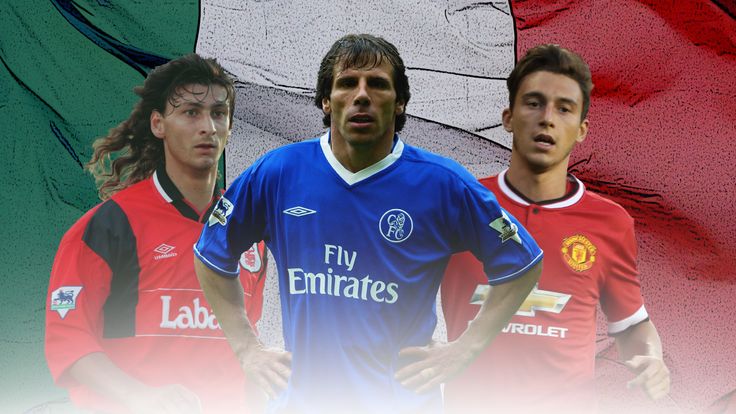
It’s 20 years since Andrea Silenzi became the Premier League’s first Italian player. There have been plenty of successes and failures since then so on the eve of Matteo Darmian's Manchester United debut, we look back at some of the heroes... and the flops.
When United confirmed the signing of full-back Darmian, he became the first Torino player to sign for a Premier League club on a permanent basis since the very first Italian to appear in the competition back in 1995.
But Darmian will be hoping for rather more success than Silenzi. The tall striker joined Nottingham Forest in a £1.8m deal in 1995 but his lasting Premier League legacy largely amounts to appearing in ‘worst ever signings’ lists for the past two decades.
Silenzi arrived with a promising reputation having made his international debut for Arrigo Sacchi’s Italy the previous year. However, Frank Clark’s signing failed to find the net in 12 Premier League appearances for Forest – only scoring against Oxford in the FA Cup and Bradford in the League Cup.
Eventually, Clark’s successor Dave Bassett opted to tear up Silenzi’s contract when he refused to return following a loan spell at Venezia. In his autobiography Bassett was succinct. “Our expensive Italian proved something of a disappointment. He just did not make the grade.” He wasn’t alone but which category will Darmian come under?
THREE ITALIAN FLOPS
Massimo Taibi
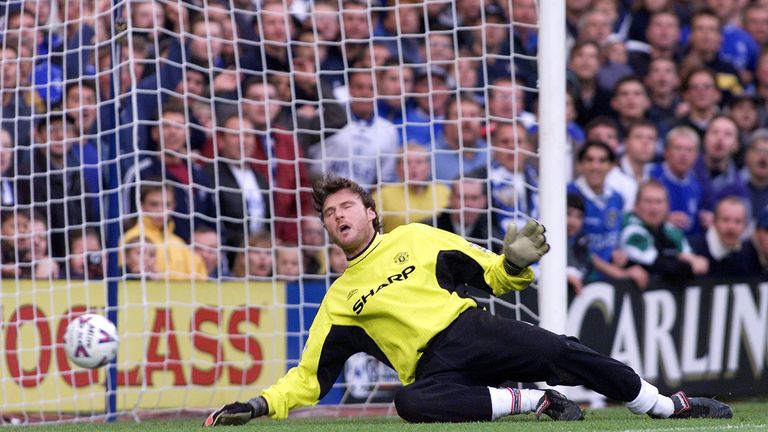
“There is nothing more dangerous than a goalkeeper anxious to get involved,” claimed Sky Sports pundit Gary Neville when discussing Taibi in his autobiography. Billed as the long-term replacement for Peter Schmeichel, it’s often forgotten that he was actually man of the match in a debut win over Liverpool at Anfield before saving two one-on-ones against Wimbledon to earn a point in his next appearance. But a terrible mistake to allow Matthew Le Tissier to score for Southampton was followed up by a 5-0 defeat to Chelsea. And that was that. “Taibi just didn’t work out,” said Sir Alex Ferguson.
Rolando Bianchi
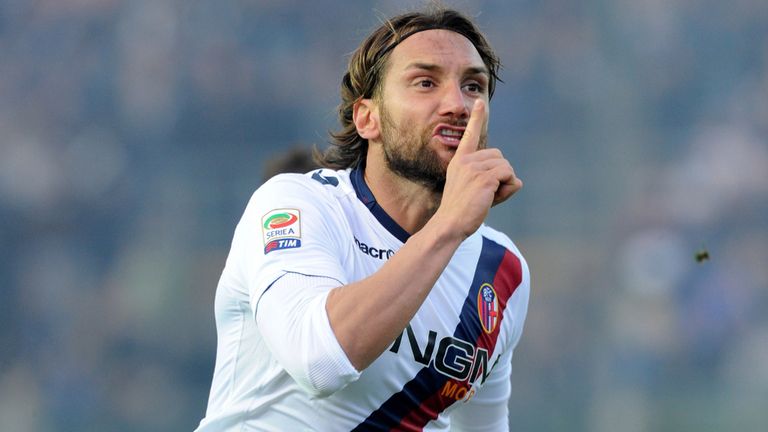
Blackburn’s Corradi Grabbi netted just twice in 30 games, while Bernardo Corradi’s stay at Manchester City began with a red card and didn’t get much better. But it’s another City striker, Bianchi, who gets the nod here for his honesty in failing to adapt. After netting four goals in 19 games for City, Bianchi departed in the January transfer window with a message for England. “I have raised the white flag with English food,” he said. “I don't like it. And I think I must be the only teetotal player in the Premier League. My team-mates were surprised when I refused a beer. They looked at me as if I were an alien.”
Alberto Aquilani
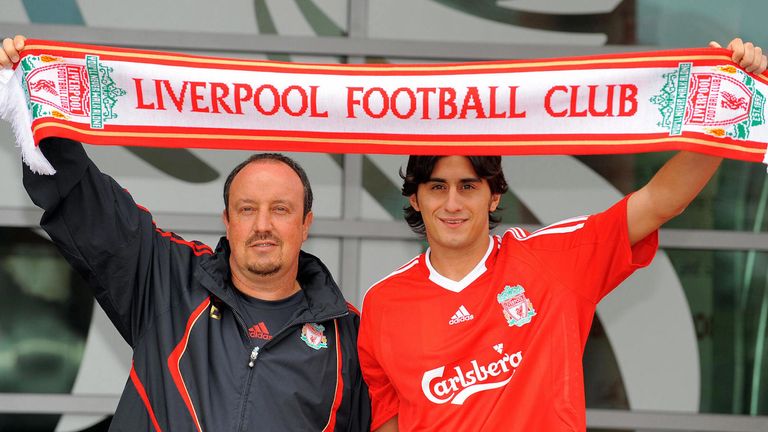
Following the sale of fan-favourite Xabi Alonso, Liverpool were looking for a dominant midfielder to replace him. The £17m signing of Aquilani got supporters excited but he “struggled to make an impact” in the words of Sky Sports pundit and then Reds defender Jamie Carragher. Indeed, injury prevented Aquilani making a Premier League start until Boxing Day. He had his moments but the decision to allow him to return to Italy following Rafael Benitez’s exit marked the first of two seasons on loan in Serie A and he eventually joined Fiorentina on a free transfer as the Reds elected to cut their losses.
THREE ITALIAN STARS
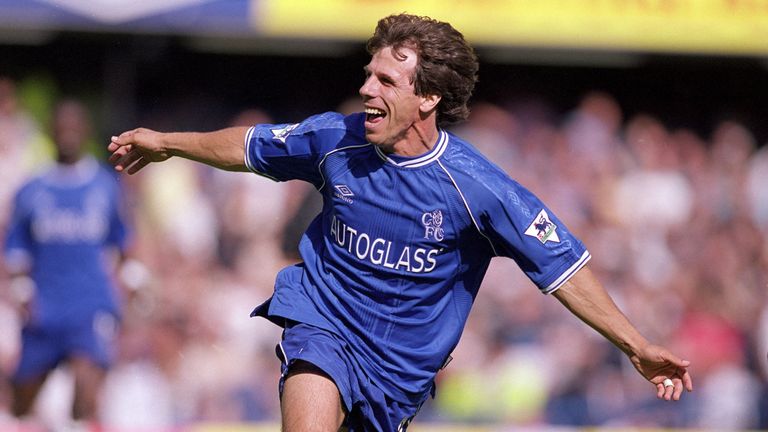
Gianfranco Zola
Zola had already turned 30 when he made his debut for Chelsea but that didn’t prevent him leaving his mark as one of the greatest players ever to feature in the Premier League. The diminutive forward wowed crowds with his trickery and was named the FWA Footballer of the Year after his opening season in England, one that culminated in Chelsea’s first FA Cup triumph in 27 years. Zola also scored the winner in the European Cup Winners’ Cup final the following year and continued to delight the public with his glorious back-heeled finish against Norwich in 2002 perhaps the pick. He eventually bowed out the following year.
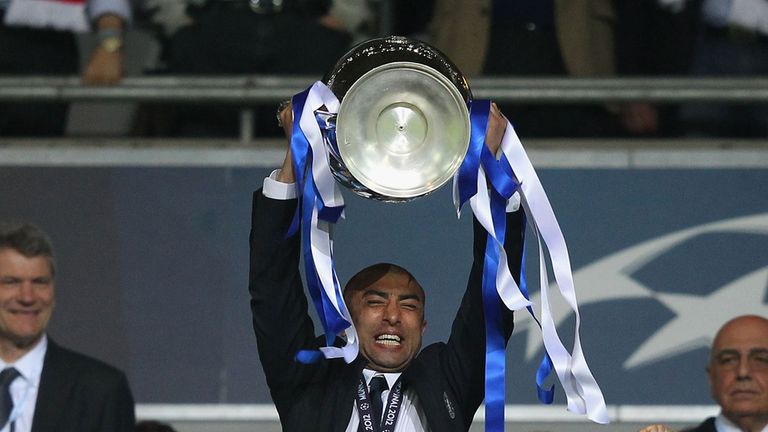
Roberto Di Matteo
While Zola arrived as an ageing Serie A star, Di Matteo had only just turned 26 when he traded Lazio for life at Chelsea. The midfielder scored the then quickest ever FA Cup final goal – and what turned out to be the winner against Middlesbrough - at the end of his first season and then scored again at Wembley against the same opposition to lift the League Cup the following year. There was another FA Cup final winner against Aston Villa in 2000 but a major injury all but ended his playing career that autumn. He famously returned to the club as a coach and led Chelsea to Champions League glory in 2012.
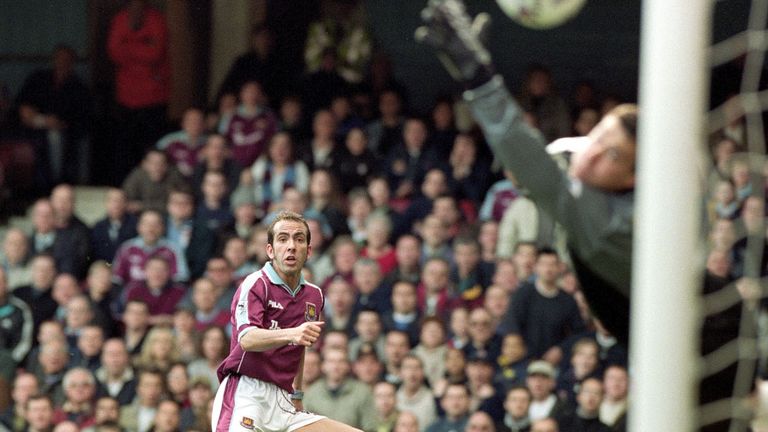
Paolo Di Canio
Di Canio’s Premier League career began with Sheffield Wednesday and while he quickly became a fan favourite, an infamous push on referee Paul Alcock earned the forward an 11-game ban and ended his time at the Owls. At 30, Di Canio embarked upon a new adventure with West Ham, scoring 48 Premier League goals in four-and-a-half seasons. In fact, his flying volley against Wimbledon in 2000 is widely regarded as one of the Premier League’s greatest goals. As Sky Sports pundit Jamie Redknapp once put it: “They could sell tickets to watch him train.”