Analysis
Man Utd’s DNA? Darren Fletcher joins list of old Sir Alex Ferguson players as club keeps looking back not forward
As Manchester United look to their past once again, Adam Bate reports from Turf Moor after Darren Fletcher's first game in interim charge and argues that trying to recreate what's been lost since Sir Alex Ferguson's retirement is not the way forward

Monday 12 January 2026 08:53, UK
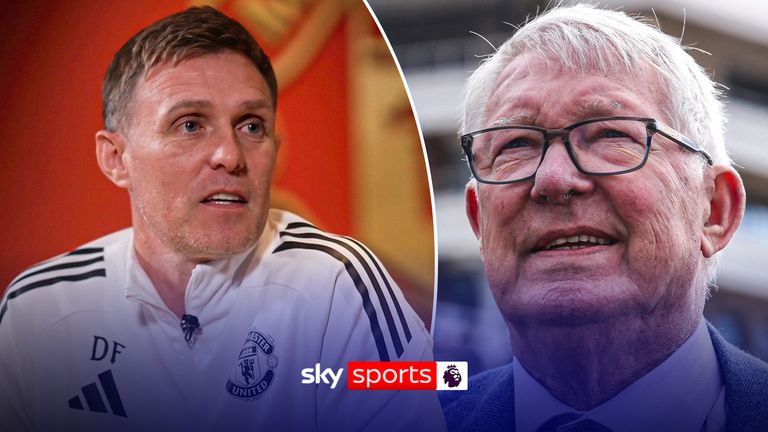
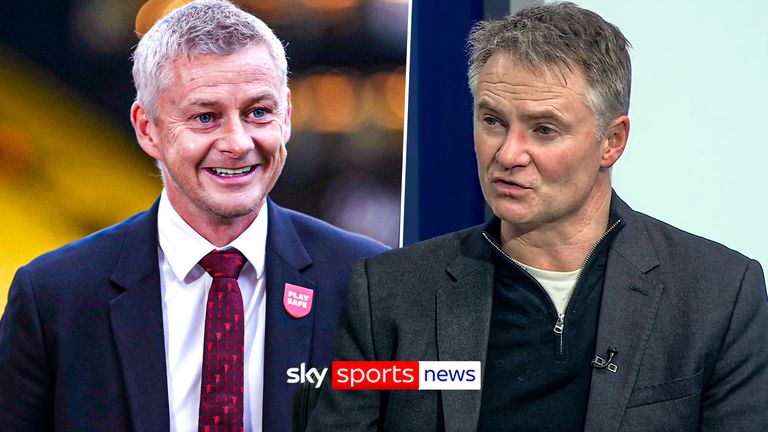
They chanted for Darren Fletcher. They chanted for Ole Gunnar Solskjaer. They chanted for Michael Carrick. Under the lights at Turf Moor, they played four at the back and saw an academy-graduate winger come close to scoring a stunning winner.
Squint a little and Manchester United's players and supporters were beginning to enjoy themselves again even if Jason Wilcox and Omar Berrada did appear rather stoney-faced in the stands. Kobbie Mainoo and Mason Mount as the midfield two. Thirty shots.
The stories are already doing the rounds about how Fletcher has inspired the young players at Old Trafford by showing them videos of Ronaldo and Wayne Rooney. We have been here before, of course, when Solskjaer had a tale for every situation. Fans lap it up.

None of which should really convince United's decision-makers to lurch back to the past for any great length of time. As difficult as it might be after a painful - and now largely pointless - misstep under Ruben Amorim, United still need to look to the future.
Nostalgia is a powerful emotion when you have won the lot but despite the subsequent line in the song claiming that it is never going to stop, United are stuck once again. This can feel like a football club that is happier looking backwards rather than forwards.
For now, every match - every conversation around that match - has become a referendum on this club's path back to glory. United are at another fork in that road. Many seem tired of the attempts to modernise by mimicry. They want to do it their way.
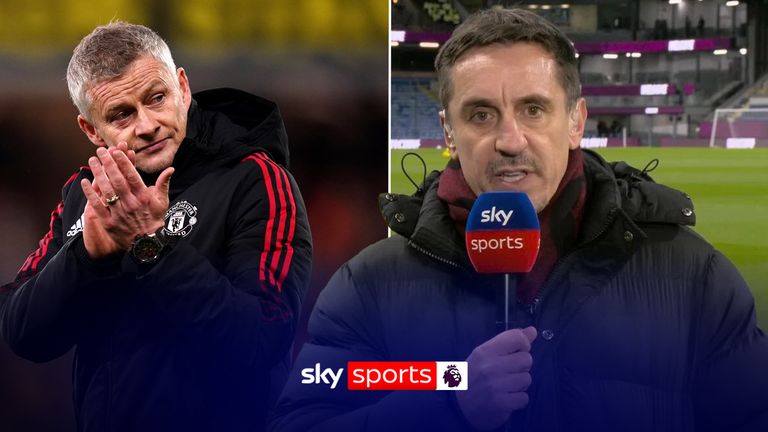
Gary Neville is determined to see the club embrace their DNA and start 'playing the United way' again. Paul Parker thinks that means bringing back Roy Keane. And that is just the former England right-backs. Viv Anderson's views on the matter are unclear.
Then there are the ginger ex-midfielders. Paul Scholes believes Keane's return would be greeted rapturously, comparing it to Cristiano Ronaldo's playing return - which was obviously a huge success. Nicky Butt thinks there needs to be a role for Steve Bruce.
Rio Ferdinand is pleased that Fletcher has been appointed as interim coach - revealing that the former players' WhatsApp group agrees - and is even more delighted that Sir Alex Ferguson was consulted by his compatriot before taking on this temporary role.
The devotion to the cult of Ferguson might seem like harmless deference to an octogenarian legend but it hints at a longing for what is long gone that retains a material influence on what must happen next. United are still searching for that secret sauce.
Perhaps it is to be expected given Ferguson's outsized importance at a club of United's vast stature. Arguably England's biggest club and certainly its best supported, they have nevertheless only won the title under two men since the First World War.
For context, that is the same number as Burnley. It is fewer than the number of different managers who took Chelsea to the Premier League title over a seven-year period in the 2010s. Manchester City managed to win it under three different men in just six years.
The culture at United is different and it is natural that Ferguson's former players look for lessons from their old guru, even if Solskjaer's infamous claim that he did not feel comfortable using his parking space at the training ground was rather stretching it.
The challenge is that replicating him is not quite as easy as instituting the possession principles drilled into kids at Barcelona's La Masia or Ajax's De Toekomst. Ferguson was more malleable, his ideas a moveable feast that shifted to the game's requirements.
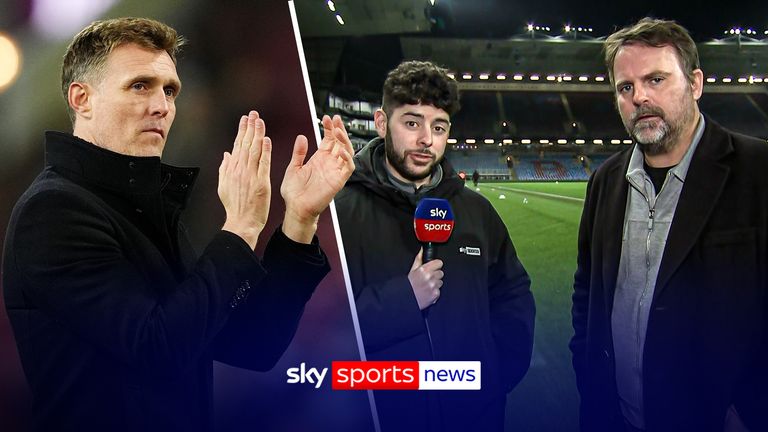
The unfortunate truth is that there is no Ferguson coaching school, no thread of an idea passed down to the next generation, just the gut feeling of a great manager. One who showed throughout his long and successful career that he could adapt to the times.
What would Ferguson do now? We do not know. Most likely, it would look as different as Norman Whiteside did to Carlos Tevez, as different as his Aberdeen team to his late-era United, not some facsimile of a system adopted when John Major was in power.
Fresh concepts came via an ever evolving cast of assistants. He played with strike pairings until he didn't. He played 4-4-2 until he didn't. He played open and attacking football until Champions League success demanded a different approach away from home.
The myth at the heart of all this is the idea that Sir Matt Busby and Sir Alex are and were United incarnate, the products of some immaculate conception at The Cliff, rather than the outsiders they were. Both Scots, Busby even played for Man City and Liverpool.
- Ole Gunnar Solskjaer and Michael Carrick to have further talks
- Got Sky? Watch Man Utd games LIVE on your phone📱
- No Sky? Get Sky Sports or stream with no contract on NOW📺
Indeed, Liverpool went through all this too, dragging Sir Kenny Dalglish out of retirement when they lost their way under Roy Hodgson, the title never seeming so far from view. It took the arrival of a man with no ties whatsoever to the city to deliver that prize.
Speaking of Jurgen Klopp, one recalls an awkward conversation with Borussia Dortmund chief Carsten Cramer when it was pointed out that for all his talk of the need for what he likes to call 'Dortmund guys', it was Klopp, a Swabian, who won their last title.
And yet, still the idea is seductive, a comfort to these clubs scrambling to recapture something lost. How else to explain turning to a man sacked by Middlesbrough in June or a man last at Besiktas who was sacked by Manchester United themselves in 2021.
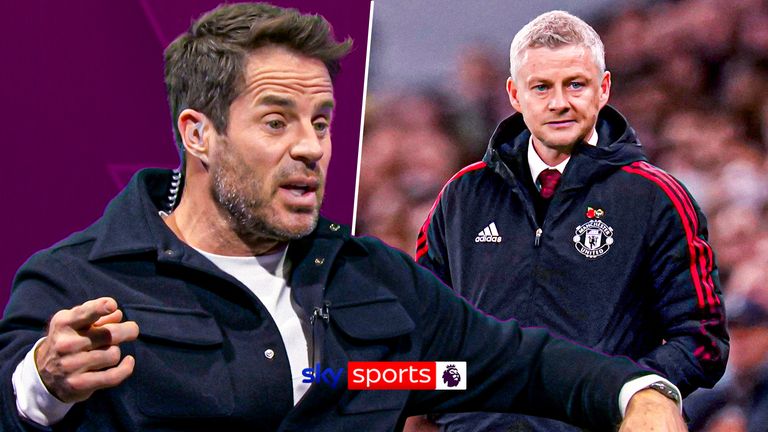
This is familiar ground for both, of course, Carrick and Solskjaer each having stepped in to steady the ailing ship before. Ryan Giggs did so before them. Ruud van Nistelrooy has done so since. Fletcher now joins that list as United try again to work out what comes next.
But this is stasis not progress and it cannot be presented as some great restoration plan destined to Make United Great Again. It is the absence of an idea rather than a return to one, a club so weighed down by its own history that it gives up forging a new future.
By all means, play positive football with a back four and try to bring through young players. This is hardly unique and it is the aim of most clubs in the country, funnily enough. As with Busby and Ferguson, you do not need to be steeped in United's traditions to do it.
That should be obvious. But when you are Manchester United and have won the lot under one man, the temptation to look back can be irresistible. Solskjaer at the wheel? Meet the new boss, same as the old boss. Squint a little and it might even start to make sense.