Mohamed Salah, the pursuit of AFCON glory and why Egypt treat him as a special case
Mohamed Salah: Why Liverpool's legend is afforded special status in Egypt and the drive to win the Africa Cup of Nations (AFCON) by The Athletic.
Sunday 18 January 2026 01:14, UK
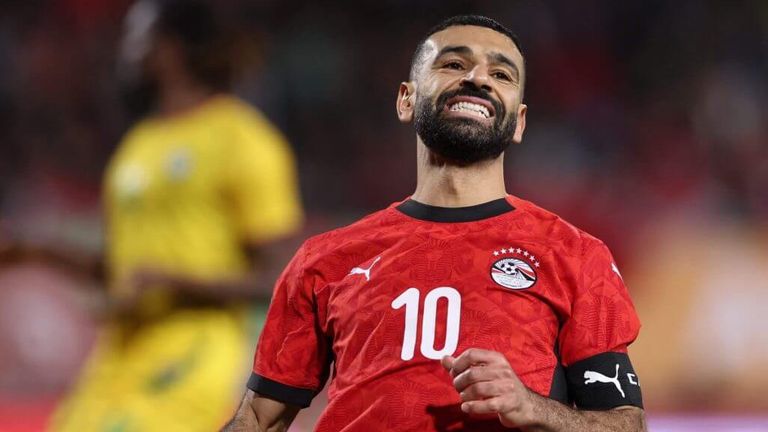
It is an unwritten rule at the Africa Cup of Nations (AFCON) that on the eve of a team's opening game, the coach and the captain sit side by side and after offering some opening thoughts, take questions from the press.
It is an unwritten rule at the Africa Cup of Nations (AFCON) that on the eve of a team's opening game, the coach and the captain sit side by side and after offering some opening thoughts, take questions from the press.
In the past few years, however, Egypt have approached the summit differently. At the 2024 edition of the tournament, Portuguese coach Rui Vitoria was accompanied instead by Mohamed El Shenawy, the squad's oldest player.
To some degree, this was in keeping with tradition because in Egypt, the captain was always chosen on the basis of his caps rather than talent or even influence.
Mohamed Salah officially became Egypt's captain in 2021, a role he first experienced two years earlier, and that in itself was a break from the past because the next in line was Ahmed Fathy, then a 35-year-old right-back who played three times for Sheffield United in 2007.
The former West Bromwich Albion defender Ahmed Hegazy was also ahead in the pecking order but Salah was chosen because he had emerged as the most famous footballer in the country's history.
Salah was quickly afforded the authority to make his own decisions around certain responsibilities and this meant he did not appear before the press in Abidjan until the final group game, with Egypt needing a result to progress.
Except, Salah was not playing because of injury and this made the dynamic in the room very unusual. It was already decided at that point that he was going back to England to jump-start his recovery but that only became clear a few hours later when Jurgen Klopp revealed exactly what was happening following Liverpool's victory over Bournemouth.
For Salah, the situation became messy because it made it look like Liverpool were calling the shots. One of his fiercest critics was his current coach with the Egyptian national team, Hossam Hassan, then a pundit, who suggested Salah should not return to Ivory Coast even if he miraculously rediscovered his fitness before the end of the tournament. "Back here, we have men to do the job," he flexed.
Now Hassan has to work with Salah, he is treading a more diplomatic line. The man sitting next to him in Agadir before Egypt's opening fixture of the 2025 AFCON with Zimbabwe was not Salah but Trezeguet, the former Aston Villa winger, though it did not seem to be a problem.
With Egypt, Salah largely gets what he wants, speaks when he likes, the world rotates around him and everyone accepts it. It probably feeds into why he thinks he can occasionally stamp his feet at Liverpool and it explains why Hassan, in a slightly more servile mood - publicly at least - announced on Sunday that "Salah will be among the best players at AFCON and will remain an icon and one of the best players in the world…".
Egypt were trying to find a way past Zimbabwe, a nation that after qualifying for AFCON finished bottom of their six-team World Cup qualifying group by some distance. Having lost twice to Lesotho, they did take points off Nigeria and South Africa and this served as a thin warning to Egypt that it might not be straightforward.
Salah was starting a game for the first time since Liverpool were humiliated 4-1 at home by PSV at the end of November. Since then, he has been temporarily marginalised by his club for suggesting he had been "thrown under the bus" having not been selected from the start in three matches following that defeat, in an outburst during which he also claimed he no longer had a relationship with the head coach, Arne Slot.
His and Egypt's performance followed a similar pattern to their opening fixture in this tournament nearly two years ago. Salah swished two crosses into the box inside the first 10 minutes that his team-mates should have scored from and Egypt played some attractive football but then came the thud of a Zimbabwe goal.
Unlike two years ago, all of the play was not going through Salah. If he has sense, he might realise that players can be more effective with fewer touches even if they are the star. It helps that there is more quality around him now and Manchester City's Omar Marmoush can be trusted to handle the ball and make things happen. When Egypt's equaliser came, Marmoush was the scorer.
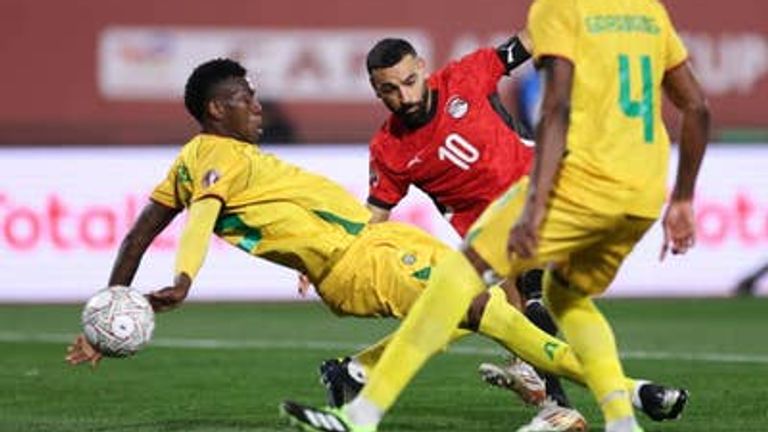
It was beginning to feel like it would not be an ideal start for Egypt, who face South Africa - victors over Angola earlier in the day - in their next game. Egypt did not exactly run all over Zimbabwe after making it 1-1 but their patience was rewarded when the ball fell to Salah in stoppage time. From there, he reminded everyone of who he is.
According to Hassan, winning AFCON is something that Salah "needs" to achieve. He will turn 34 next summer, the age Lionel Messi won his first international tournament with Argentina, the Copa America. A lack of success on the international stage at that point in his career did not reduce his greatness but Messi knew that without that validation, it would affect the way he was remembered.
A year later, Messi won the World Cup - something Salah is unlikely to match, and this places more pressure on his performances over the coming weeks, especially now the tournament will be held every four years rather than every two from 2028 following the revelations of the CAF president, Patrice Motsepe, at the weekend. With doubts about whether Tanzania, Kenya and Uganda will be able to host in 2027 because of elections coming in two of those countries, maybe Salah will have only one chance to deliver what Egypt expects of him after Morocco.
He is judged in Egypt against the achievements of the group of players that went immediately before him, a team that won three AFCON titles in a row between 2006 and 2010 but never qualified for the World Cup, something Salah has done twice. That team was breaking up as Salah was starting a career which has been tangled into a period of unprecedented modern turbulence for Egypt.
The West still tends to see Egypt through the magnificence of the pyramids and the romance of the Nile. Yet following his professional debut with Arab Contractors, there were events that had huge consequences for the country in all sorts of ways, not least the development of football and the feeling around it.
In 2011, there was a revolution and the collapse of an authoritarian regime that had lasted for 30 years, one that hyped up football to hide its own failings, causing a public to eventually become more cynical about the sport's purpose.
A little over a year later, there was a stadium disaster in Port Said in which 74 spectators lost their lives, leading to a suspension of the league, with fans banned indefinitely from stadiums.
Against this backdrop, it was perhaps understandable that Egypt failed to qualify for AFCON three times in a row.
Since 2014, Egypt has been led by another authoritarian leader, so Salah has to tread carefully. That he has kept out of trouble despite his enormous influence shows that he does have a filter. Yet the state knows the same influence stretches beyond the boundaries of Egypt, unlike the country's football hero before him, Mohamed Aboutrika, who has lived in exile in Qatar for almost a decade because of his political beliefs.
His name has never mattered outside North Africa or the Middle East but Salah has to be kept sweet because he straddles two worlds so well and he is the first footballer from the country to do so. I sometimes wonder whether Liverpool (the fans, the manager, the players - the club as a whole) really understand what it is dealing with, because there is no basis of comparison.
Kenny Dalglish and Steven Gerrard are generally considered their greatest players. Both mean something for Liverpool as an institution and a city but they have never represented a country's image. Unlike Salah, they do not represent a region that stretches across two continents. They do not represent a religion. Even Messi and Cristiano Ronaldo can't claim this. If Salah has a sense of otherness and that makes him difficult to relate to, it is because there has never been anyone like him.
This article originally appeared in The Athletic.
© 2026 The Athletic Media Company