
Hillsborough match commander David Duckenfield questioned at inquest
Tuesday 10 March 2015 22:43, UK
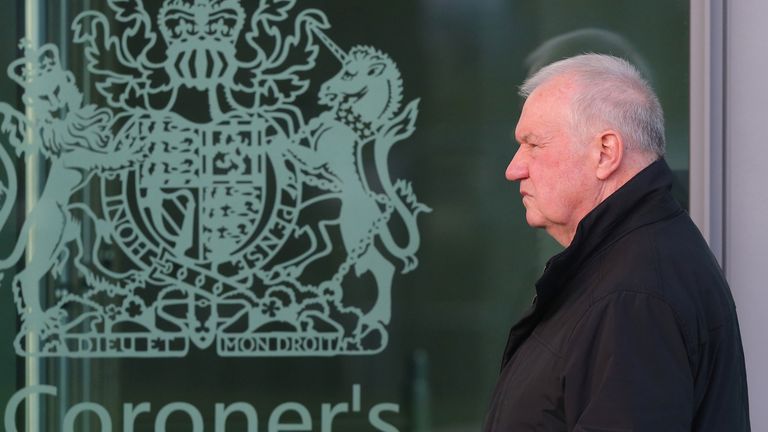
The match commander on the day of the Hillsborough disaster has admitted he was "not the best man for the job".
Former chief superintendent David Duckenfield told the Hillsborough inquests jury he had "limited experience" of planning for football matches prior to the day of the disaster on 15 April, 1989.
Approximately 200 family members of the 96 fans who died were present as Mr Duckenfield confirmed he had been promoted just a few weeks before the FA Cup semi-final in Sheffield between Liverpool and Nottingham Forest.
Duckenfield was asked by barrister Christina Lambert QC: "Did you think with hindsight: I should have thought about my limited knowledge of the role of commander in a major event that was an all-ticket sell-out?"
He replied: "I am older, probably wiser. Probably I was not the best man for the job on the day."
While he had experience of public order policing, Duckenfield said that was "totally different" to policing football matches.
He added: "At the time I should have thought about my limited knowledge of the role of a commander at a major event that was a sell out when I had not been in that responsible position previously."
He was also asked whether it had occurred to him before the match that it "was a job that called for deep experience".
The former South Yorkshire police officer said he had been assured by the assistant chief constable at the time, Walter Jackson, that he would have an experienced team to assist him on the day.

Ms Lambert asked: "Did you think it was a mistake for you to accept the role of match commander and not seek assistance from others?"
He told the jury there had been a culture at the time of senior officers being moved around different departments and learning "on the job".
Ms Lambert continued: "My question was whether or not it was a mistake."
Mr Duckenfield replied: "With hindsight it was a serious mistake."
He said, after first joining South Yorkshire Police as a cadet in 1960, he had been "delighted" to be promoted to the post of chief superintendent of F Division of South Yorkshire Police around March 1989.
"So it did not cross my mind to say, 'I'm not up to the job'. I just got on with it."
Duckenfield accepted under questioning that he could not remember whether he had read the relevant police guidelines before the match and that he was not aware of the codeword "catastrophe" that was to be used by emergency services in the event of a major incident.
The inquests have already heard that Mr Duckenfield gave the order to open a perimeter gate at the Hillsborough stadium before telling officials that fans had forced it open.
Ninety-six Liverpool fans died as a result of crushing on the terraces in overcrowded pens at the ground's Leppings Lane end.
“I did in the light of the information, available what I considered necessary, and if there was a failing, well I apologise," Duckenfield added.
Mr Duckenfield said that there was no contingency plan on behalf of South Yorkshire Police to deal with the build-up of crowds in that section of the ground.
He is due to give evidence to the inquests in Warrington for four days.