
Arsenal manager Arsene Wenger says UEFA 'accepts doping'
Monday 23 November 2015 18:20, UK
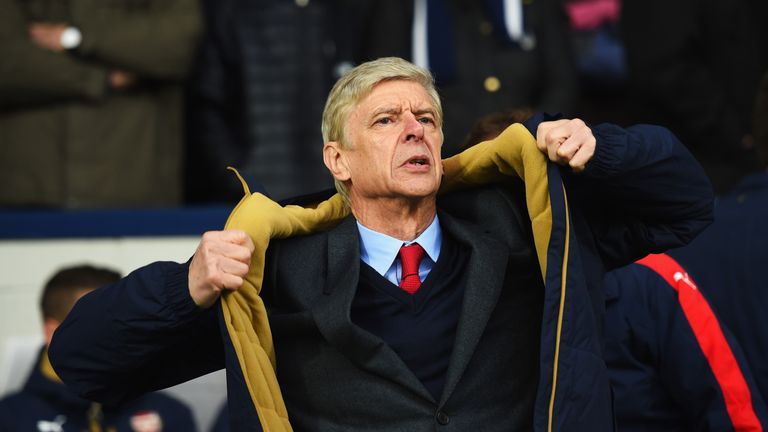
Arsene Wenger believes UEFA 'basically accepts doping' and has called for an urgent change in the rules for football's drug policy.
Wenger strongly criticised the current system, describing it as "strange", but feels he is unlikely to receive much public support after seeing UEFA's doping team visit the Gunners' training ground shortly after his recent comments.
Dinamo Zagreb midfielder Arijan Ademi was given a four-year ban for providing a positive sample after the Croatian side beat Arsenal in the Champions League in September.
Ademi played the full 90 minutes of the game in Zagreb, which Arsenal lost 2-1, and the teams meet again at the Emirates Stadium on Tuesday night with Wenger's side knowing they must secure a victory to stand any chance of getting out of their group.
Wenger has been outspoken against doping on several previous occasions, particularly in a recent interview with L'Equipe Sport & Style, and has repeatedly questioned why UEFA rulings means there is no way of disqualifying a team from continental competition unless more than two players fail a test.
Asked if he found the regulations strange, Wenger said: "Yes, of course.
"It's a surprising rule. UEFA applies the rule that is planned but I personally don't agree with the rule. You cannot say that they had a doped player but the result stands.
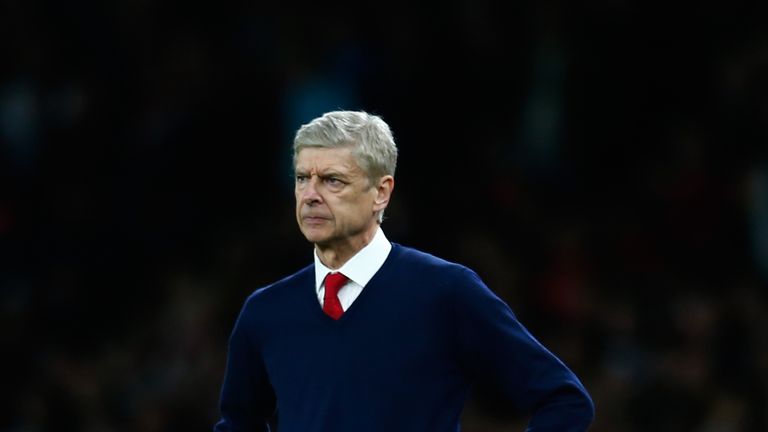
I don't know if I would have the support of anybody but I came out on that and as a result we had a doping control from UEFA on Friday.
"That means you basically accept doping. But it is the rule and we accept that. We have to look at ourselves and deal with our own performance."
The Frenchman believes the rules need to be altered but admitted he did not know how much public backing he would receive.
"I don't know if I would have the support of anybody but I came out on that and as a result we had a doping control from UEFA on Friday," he added.
"We had 10 people on Friday to control us. I do not want to speculate too much on the career of a player. In between (the match in September and now) he has been punished. There are two things: our performance on the day and the fact that they had a doped player."
Wales were left fuming after the same ruling saw them miss out on a place at Euro 2004.
Russia's Yegor Titov failed a drugs test after the first leg of a qualification play-off, in which he was an unused substitute, before he played a part in the second leg which saw Mark Hughes' Wales miss out.
UEFA stated at the time that, because only one squad member had recorded a positive result, it was the player and not the team who was liable.
And that stance was confirmed in a statement from UEFA spokesman Pedro Pinto: "UEFA's anti-doping regulations regarding the consequences for teams for doping offences are strictly in accordance with article 11 of the WADA code that states that 'where more than one team member in a team sport has been notified of a possible anti-doping rule violation, the team shall be subject to target testing for the event.
"If more than two team members in a team sport are found to have committed an anti-doping rule violation during the event, the team may be subject to disqualification or other disciplinary action'.
"Blood testing is a key part of UEFA's anti-doping arsenal. UEFA has in fact been blood testing since 2008. In the 2014-2015 season, UEFA carried out 2,318 tests - 2,024 urine tests and 294 blood tests."