
Analysis
Premier League has a clear and obvious problem with how referees and VARs penalise grappling and holding - but what can be done?
West Ham will contact PGMO to raise concerns about the officials' decision to disallow their late equaliser in their defeat to Arsenal on Sunday, Sky Sports News understands; decision had huge ramifications at the top and bottom of the Premier League
Monday 11 May 2026 15:12, UK
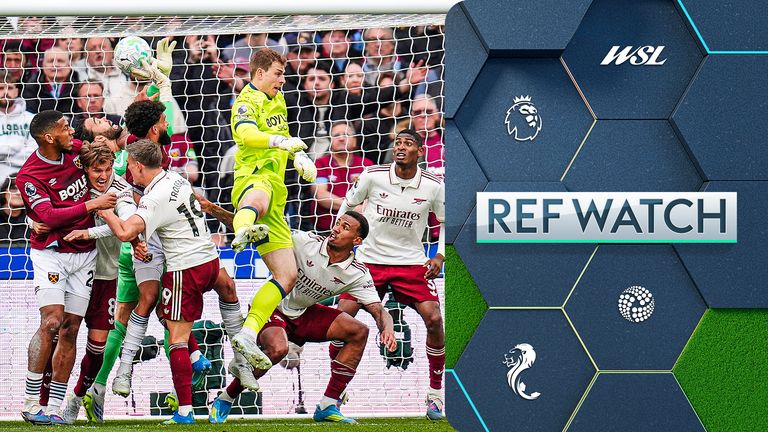
While West Ham's complaints against the decision to rule out an equalising goal against Arsenal are unlikely to gain much traction, it appears clear and obvious that English football has a difficult decision to make about how to get a grip on penalty-area grappling.
Relegation-battling West Ham had a stoppage-time equaliser from Callum Wilson ruled out for a foul by Pablo on Arsenal goalkeeper David Raya, but the check took more than four minutes as VAR Darren England watched several replays before sending referee Chris Kavanagh to the screen.
The decision to disallow West Ham's 95th-minute goal has been described as the biggest in the history of VAR in the Premier League.
It may also have sparked one of the most contentious and complicated debates in the league's history.
- Report - West Ham 0-1 Arsenal
- Live Premier League table | Watch FREE PL highlights
- Got Sky? Watch Premier League games LIVE on your phone📱
- Not got Sky? Get Sky Sports or stream with no contract on NOW 📺
Do West Ham have a clear and obvious complaint?
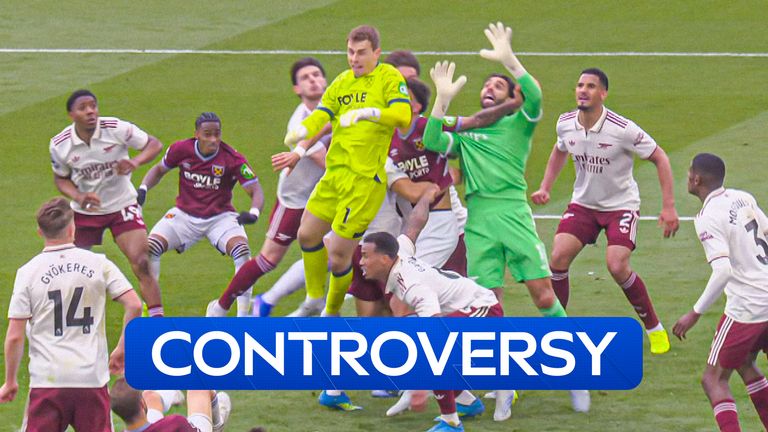
West Ham will contact PGMO to raise concerns about Sunday's VAR decision and request further explanation, Sky Sports News understands.
The Hammers are expected to argue that the decision to overrule the on-field award of a goal was not 'clear and obvious' given the amount of time it took for Kavanagh to rule out Wilson's strike.
There were two minutes and 35 seconds between the ball crossing the line and Kavanagh being sent to the monitor by England.
Kavanagh then watched 17 replays of the incident before making his decision.
In total, it took four minutes and 17 seconds between the ball crossing the line and a foul being awarded.
- Ref Watch: 'Definite foul by Pablo'
- Your views: 'Ref watched 17 replays of controversial Raya VAR review'
Are on-field referees ducking big decisions because of VAR?
Conversely, the delay will only fuel accusations that on-field referees are shying away from being the principal decision makers and add to concerns that too many decisions are being passed over to VAR.
Speaking on Soccer Saturday, 24 hours before the critical clash at the London Stadium, former Premier League referee Mike Dean lamented: "I'm just annoyed that the guys are not making decisions.
"They are just not making on-field decisions. They are going to have to address it over the summer because it is not good enough."
Given that Pablo had his arm fully extended across Raya as he blocked the Arsenal goalkeeper while team-mate Jean-Clair Todibo was pulling on Raya's shirt, an alternative viewpoint on Sunday's incident is that Kavanagh should have blown for a foul in real time.
Why did the West Ham decision take so long?
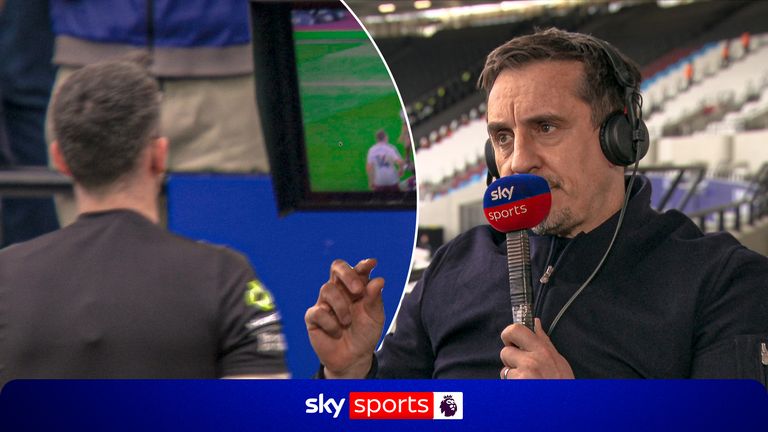
While Dean's ire was sparked by non-decisions that could have resulted in red cards in various Saturday afternoon games in the Premier League, it was noticeable that Sky Sports' Gary Neville required just two replays and less than one minute to declare that Raya had been fouled.
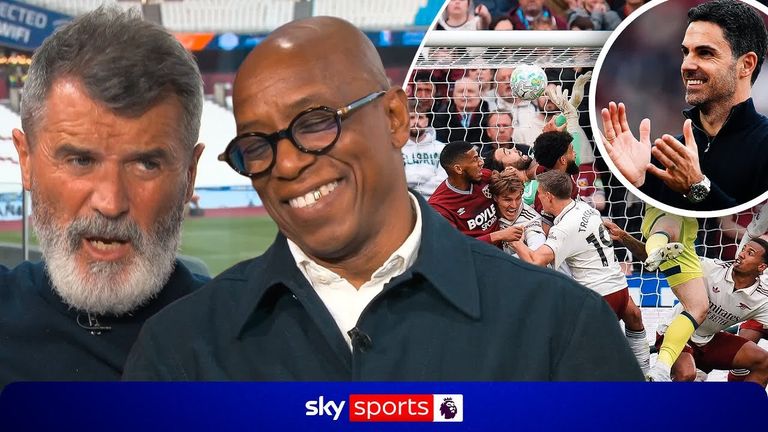
The in-studio Sky Sports pundits were also unanimous in their verdict that a foul had been committed. "It was really silly from West Ham," argued Roy Keane. "Don't make it such an obvious foul."
But Sky Sports digital journalist Lewis Jones offered a more sympathetic viewpoint in Kavanagh's favour. "He is only human," he wrote.
"He took his time with the VAR communication and he'd have known the magnitude of the decision. The fact he was even able to deliver his announcement to the world coherently and seemingly unflustered needs to be appreciated."
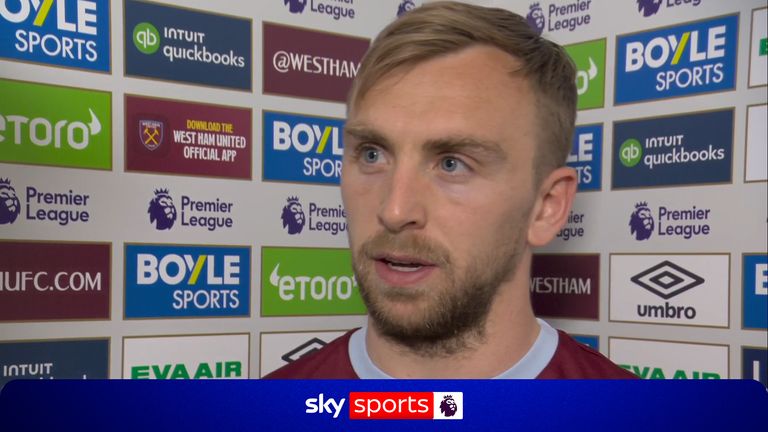
Jay Bothroyd added on Ref Watch: "It is really difficult and you have to make the right decision in this type of game at this stage of the season. So that is why it took so long."
It is also understood the process was delayed by England reviewing numerous instances of holding taking place when West Ham took their last-minute corner.
"It is probably the most impactful decision VAR has made in the seven years it has been going because of the magnitude of the game," explained Ref Watch's Dermot Gallagher. "It could potentially decide the title and it could potentially decide who goes down. There was so much at stake so it had to be right.
"The decision is all about sequence," Gallagher added. "If the West Ham goalkeeper Mads Hermansen [who came up to attack the late corner] heads the ball, Pablo hasn't engaged with Raya yet - he would have to head the ball before the shirt is grabbed. But he doesn't.
"The impact is Pablo stopped Raya. He can't go forward and attack the ball.
"[Declan] Rice's challenge on [Konstantinos] Mavropanos comes after. The foul on Raya had already occurred first. You have to go in sequence order."
What is English football willing to give up in order to eradicate grappling?
Above and beyond the debate about the West Ham decision is a far wider question - and one which seems far harder to answer.
Penalty-box grappling has become endemic in the Premier League this season and while West Ham's complaints appear unlikely to gain much support, the solution to how to stop wrestle-mania taking root is far from obvious.
Last month, Sky Sports' Rob Dorsett reported: 'Every summer, the Premier League and PGMO carry out an extensive survey of key people from the game to get feedback on what should be their refereeing priorities.
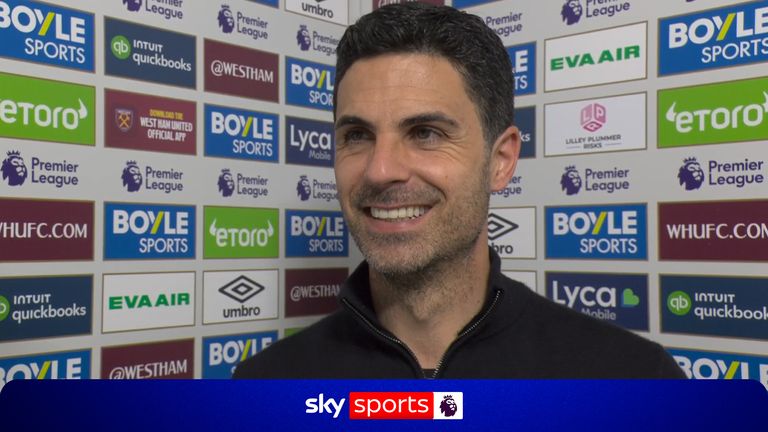
'Overwhelmingly, there were three priorities - people in the game want a high threshold for handball and a similarly high threshold for VAR intervention and for physical contact.
'That shouldn't come as a surprise - the physicality of the Premier League is one of the factors that makes it the envy of the world. And so, if referees are told that two of their three priorities are to allow a decent chunk of physical contact and that there should be a lightness of touch from VAR, it is understandable how we have reached the situation we now see match-by-match in the Premier League, where a great deal of shirt pulling and physical blocking goes unpunished.'
However, in August, PGMO chief Howard Webb said there would be a measured crackdown on holding in the box.
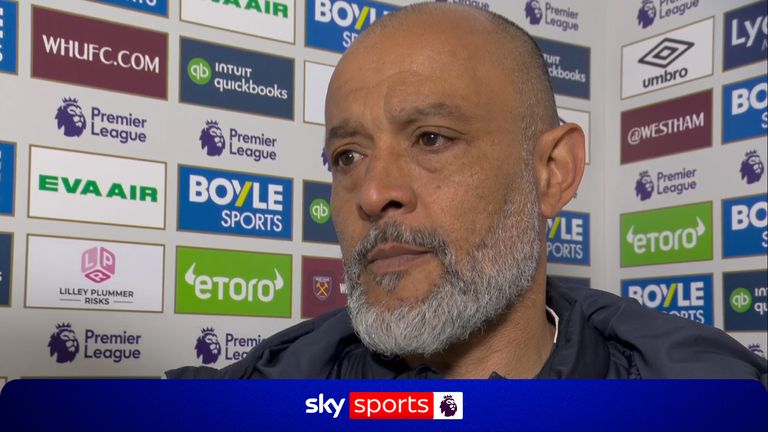
"The feedback that we had is that there's just a few too many examples of players clearly pulling people back, impacting their ability to move to the ball, or some clear extreme actions are not being penalised," said Webb.
"They're the ones I expect us to catch. Therefore I would expect this time next year for there to have been a few more penalties given for holding offences than what we've seen this year. But not a huge swing of the pendulum."
Up until last month, there had been seven penalties given for holding/grappling in the box.
The guidance to referees is that a penalty should only be awarded if the holding/grappling is "clear, impactful and sustained" - and if ONE of those factors is not evidenced, the officials should not give a penalty.
Moreover, as decisions around penalty-area grappling are deemed to be subjective decisions, the guidance to VAR is to only intervene when the 'clear and obvious' threshold is reached.
Reducing the amount of grappling would therefore require either/both greater in-game VAR intervention and a caveat to the principle that football is a contact sport.
Is that something English football is prepared to accept? The debate will rage on.