
Scottish Football: Our guide to the situation at Rangers
Thursday 8 January 2015 10:40, UK
Charles Paterson, Scotland reporter for Sky Sports News, takes us through the questions that need answering as the storm clouds gather around Rangers.
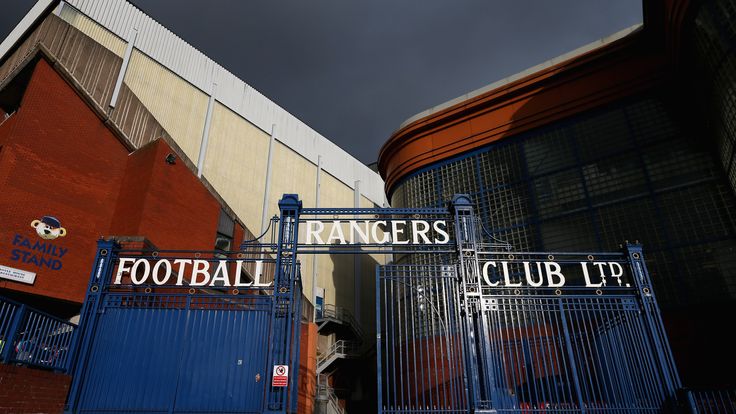
Here’s our guide to the issues surrounding the Scottish giants…
So how did they manage to get into another mess?
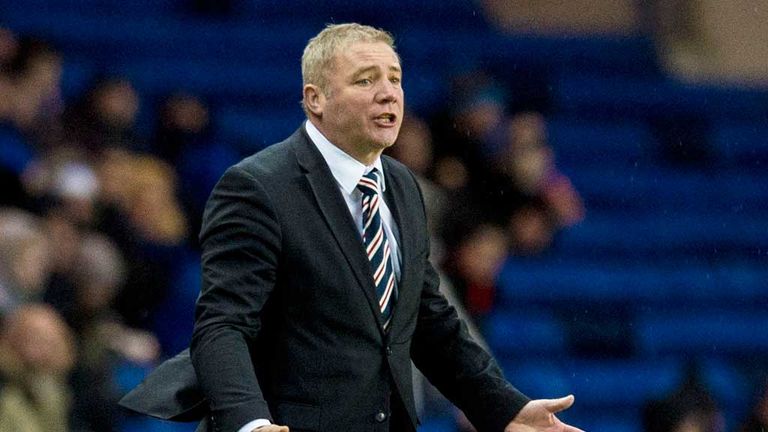
A combination of overspending and bad management. Hopes were high that Rangers were on the road to recovery after the share offer of 2012 driven by former chief executive Charles Green raised over £22m. On the pitch, Rangers completed two successive promotions under manager Ally McCoist. But a decrease in turnover, due to their league demotion and a lack of European football, was not matched by a decrease in expenditure. A playing staff wage bill of almost £7m, alongside operational costs in tune with a top flight rather than lower-league club, led to a rapid cash burn.
Rangers recorded a £14m loss for the first 13 months following liquidation. In January 2014 the playing squad were asked to take a 15% wage cut, which they refused. The club then accepted loans from Sandy Easdale and George Letham to address cash flow problems. In April 2014, former chief executive Graham Wallace declared that only £3.5m remained of the £70m raised during the two year period following liquidation.
This news left Rangers fans angry at perceived mismanagement by a series of board members. This year’s season ticket sales have plummeted to around 23,000, a drop of 15,000, further hampering cash flow. A continuing high wage bill, coupled with staff pay-offs, led to a situation in October when the club courted a number of prospective offers of financial investment. Rangers accepted another loan, this time from Mike Ashley, for £3m – an offer preferred to one from Dave King’s consortium, and a third offer from Brian Kennedy. This decision led to the resignation of Wallace.
Neil Patey, partner at Ernst & Young and a football acquisitions specialist, has stressed that the money is in danger of running out. “The IPO funds raised should have been sufficient to sustain Rangers through to promotion to the Scottish Premiership, assuming back-to-back promotions, or at least until some point in the latter part of the current season,” Patey told Sky Sports.
“However, the failure to manage costs to an appropriate level from the start of life in the Third Division, coupled with a withdrawal of a significant proportion of fan support in the last 12 months has meant that the cash has run out before the football club has returned to the Scottish Premiership and, thus, before it has managed to return to a positive cash generation position.”
How much trouble are they in?
Rangers have urgent financial issues to deal with this month. Ashley’s loan due for repayment in April; on January 5th Rangers chairman Sandy Easdale loaned another £500,000 which Rangers state is for immediate use in the next few days. In a statement confirming the latest loan, Rangers admit they require further funding in the shape of loans to remain operational beyond the end of January, with a view to a new share offer in due course. Without emergency loans, the club is unlikely to be able to function.
Rangers admitted in their most recent accounts last November that they lost £8.3m in the previous year and needed to raise £8m in operational costs to continue functioning through 2015. At that time, auditors Deloitte warned of "material uncertainty which may cast significant doubt over the group's ability to continue as a going concern".
The cash position is critical. Without further cash injection or asset sales in January, Rangers are unable to be able to pay bills as they fall due. Any creditor of the club who is not paid within agreed credit terms could take action which could ultimately lead to an insolvency event for the company.
Who owns the club now?
Shareholders with varying degrees of influence. The single largest shareholder now is former director Dave King, with just under 15%. The Three Bears consortium of George Taylor (9%), Douglas Park (6%) and George Letham (4%), hold a significant stake combined. Mike Ashley’s company MASH Holdings own just over 9%. Football board chairman Sandy Easdale has 5% of shares, but controls another 21% of proxy votes. Asset Management company River and Mercantile own 7%, while the other shares are spread amongst various individual shareholders and supporters groups, including former managers McCoist and Walter Smith.
What is Mike Ashley’s involvement?
As well as owning shares and being the major creditor of the club, Ashley also owns half of Rangers Retail, the operation that deals with the club’s merchandise. Ashley’s company Sports Direct have a five- year deal to sell Rangers merchandise, and the tie-ups between Rangers and Sports Direct have led to protests from supporters groups, claiming that money intended for club funds is being haemorrhaged away.
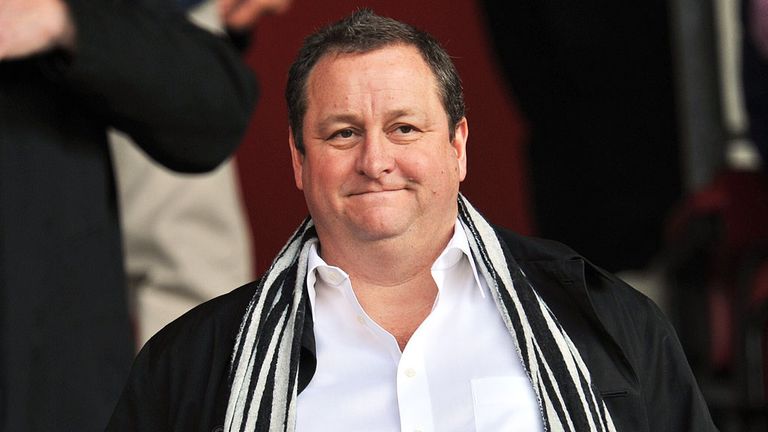
The terms of Ashley’s £3m interest-free loan to Rangers also gave him the right to appoint two directors to the Rangers board – chief executive Derek Llambias, the former managing director of Newcastle United, and new Finance Director Barry Leach, Head of Retail at Sports Direct.
Ashley also wants to buy a greater shareholding in Rangers, however his attempt to increase his shareholding to up 29.9% was blocked by the SFA last month. Ashley’s ownership of Newcastle means he is bound by a special arrangement with the SFA not to increase his shareholding beyond 10%, nor is he to have undue influence over boardroom affairs. In the wake of recent events the SFA have charged Ashley and Rangers with a breach of these rules. The case is due to be heard on January 27th.
Who wants to buy it?
Phoenix Suns owner Robert Sarver, the chairman of Western Alliance Bank based in Arizona, had an £18m offer for a controlling stake in Rangers rejected by the club on January 6th. The United States businessman’s interest in Rangers grew thanks to his association with former Rangers defender David Robertson, who coached Sarver’s son’s football in Phoenix. Sarver has been in contact with the Rangers board since December 22nd’s AGM. He has also been talking with the Three Bears consortium about a possible financial alliance. Rangers said in a statement that while they welcomed Sarver’s interest, his offer “did not adequately value a controlling interest in the company.” They did however invite Sarver to “consider participating in discussions” with shareholders about future finance for Rangers.
What happens next?
The battle for control of Rangers could be about to get very complicated. A share issue was given the go-ahead at December’s AGM. When it takes place and which shareholders will underwrite it remains open to question.
Unless Robert Sarver purchases shares, he will be unable to participate in any share offer until existing shareholders have had their fill. The Three Bears have offered £6.5m to underwrite the offer and while there’s been no indication of what Dave King’s next move may be, the South African based businessman is expected to return to Scotland before the end of January.
Any possible deal with the board to provide immediate funding from those parties would come with caveats of boardroom influence, which the current directors would be unlikely to accede to.
There are also reports of complaints being made to the stock market alleging that King and the Three Bears are in collusion – a so-called “concert party” agreement is prohibited under stock exchange rules. It is likely that if King and the Three Bears can agree a funding deal, they would also push for an EGM to push through boardroom change.
As for Ashley, it is unclear if he will choose to invest in a share issue in spite of the SFA regulations preventing him from doing so. He holds significant sway on the current board with former associates Llambias and Leach in place and will want to protect his strong existing retail contracts. It is therefore in his interests to keep Rangers out of a second administration event in three years.
Patey adds: “The club has indicated that it needs to raise £8m to fund day-to-day cash requirements in the current year. It is critically short of cash now, and until any share issue is successful, it will continue to need to resort to short-term emergency funding in the coming weeks. Given the financial position of the club, it is difficult to see short-term funding coming from any other source than an existing, or prospective, wealthy shareholder.
“The source of funds is further complicated by the differing agendas of the shareholding parties and their respective demands attaching to the introduction of any funds. In tandem to seeking emergency funds and launching a share issue, the club will need to continue to cut operating costs as far as possible and consider raising funds from asset sales if the opportunities arise.
“Looking beyond the immediate cash requirements, longer-term financial stability can only be achieved by resolution of the shareholder control battle, the return of fan support restoring ticket sales and promotion into the Scottish Premiership.”
Whatever happens, Rangers need finance and fast. Whether the interests of individuals obstructs the path to financial stability, will become clearer in the coming days.