
Analysis
What is Alessia Russo's best role for Arsenal - is she most effective as a No 10 or striker?
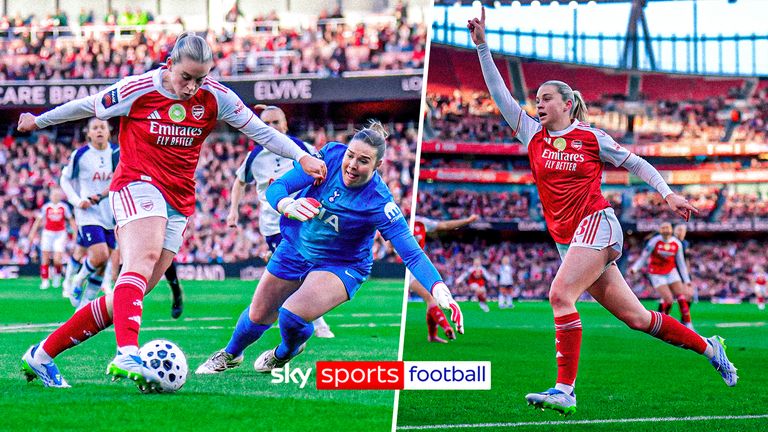
Digital journalist Laura Hunter pens a Sky Sports column which analyses the big talking points from across the WSL; this week looks at a special performance from Alessia Russo in Arsenal's 5-2 north London derby win over Spurs, which prompted the question - what is Russo's best role?
Monday 30 March 2026 15:18, UK
Sky Sports columnist Laura Hunter analyses the big talking points from the latest Women's Super League matches, bringing you closer to the key stories at the heart of the women's game.
Russo's role for Arsenal analysed
Renee Slegers has a problem: Alessia Russo is too good.
Ordinarily, having a player with such versatile distinction is considered only a positive. No doubt Russo's quality adds wonderful vibrancy to Arsenal's attack in any configuration. But where does she actually serve Slegers best?
Is it in the No 10 pocket, playing with her back to goal more often but able to receive between the lines and create consistent overloads? Or is it as a more traditional No 9, who invades space in behind with clever movement and directing running?
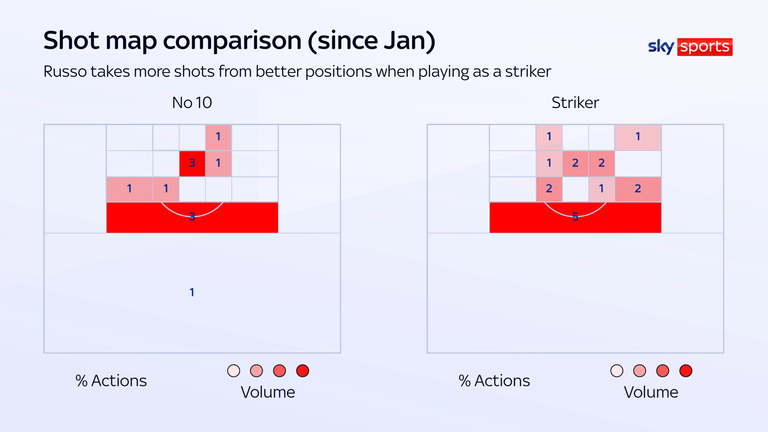
A glance at the heat map below reveals how this duality has actually dragged Russo away from the most dangerous penalty box zones. And yet, few players can play two positions equally well; Russo is a rarity in that regard. Slegers has every right to explore the benefits of that unique luxury.

But at times this season it has also confused the tactical blueprint; not until very recently have Arsenal demonstrated this much fluency and threat in the final third. It's taken two-thirds of the season to figure out the formula for such sustained attacking success.
- Live WSL table | All of this season's WSL highlights
- Got Sky? Watch the WSL on the Sky Sports app 📱
- Not got Sky? Get Sky Sports or stream with no contract on NOW📺
Clearly, Russo's form also plays a significant part. It's no coincidence that Arsenal have peaked in coexistence with some of the England international's most complete performances since she arrived in north London in 2023. In the last week alone Arsenal have scored 13 times; five netted by Russo.
Across the month of March as a whole, 40 per cent of Arsenal's total goals were either scored or assisted by her. In games of a more attritional nature her ability to lead and co-ordinate the press has proved another effective means of getting her side the upper hand.
Does it really matter where she plays, then?
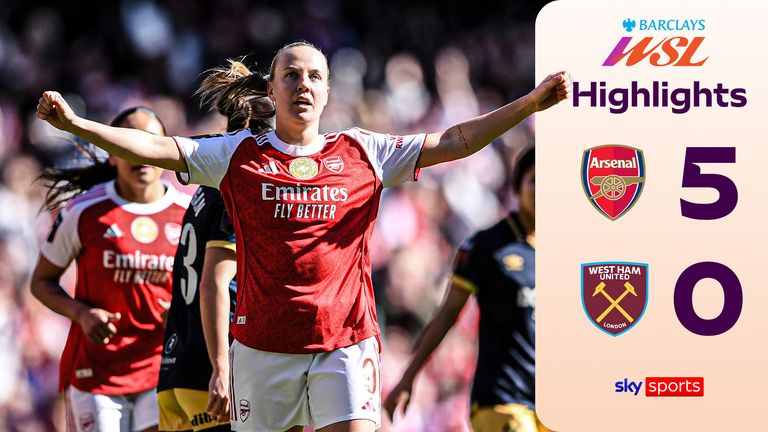
Comparing Russo's role in victory over West Ham with her function against Spurs at the weekend - Arsenal scored five in both - offers interesting insight.
When Russo operates as a No 10, most recently against the Hammers, she tends to drift wide left, used to bounce short, sharp passes and move opposition defenders out of shape. Chloe Kelly in particular thrived on the confusion it caused and the gaps it created, scoring three in a compelling 5-0 win.
The result for Russo is that her arrivals into the box are timed much later, meaning she is often only present for the second phase rather than the first. There is value in that, too, albeit it reduces the space to be effective in zones where she is most dominant and puts more emphasis on the finishing ability of those around her.
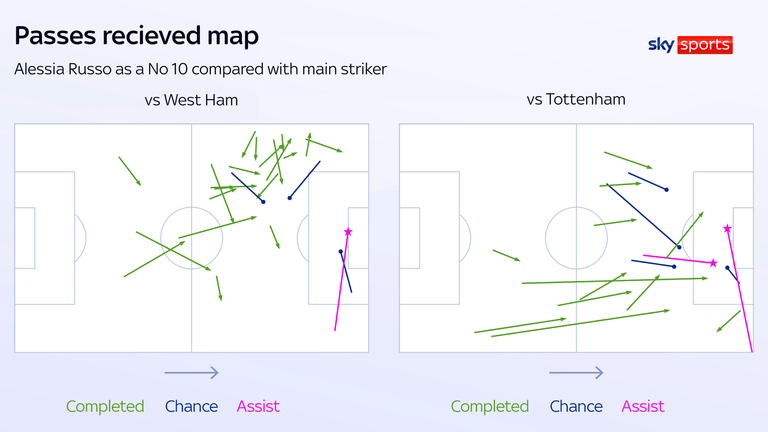
Contrast that with the hat-trick she scored against Spurs, where Arsenal played longer, exploiting the visitors' unusually high line. Russo acted as the focal point to ensure almost all of the passes she received were between the width of the box, with the intention of directly creating a goalscoring action. She scored twice inside the first seven minutes and completed her treble within 27; the first player to score three in this fixture since Vivianne Miedema in 2020.
The graphic below indicates the frequency and positioning of Russo's shots taken from the No 10 position versus out-and-out forward since the turn of the year. It's clear to see the output increase on the right.
A key difference between her and strike partner Stina Blackstenius, who is predominantly used when Russo drops deeper, is big-chance conversion. According to Opta, the pair have generated 13 big chances apiece across this season and Russo has converted seven to her team-mate's three. Incidentally, Arsenal's second most effective chance creator is also Russo.
Perhaps because of the latter there is a temptation to use the 27-year-old as something, by default, she is not. This is why Russo's adaptability is as much of an issue as it is an option for Slegers. The Dutchwoman speaks regularly of her admiration for Russo's "football intelligence". Why pigeonhole a player that can essentially do it all?
But if Saturday's Spurs display taught us anything it is that Russo is at her ruthless best when she is the centrepiece. She deserves the starring role in as many games as the process allows for, even if she humbly declares after games that she's happy "playing anywhere".
Clearly, certain tactical setups call for something different, but very few would not benefit from Russo at the heart of things. That theory will once again be stress tested this week as Arsenal try to make it to the semi-finals of both the Champions League and FA Cup against Chelsea and Brighton respectively.
How Slegers choses to use her No 23 to cause maximum devastation across two separate competitions will be very interesting indeed. It even has the potential to define Arsenal's season.
Read last week's column
Last week's column analysed another standout performance from the WSL's leading scorer Bunny Shaw.