
Australia's football revolution: Eric Abrams on the country's big plans

Sunday 10 July 2016 13:53, UK
Eric Abrams is credited with helping to introduce the youth structure that developed the talents of Belgium's golden generation. Now he's taken on the challenge of harnessing Australia's vast potential. Adam Bate caught up with him to find out more...
Belgium and Australia are very different. You can drive across Belgium in two hours, while Australia has three time zones. Australia's smallest state, Tasmania, is more than twice the size of the European country. It's clear that Eric Abrams, the Belgian charged with bringing his football knowhow Down Under, has a big job on his hands in more ways than one.
Abrams, a genial 59-year-old coach with a passion for youth development, has a well-earned reputation. For more than a decade, he was integral to Belgium's elite player programme - innovations that the country's senior side are now enjoying the benefits of. From Vincent Kompany to Eden Hazard, Abrams has worked with them all.
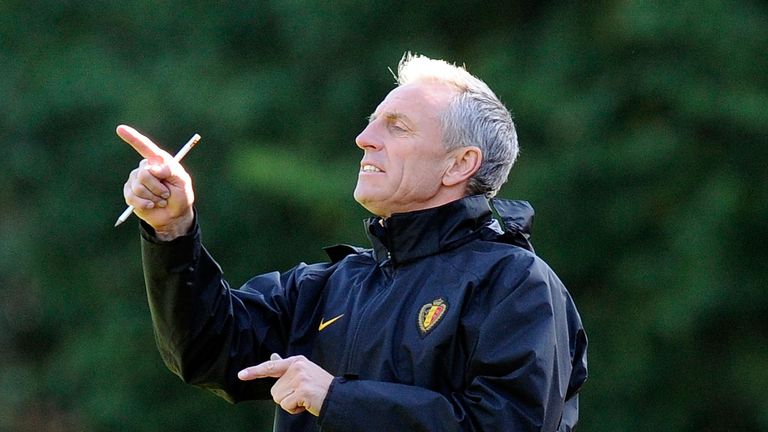
Now he's tasked with "bringing to life" a national football curriculum in Australia with the stated aim of introducing "a defined playing style" in the country. The challenge is huge but so is the potential. "These are exciting times," Abrams tells Sky Sports. "I did my research so I knew what to expect but there are always surprises.
"The country is a big one geographically so it's a huge challenge and it's a different environment in Australia. Copy and pasting doesn't exist but some of the principles of Belgium can be implemented here. All I can conclude is that everyone I've met is open and receptive to my proposals. There's a supportive mind-set.
"I think they acknowledge that they're still not on the same page as the top countries in the world of football. But Australian people are used to being the world's best and I sense strongly the aspiration to do the same thing in football. So from day one until today, I'm still excited about the job and happy in what I'm doing."
What Abrams is doing is attempting to implement and adapt the vision of his predecessor Hans Berger, the man who came up with a written document outlining a long-term plan for Australian football. "What the FFA was really looking for was someone who could bring that to life in practice around the different member federations of Australia," says Abrams.
"In the 18 months I've been in the job, I'm not going to say there have been spectacular changes but you can see the recommendations will have benefits. There are strong, defined targets and that's part of our four-year plan. In fact, it fits perfectly with the FFA's long-term 'whole of football plan' over the next 15 to 20 years."
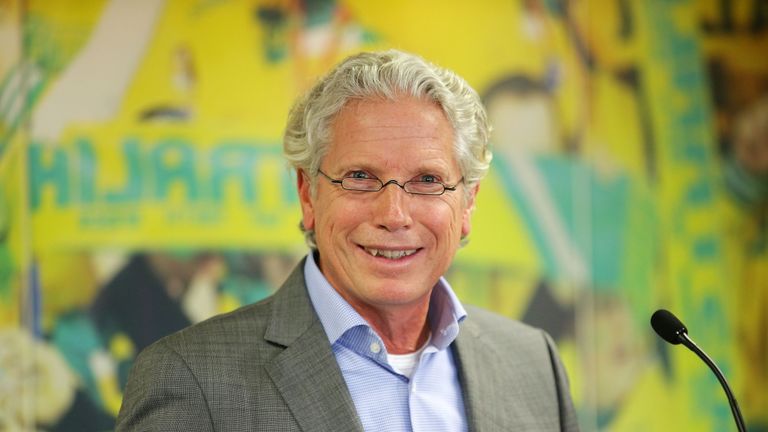
Abrams is full of ideas. "One of my key recommendations having had my experience in Belgium, was that giving young players international experience at a young age is a very important development tool for the players and a good benchmarking tool for the coaches in terms of seeing where your players are at the moment," he says.
"The best example is that if you look at the Belgium squad for Euro 2016, the majority of the players had played for the national team by under-16 level." The problem is that replicating this highly-successful system in a country the size of Australia is fraught with difficulty. "Being so far away from other countries makes it a very expensive exercise," he explains.
"It's easy to say we want more under-15 internationals but if we want to play against good teams, we need to go to Japan or South Korea. That's a flight of more than 10 hours, so it's a costly undertaking. Then you have to judge whether it's good to do this with 15-year-olds. So that's an area where we struggle with the resources we have available."
Even within the country, there are issues. Abrams introduced a full-time coaching programme in Belgium, one that saw the most talented youngsters coached in school in the morning and with their clubs in the evening. "These additional contact hours made our players better," he says. But getting elite youngsters together in Australia is a tricky business. In March, the FFA launched a 'high performance school' in Sydney in order to create a challenging environment for the best players aged between 15 and 18. But it's early days.

"That's what we miss in Australia, because teams like Western City Wanderers, Sydney FC, Perth Glory, Newcastle Emerging Jets and Central Coast Mariners have academies but even in these clubs the young players only train three or four times a week," he adds. "If there's really a desire to compete with the best in the world, then our young players have to train more. It's a must for these age groups if you want to compete, there's no doubt about it.
"The problem is that in centralising the programmes full-time, we excluded a lot of players because the travel was too far - in some territories it's a 10-hour drive from one side of a state to the other. So we introduced pilot part-time programmes in Western Australia and Tasmania in conjunction with the clubs. One or two times a week, the best players train with each other and the rest of the week, they train and play in junior competitions with their clubs.
"At least by having these regional centres and people in charge from the FFA, we have a better control over the talent spread over the country. It's a double function as we have more players in our elite programmes now part-time and more qualified people looking after our elite players. We need to extend our pool of top potential players.
"For example, only five A-League clubs have real, established academies. It was a surprise to me that there are professional clubs in this country with only a senior side and an under-20 side. There were no youth-team programmes established. Perhaps there wasn't the desire from the owners to have these academies. It's a process of changing the mind-set."

For Abrams, that means coaching the coaches. "What we did very well in Belgium is create fantastic coaches thanks to our coach education," he says. "Player development is linked to your quality of coaching. The better the coaches, the better the development. In Australia, the level of coaching is still in a growing phase with a brand new curriculum introduced in 2013. So the FFA has an ambitious plan to increase the pool of high-quality youth coaches.
"With high-quality coaches, you can improve players and turn them into fantastic players. They call it a 'golden generation' in Australia with Tim Cahill and Brett Emerton, but I don't think Belgium is a golden generation. It's a product of very good talent identification and development thanks to opportunities they've received. It's a top generation but there are other generations to come."
With this in mind, Abrams has introduced a system of talent identification. The process will not be left to chance. Coaches will be advised on how to spot the best. "What we did very well in Belgium is that we developed a talent ID pool with six key competencies," he says. "We educated people to look at players this way.

"One of the missing links in Australia was that we didn't have the tools to judge these competencies. When I came in and we got our technical departments together, I asked them to explain to me what they looked for in talented players - they had a hundred different answers for what they looked for in them.
"You need some consistency and so convincing people to use a tool to identify players is essential. You can still have personal ideas, that's not a problem, but there has to be a tool. What I do now when it comes to talent ID is convince them to look at players in another way before judging them. It's about educating people to look for talent in different ways. By creating a consistent approach and a network of scouting experts we will definitely extend Australia's pool of young talent."
These are early days for Australia's revolution but having won the Asian Cup last year, their place at next year's Confederations Cup is already booked and a new team is taking shape. Hopes are high, but Abrams' vision will take somewhat longer to implement. "It's a process," he admits. "There's a way to go but we are making good steps."