Sky Sports looks at ten sporting returns in light of Thierry Henry and Paul Scholes' homecomings.
Sky Sports looks at ten memorable sporting returns in light of Thierry Henry and Paul Scholes' homecomings
One of the best stories sport can produce is a great comeback, when a legend returns to see if they can still compete at the top of their profession.
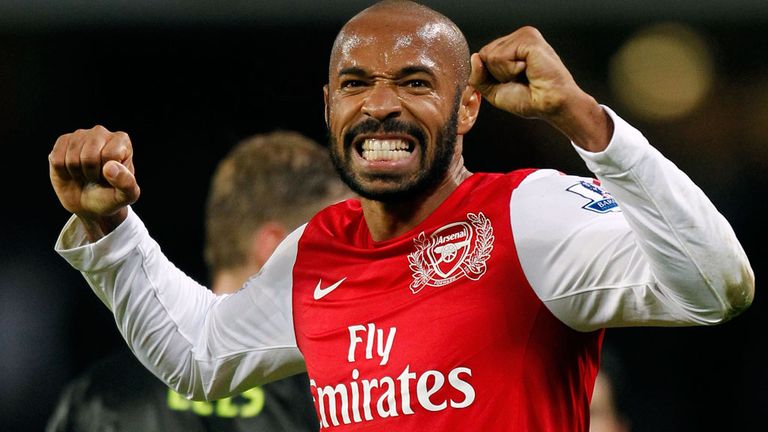
There have been a couple of instances in the January transfer window of former players going back to their old clubs, with Thierry Henry rejoining Arsenal on loan from New York Red Bulls and Paul Scholes coming out of retirement to play for Manchester United.
Whether Henry and Scholes are successful remains to be seen, as there are plenty of examples from history of athletes that have had a fairytale return, and others who whose dreams of a comeback have turned into a nightmare.
But it is always fascinating to find out how somebody will fare, and here
Sky Sports recounts ten of the most memorable tales.
Lance Armstrong
One of the most inspirational stories in sport, Armstrong battled back from stage three testicular cancer to re-establish himself at the top of the cycling world. Armstrong, then 25, was diagnosed with cancer in 1996 that had already spread to his lungs, abdomen and brain. The prognosis was not good but, after successful chemotherapy, he returned to training in 1998. One year later, he won the Tour de France and he went on to retain the title for seven consecutive years. He then took some time off, but he made a further comeback in 2009 - finishing third - to raise further awareness of cancer.
Michael Jordan
Widely regarded as the greatest basketball player of all time, Jordan's success with the Chicago Bulls made him a global brand. However, he announced his retirement at 30 in 1993 after his father was murdered and he grew tired of his celebrity status. He then stunned the world by announcing he was pursuing his father's dream to see his son become a professional baseball player, and he had an unspectacular stint in minor leagues with the Birmingham Barons. But in 1995, he returned to the Bulls and, after a disappointing false start, he trained hard ahead of his first full season back and returned to the peak of the game - including an emotional NBA championship victory on Father's Day in 1996.
George Foreman
He may be as well known for his grills as his sporting career these days, but Foreman remains one of the greatest boxers the world has ever seen. He stopped fighting in 1977 but, more than that, became a born-again Christian and an ordained minister. Quite the surprise, then, when he re-entered the ring in 1987 at 38 years old, looking a long way away from fighting fit. However, he was still spirited enough and, after several years of solid victories and narrow defeats to the likes of Evander Holyfield and Tommy Morrison, he did something quite incredible in 1994. At the age of 45, he knocked out Michael Moorer to become the heavyweight champion of the world, reclaiming his title after a 20-year gap.
Sugar Ray Leonard
Boxing legend Sugar Ray was a man with a heavy addiction to comebacks. After winning an Olympic gold at 20 years old in 1976, Leonard said his dream was fulfilled and hung up his gloves, planning to go back to college. Not long afterwards, he was back in business as a pro and he won his first title in 1979. In 1982, he retired again. In 1983, he was back. In 1984, he retired again. In 1986, he made a comeback for a one-off fight with Marvin Hagler, which he won on points. In 1988, he came back again and, after several fights, he finally retired in 1991. Finally retired, that is, until 1997, when he fought Hector Camacho and lost, before announcing his retirement.
Monica Seles
Seles was a precocious talent upon her arrival into the world of tennis. At 16 years and six months old, she became the youngest female singles champion at the French Open in 1990 when she beat Steffi Graf in the final. In 1991, she retained the title as well as adding the Australian Open and US Open. The following year, she retained those trophies. Things seemed to be going well at the start of 1993, too, when she won the Australian Open for a third successive time, but she was stabbed between her shoulder blades in full view of the court in April by a German spectator during a match in Hamburg. She took two years off despite a relatively swift recovery from the physical damage, and - while she never fully recovered her previous form - she became a Grand Slam champion again in 2006 when she won the Australian Open for the fourth time.
Kim Clijsters
Clijsters sealed the mother of all comebacks in 2009 when she came out of retirement to take her place back at the very top of world tennis. There had been a lot of sadness when the Belgian decided to hang up her racket two years earlier to have a family, with injury also bringing forward her plans to stop playing. However, she got a taste for it again when playing an exhibition event at Wimbledon under the new roof and, with the women's game in need of a lift, Clijsters provided it by sensationally winning the US Open. Her remarkable run of success has since continued with two further Grand Slam titles, and she will be targeting more glory in 2012.
Michael Schumacher
Schumacher signed off in 2006 with what he described as a 'class finale', having bounced back from a puncture after nine laps in Brazil that saw him drop to 19th, to finish fourth. A motor racing legend, the German's manager, Willi Weber, said he was '200 per cent' sure he would not risk his reputation in an unfamiliar car when talk came up of the now 40-year-old stepping in for Ferrari driver Felipe Massa after his serious injury at the 2009 Hungarian Grand Prix. 'Schumi' did want to return, though, and after being prevented by a neck injury at the first attempt he signed for Mercedes in 2010. While his comeback has not yielded the glittering honours of his earlier career, he has still shown he can be competitive.
Robbie Fowler
Fowler sealed a remarkable return to Liverpool in January 2006, much to the delight of supporters who had waved farewell to the Kop favourite almost five years earlier. A striker with predatory instincts, Fowler accomplished great things during his first stint at the club with his sharp movement and precise finishing marking him out as one of the best in the business. But after falling down the pecking order he left for Leeds in 2001 and then linked up with Manchester City two years later. A return to Anfield appeared unthinkable but in January 2006 Rafa Benitez pulled off one of his most popular pieces of business to bring Fowler back on a free transfer. Now the wrong side of 30, he never quite hit the heights of his previous spell at Liverpool but still connected with the fans.
Sol Campbell
Setting the trend for Jens Lehmann last year and Henry in 2012, Campbell was given the opportunity to train with the Gunners in 2010 and succeeded in earning a short-term contract at Emirates Stadium. The defender, who had just turned 35, had already developed a habit for making surprise transfers after joining Arsenal the first time from bitter rivals Tottenham and then later moving to League Two outfit Notts County. His Meadow Lane adventure lasted just a single game before he walked out and Arsene Wenger took the decision to snap him up as a free agent, which turned out to be a great bit of business. With first-choice centre-backs Thomas Vermaelen and William Gallas suffering injuries, Campbell often found himself starting and was an assured figure in the heart of the defence until leaving for Newcastle over the summer.
Ian Thorpe
Not quite the same as the others in this list as we still do not yet know how Thorpe will fare in his bid for glory at the London Olympics, but the swimmer's announcement that he wanted to get back in the pool provided one of the big stories of 2011. Judging by his early results he would still appear to be several seconds off the pace, but the 'Thorpedo' was such a teenage prodigy that it would be unwise to ever write off the now 29-year-old, even after so long away from the water.