
Look to the future
Monday 12 October 2020 10:42, UK
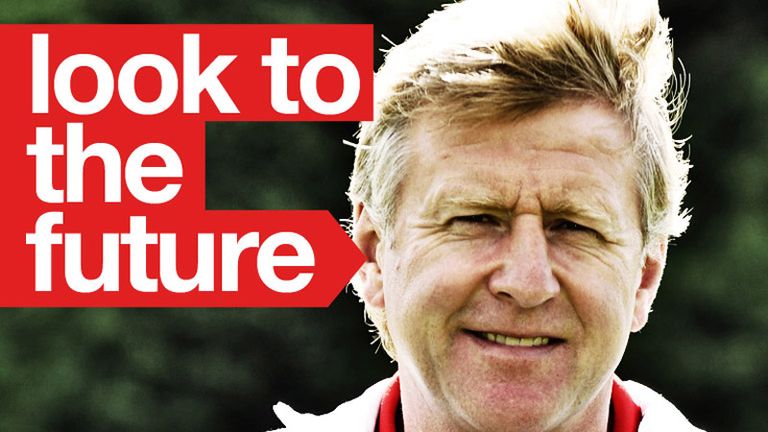
As part of our Look to the Future series, Graeme Bailey investigates Middlesbrough's academy.
As part of our Look to the Future series, Graeme Bailey travelled to Middlesbrough Football Club - the home of one of England and Europe's most productive academies.
Upon arriving on Teesside we sat down with the head of Boro's academy Dave Parnaby, one of the most respected youth coaches anywhere in the country.
Many people in the game are calling for major changes from grassroots up to the full England team.
Parnaby has led the Boro academy from its inception 13 years ago and he is more than happy with the model they have developed for their youth system.
"I keep repeating myself with this, our model that we developed over 13 years ago was based on the initial charter for quality, which was trying to produce coaching opportunities for local boys," Parnaby said.
"The chairman's favourite saying is that we want to give Teesside and the surrounding areas, its children, the chance to become professional sportsmen.
"Our programme is based on solid recruitment - led by Ron Bone. There is an army of scouts looking at school games, local leagues and that is backed up by what we think is a very good coaching programme.
"And then as they develop through that programme we begin a scholarship programme which has proved successful. That is our model and that remains the same."
Parnaby is wary of the new proposals for the academy system in this country, but the Elite Player Performance Plan has been finalised and is due to be ratified at the Premier League AGM in June.
This will see many changes including the scrapping of reserve team football for an Under 21 league, whilst an independent commission will be set up to grade the systems - something which Parnaby is unsure about.
"I think our model is being threatened by new developments in the game, the proposals from the Premier League is to move to classifications and we all wait with baited breath how that will be structured," he continued.
Parnaby has always been an advocate of the FA Charter for quality which was introduced by Howard Wilkinson.
Wilkinson's document saw academies introduced, which also meant clubs could only recruit from their own vicinity. Although, Parnaby feels that bringing players into professional ranks before the age of 12 is a mistake.
"I have always said that to travel the length and breadth of the country with nine, 10 and 11-year-olds, in my opinion, is not conducive to good learning - I think it is hard.
"I have always stated that there needs to be some adjustment. My regional proposal was that we should be coaching that age group but not necessarily guiding them into the structured games.
"Prior to 1998, English schools football ran the development side and the boys were allowed to train with professional clubs, and that all changed.
"I was on the schools side of the fence as a national team manager, and I knew there would be changes but I firmly believe the charter was a good document, one that would take the game forward and produce successful English teams. We are 13 years on now and I still think it is a good document.
"I think people are now re-visiting the charter and tinkering with it, the classification system is linked in with this.
"We are in a state of change at the moment, the FA are putting forward a coaching strategy which will put forward the coaching levels and standards and that should dovetail with the Premier League plans of classification."
Part of the future FA plans will see St George's Park at Burton developed as a coaching centre of excellence and Parnaby feels that can only be a good thing for the game.
"From a national point of view, from the FA point of view, it is to develop national players and squads and coaching of the highest calibre. I think that is the idea behind St George's. Most of the European countries have these coaching centres."
Lilleshall was the previous national youth centre which was disbanded in the 1990s, but Parnaby feels that it should have been persevered with.
"The national school was a model that I thought was just starting to be a successful model," he admitted.
"I had experience of my own son Stuart being in attendance and I think when Howard Wilkinson put his charter plans forward for academies in 1998, Lilleshall was put forward as the model.
"I think Howard envisaged a small amount of Elite academies with the idea of residential boys, with lots of research and development, and I think the recruitment was becoming better and better, but the responsibility was taken away and handed to the clubs. Instead of a small number of Elite academies suddenly 40 popped up, with the proviso by August 2001 that all the facilities would be in place and it is sad to say that in 2011 some of the facilities are still not there."
The charter also meant clubs like Manchester United could no longer have centres within another region and although Parnaby admits this has been a benefit to Boro, he insists they still suffer geographically.
"Pre 1998 there was Sheffield Wednesday in Gateshead, Man United had a centre of excellent in Houghton Le Spring, but the change localised it - and that opened up things, but again if you look at population density - the Pennines, Cleveland Hills and the North Sea, we are pretty much geographically disadvantaged.
"But our grassroots programmes in the North East are very, very strong and that is a protected area for Sunderland, Newcastle and ourselves. Although we look for the same type of players, we have a good relationship with each other and we are lucky in that respect. If you go to Manchester, Leeds or Sheffield the choice for the boys is much greater."
Middlesbrough are providing a host of players for the England youth programme, and three members of Under 17 squad which won the European championship last summer.
Parnaby admits that Boro's academy is well placed because of the progress it has made in continuing to provide for the national squad, but the Premier League remains the major driving force in the English game.
"It depends on how each club approaches the programme, is the balance between the national infrastructure of the league comparable to the success of the national team?
"England is very close to my heart, I desperately want them to do well.
"I think what has been created with the Premier League is a massive commercial juggernaut, rolling along creating this wealth and the management of that has been fantastic and whoever is driving it isn't going to sacrifice that for the benefit of the English national team.
"But then the argument is where are all the up-and-coming young English players coming from, at one point does that cease? It is another step forward from the charter to improve the quality and technical levels. I strongly believe there are good programmes throughout the country and we have been fortunate at Middlesbrough where we have been able to give the players an opportunity."

On Middlesbrough specifically, their academy has flourished in the past ten years in providing a host of talent now plying their trade in the Premier League, with the likes of Stewart Downing, Adam Johnson, Lee Cattermole, James Morrison and Ross Turnbull amongst a host of former Boro stars plying their trade in the top-flight.
But for the first time in more than a decade, Boro's need for young players has never been greater with the club sinking to the lower reaches of the Championship.
"Are we in greater need now as a club? People sometimes say that the academy is more important now than it ever has been, but we just keep doing the same job.
"We are lucky that we have a chairman, chief executive and managers, who I have been fortunate to work with, that see it as being important. So whether its importance changes because of the status of the first team I am not so sure.
"Tony Mowbray and Mark Venus have joined the club now and they are two very impressive people and they bring in a coaching philosophy that is very close to the academy's heart, playing through the three thirds of the pitch. Passing being very important and individual responsibility being very important. I will never steer away from the academy being a support mechanism for the club, our primary concern is to produce first-team players.
"I am not sure what is right and what is wrong. I just know what we do here with the understanding of the manager and chairman has proved to be pretty successful.
"We are here to support, if the needs of the club are that we need to sell to progress and make sure the first-team are able to go into the transfer market, I am quite comfortable with that because the success of the first-team is the bottom line in any club.
"We need to make sure there is a good feeling, to make sure everyone is kept in employment, not just us but the programme sellers, the stadium staff. Without the first-team success all those people are threatened, so if it means Danny Graham moves on, David Wheater moves on, Adam Johnson and Stewart Downing all move on to benefit the club at that particular time in their development then so be it.
"I don't think Steve Gibson has made many wrong turns in his guardianship of Middlesbrough Football Club. He will make those decisions and sometimes it is needs must and that is where we are at the moment."
Parnaby has been in charge for over a decade and he admits continuity has played a crucial part in the success.
"Continuity is key, that is right - that is key to the whole process," he said.
"You have to give it time and be patient, some academies, perhaps not through choice, have decided to change their structure and in some cases have had six, seven, even eight managers in as many years and I don't think that constant change is good for development."
He admits that every player has to be allowed to develop in his own way, which is another strength of Boro's.
"Every individual player presents their own challenges to the staff and themselves. We simply are there to support them and point them in the right direction, we have an ideal model but very rarely does that come to fruition.
"All of the boys that have been successful have all had social issues at some point that we need to deal with.
"Certain things drop into place in their development, and we are keen to experiment and track them. We have experience of boys going out of the programme and then coming back later and developing into first team players, Jonathan Grounds did that, Cameron Park did that."
With good young players also comes the task of dealing with agents, and although Parnaby is no fan he accepts they are not going anywhere.
"It is part of the modern game, something we have to live with and each of the clubs deal with it in their own way," he continued.
"We firmly believe that we offer sound advice in every sense of the word and hopefully the players and parents can trust us fully. They do need some help and sometimes it goes beyond mum and dad, and that is the stage they need advice - the agent thing has been bubbling along for a long time.
"I think they are well looked after here, we try to give them sound advice and my answer to all the parents and boys is that it is in our interests for them to play for the first team."
Boro's recent success at youth level was highlighted by their Youth Cup final appearances in 2003 and 2004, the latter of which they won.
But Parnaby does not see it as being essential to his plans, adding: "In some ways the Youth Cup becomes a distraction.
"It is their opportunity to go into the main stadia and taste the dressing room of the senior professional which is a step they have to take, but our every day programme is our bread and butter, and that is where our success comes from.