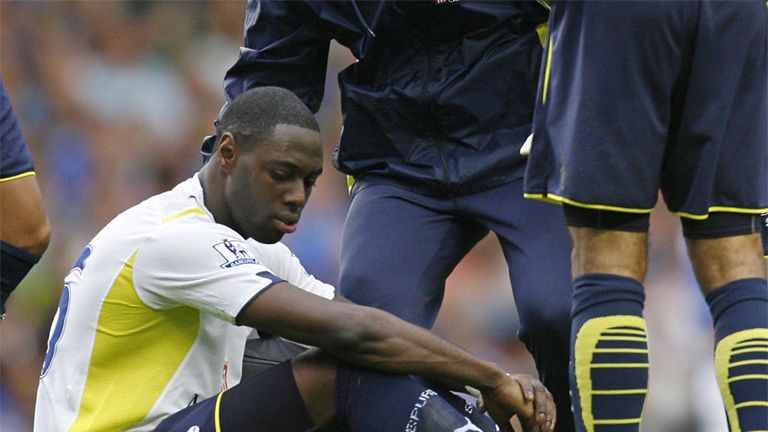
As he heads for the operating table, Nicky Forster looks at the constant balancing act a pro faces.
Playing through the barrier is part and parcel of being a pro
Deciding on this week's blog subject was unfortunately all too easy as sadly the bane of any footballer's life, injury, comes too close to home for me once again. On Tuesday I travel to Leicester to undergo an operation on my groin which thankfully should only keep me out for 10 days.
This is an on-going problem that has required a simple surgical technique for some time but due to the heavy log of games I have had to postpone it up until now. In my case it's fair to say that I have still been able to function at almost full capacity and get through both training and games.
Playing through an element of pain or discomfort is a normal event for a professional footballer and yet its extent remains an unknown fact to many outside the game. It is commonplace for everyone of all ages to get up with the usual morning aches and pains but this is totally different to having to perform at an elite level with such niggles.
There are different types of pain too; pain from working at your maximum heart rate is normal and I for one enjoy taking my body to the limits, to challenge myself, and see how far I can push myself, but I'm not talking about this.
There is a fine line between playing while hurt and playing when injured, and only the player can recognise it. Anti-inflammatories are often used to mask minor injuries and keep a player out on the training field and it's clear that some have a higher tolerance than others. But in truth, players never want to give up their place while in the team and therefore that struggle between 'pain and play' interrogates us regularly.
In an ideal world we would only take to the pitch when 100 per cent fit but that simply can't be the case. Physical pain is so much a part of competitive sport the question should be asked: what pain is worth?
Have you ever wondered why in big games teams are almost always at full-strength!
Debilitating
It has long been assumed that coping with pain is essential to the toughness required for success, but in reality pain is the body's way of telling us something is wrong.
Ask a player what is the worst thing about being a professional footballer is and the vast majority will say injury. From a player's perspective most injuries are instantly debilitating; by that I mean not brought on over a period of time, so the transition from fit and playing, to injured and immobile, is slightly surreal and obviously unexpected.
This turnaround from active to inactive is tough to accept on a physical level but it is how a player copes with the mental side of injury that is more crucial. Matchdays are especially difficult as it's when a fit player performs and an injured one hangs about to watch.
The first question any player asks after an initial examination from the physio is "how long?". This obsession with the question of when one can return to play puts all involved under pressure, none more so than the player himself.
It is fair to say that there is an element of luck involved in both avoiding and acquiring injuries, and it too seems to be the case that certain players are predisposed to specific injuries, such as the case with Ledley King and his recurring knee troubles.
I myself seem to only endure long-term injuries as a result of a twist or rotation usually resulting in surgery, whereas I have never really been troubled by muscular pulls or strains.
With a catalogue of most injuries ever invented under my belt during my life as a pro, and now relying on the capable abilities of club physio Mike Preston and rehab specialist Al Lane to prolong my playing days, I look back and feel a sense of fortune to have survived the length that I have.
I'm just not sure that I have got another 700 games left in me... but I'll give it a good go!