England Women manager Sarina Wiegman welcomes new maternity policy in Women's Super League
"We waited with our wish to have kids because we wanted to play football. And now...you have a choice," England manager Sarina Wiegman welcomes policy changes to contracts in women's game relating to maternity provision; watch Inside the WSL on Sky Sports Premier League at 6pm on Thursday
Thursday 3 February 2022 11:17, UK
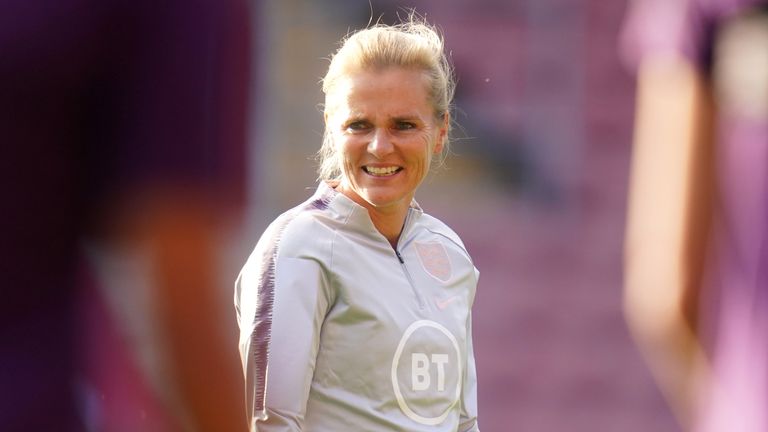
England manager Sarina Wiegman has welcomed the new maternity policy that will apply to the Women's Super League and Championship.
The Football Association on Tuesday announced it had reached an agreement with the Professional Footballers' Association, coming into effect from next season, regarding improvements for players in the top two tiers of the English women's game.
That includes an enhanced maternity policy, and Wiegman told Sky Sports: "I think in the time I played, lots of women quit football because there was no perspective and that's what I think is so beautiful now - there is perspective.
"We waited with our wish to have kids because we wanted to play football. And now...you have a choice, you know you can come back and you have the support and you don't have to be worried too much about things.
"So I think that's really good and it's also part of growing the development of the women's game. I'm really happy with this development."
- PFA outlines reforms for 'absolute parity' for female players
- Women's Super League news | Fixtures | Table
- Watch WSL with a NOW pass | Get Sky Sports
Under the new policy, players going on maternity leave will be entitled to 14 weeks at 100 per cent of their regular salary and any additional remuneration, before reverting to the applicable statutory rate.
Previously, any enhancements had been at a club's discretion, with the standard minimum being statutory maternity pay.
Even then, a player had to have been with a club for a minimum of 26 weeks to qualify - under the new policy, there is no minimum qualifying period.
The FA said the policy would form part of a club's licensing criteria and must be offered to players to ensure those criteria are met, and Wiegman believes it's another sign of the increasing professionalism in the women's game.
"Now you feel the women's game is growing so much and is now really professional, when I played it was not very professional, I had a job alongside playing football," she added.
"It's really nice to be part of that journey and to see where I started as a six-year-old to where I am now.
"It's great to be a part of it, to see the growth, and how now you can make a living out of football doing. It's great to be able to train every day, have great facilities, and have great coaches, all the things that are necessary and benefit development."
PFA reforms continue search for 'absolute parity'
The PFA has warned there is much work to be done to achieve parity between female players and their male counterparts after outlining pioneering contract reforms in the women's game on Tuesday.
After 16 months of negotiations with The Football Association, the PFA has secured 'significant policy changes' that could apply to players at all 24 clubs across the Women's Super League and Women's Championship.
The reforms see the introduction of a comprehensive Family Leave Policy, which provides players with additional protection if they have children during their career, a provision which was previously at the discretion of clubs.
The disparity in contractual rights between male and female players in relation to injury, illness, and the termination period of contracts has been addressed by improvements to the Standard WSL contract.