
Artificial turf at Women's World Cup still causing a stir
Thursday 4 June 2015 09:21, UK

By Sky Sports News HQ reporter Geraint Hughes, in Canada
If FIFA didn't quite have enough to concern themselves with right now, in a few days time they have a World Cup to oversee and for the very first time, a senior World Cup that will be played entirely on artificial surfaces.
And because of that, it's not universally popular. Last year, a group of players, among them USA star Abby Wambach filed a lawsuit claiming gender discrimination - why do the men play on grass at Brazil 2014, yet women at their World Cup play on artificial turf?
In January, the lawsuit was dropped as all parties involved including FIFA and Canada 2015 organisers sorted their differences out.
However, players are still voicing concerns about the artificial pitches, the main concern being injury. According to FIFA's Johannes Holzmuller, there is no evidence that there are more injuries caused by playing on artificial turf as opposed to natural grass.
A number of England players I spoke with during their successful Cyprus Cup campaign earlier this year told me the surfaces are now much better, but they do wonder whether studs do get stuck more easily and as a result cause non-impact injuries such as knee ligament damage - the terrible trio, as it's known, of ACL, MCL and meniscus injuries.

They (England players) do wonder whether studs do get stuck more easily and as a result cause non-impact injuries such as knee ligament damage.
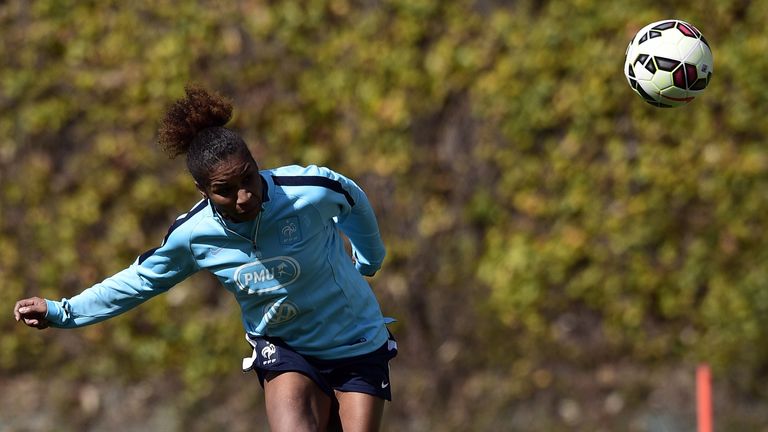
France's Laura Georges doesn't like the artificial turf at all.
She told Sky Sports News HQ: "I like the grass, I don't like turf although it's what we have to play on."
So why has Canada 2015 gone for six venues all with artificial surfaces?
Don Hardman, Chief Stadia Officer for the tournament, told SSN HQ: "We bid from the beginning with artificial turf. We had to take into account usage, the stadiums we wanted to use, community use and in Canada, the weather is a big factor."
What about those injuries though? It's knee injuries that concern the players most.
As Ryan Hill, a sports physio from the Allan MacGavin Medical Practice in Vancouver explained, a non-impact injury through a twist or sharp turn can be serious.
He said: "An ACL, MCL or a tear of the meniscus is painful. If it's serious, it will require surgery and you are looking at anywhere between six months to over a year to recover.
"It's difficult to explain why the players are concerned. Statistical evidence doesn't prove beyond doubt that artificial turf is worse than grass, but anecdotally the players say it is."
There will be 52 matches played at the Women's World Cup over the next month, but artificial turf isn't set to be used at future World Cups.
As Georges reminded all with a smile on her face, when her country hosts the next Women's World Cup, it will all be played on grass.