Sports Analysis Secrets
Sports Analysis Secrets: Author Keith Elliott reveals some of the hidden keys to sporting success
Friday 29 August 2014 15:38, UK

Beyond being two of the Premier League's greatest ever strikers, what is the link between Manchester United's Wayne Rooney and ex-Liverpool star Luis Suarez?
One of the more unlikely answers - but perhaps the most intriguing - is that both men produced their hottest run of form following the birth of their first sons.
Rooney responded to the arrival of new son Kai in November 2009 by finishing that season with 26 league goals, 33 in all, and being named PFA Player of the Year. Suarez's boy, Benjamin, came along in September 2013 and proud dad Luis (who, just days later, lifted his shirt to reveal a 'Welcome Benja' message after scoring in his first game back from a ban) went on to have the season of his life, banging in 31 league goals and winning awards galore.
The name given to the theory behind this surge in performance is 'The Nappy Factor' and is one of a host of fascinating mental factors discussed in a new book called 'Sports Analysis Secrets' by Keith Elliott.
Keith first wrote about the idea of the 'Nappy Factor' back in the 1990s, originally applying it to golfers and using it as a basis for when to back them to win, and since then there have been countless examples of sporting stars being energised by the patter of tiny feet.
Why does it happen? Keith has several theories and although the notion of having extra incentive to provide for new offspring may not apply to money-laden Premier League footballers, the other ideas certainly make sense for Rooney and Suarez - the wish to make the child proud, being given a wider sense of perspective and showing greater maturity.
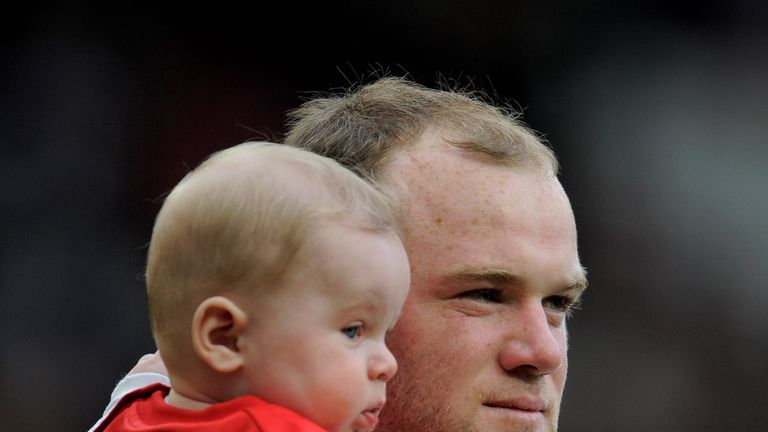
The idea has had academic backing too with a study of 1,200 men over a 25-year period showing that salaries rise by nearly 5% every time they have a child, with the ‘fatherhood premium’ being far greater for a son than a daughter. Keith surmises that most men want a boy and sometimes the feeling of relief when one is born as the second or third child acts as a more powerful motivator than if it had been the first.
Suarez's incredible final campaign for Liverpool was actually inspired by another factor, writes Keith.
Chapter 9 in 'Sports Analysis Secrets' is 'The Comeback Trail' and explains how a sportsman/woman can bounce back from a poor spell to hit the heights again.
Many problems can create the background for a comeback - marriage and family woes, poor lifestyle choices, difficulties with coaches or agents, contract and disciplinary issures - but if these are overcome, careers can flourish again.
Suarez's stock was way down in the summer of 2013 as he served out a ban for biting Branislav Ivanovic and publically stated he wanted to leave Liverpool but as Keith explains: "Once he realised that Liverpool would not allow him to leave he accepted the situation as he wanted to play, and so he became a highly motivated player who owed the club, the manager and the fans so much for the way they had supported him through 'his difficulties’."
With the combined forces of 'The Nappy Factor' and 'The Comeback Trail', Suarez was ripe to have a massive season and so it proved.
The Uruguayan also had the assistance of a mental guru to help him through the dark times. Dr Steve Peters has had a hugely positive effect on the careers of many at Anfield such as Suarez and Steven Gerrard and also the now blooming Liverpool youngsters such as Raheem Sterling and Jordan Henderson.
'The importance of Mental skills' is actually the opening chapter of 'Sports Analysis Secrets' and highlights how the use of sports pyscholog