
Hooking good
Wednesday 9 April 2008 16:39, UK
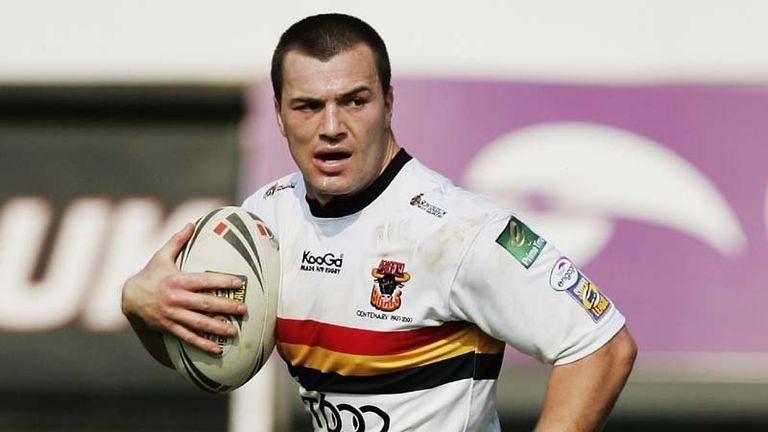
Phil Clarke looks at the importance of hookers - and second-hookers - in the ever evolving game of rugby league.
Last week's game at Huddersfield threw up an interesting debate on the importance of the hooker in rugby league. The Giants played the game with two, while Catalans opted for just one - and coincidentally Aaron Gorrell played the full 80 minutes and still had enough energy for the match-saving tackle on Luke Robinson in the last minute. It's probably the hottest topic of debate amongst coaches, chief executives and club owners as they deliberate over their recruitment in the salary cap age. Firstly, its important to redefine the term from hooker to acting half-back. The players' role in the scrum is negligible and until the scrums become a contest again, the word hooking is redundant. His most important task is to stand behind the play-the-ball and direct his team's attack. Prior to the introduction of the 10m rule (i.e. the defensive team were only taken back 5m from the play-the-ball prior to 1992), the hooker used to serve the ball to the first receiver, who was the team's decision-maker. The fact that the defensive line are now further back allows the acting half-back the chance to dictate play. If he can keep the two marker defenders interested, or if one of those is on the floor, he and his team-mates can advance rapidly down the middle of the field. The hot spot is now around the play-the-ball area and teams want to have their sharpest eyes, fastest feet and best hands on the ball as soon as it is rolled back into play.Redefine
St Helens redefined the way the game was played with Keiron Cunningham and James Roby, starting a match with one then introducing the other just as the opposition begin to tire. Their success over the last few years is primarily because they had the best acting-half-back. The demands on the men who fulfil this role for 80 minutes are massive and they are invariably the fittest men in the team. They could go to a fitness test for the Royal Marines or Paras and still come back fresh enough to play the second half! In addition to all the running that they do, they end up being one of their team's top tacklers, averaging 25-30 tackles per match, on the biggest strongest men that the opposition have to throw at them down the middle of the field. If you bare in mind that they need to be alert at every single play-the-ball when their team is in possession (about 150 times in your average Super League game) and in less than a second, scan their opponents' defensive line to spot a weakness or target area, you start to appreciate why the position has taken on such importance and why so many coaches use two different men over the course of the game. It's perhaps impossible to state which is the most important position in a rugby league team. If you've ever read a book about American Football called Blindside, you will realise that the quarterback is not always viewed as the top priority. The man who plays as left tackle is responsible for getting to the blindside of a right-handed quarterback and putting him under pressure. He can earn more money than a quarterback. Similarly in rugby union it can be the prop who is the highest-paid member of the team, not the goal-kicking stand-off. Dominance at the scrum is seen as vital to success in 15-a-side rugby.Shift
The shift of importance to the acting half-back in the 13-man game makes it the most prized position and therefore the highest paid. When I was a young boy everybody wanted to play stand-off or loose forward, they were seen as the glamour positions, but that's all changed. Rugby league will continue to evolve and other positions may become more important in the future if the style of the game or the rules change. Can anybody honestly say that they could foresee Iestyn Harris playing hooker for Bradford when he won the Man of Steel award for Leeds as a full-back 10 years ago? Each club has its different priorities and resources and you could say that St Helens were rather lucky to have two local lads born in the same era good enough to play internationally. The Cunningham-Roby double act has created a paradigm shift with the new belief system stating that every team needs two good hookers (or acting half-backs). We are also seeing a migration of many scrum-halves into the second so-called hooker's role. There is a conundrum for clubs who go down this route. Do they get the best out of two players who only play for 40 minutes? Do these players improve and feel satisfied with their game time? Can one of them play in the back row at times? (One Super League team used one hooker for 53 minutes last Saturday, and the other for just 27!) It is fascinating to contemplate how Leeds will accommodate both Matt Diskin and Danny Buderus in 2009. I suspect that Diskin will sometimes play in the back row. St Helens meanwhile have loaned their third hooker, Scott Moore, out to Castleford. Having more than one hooker is a luxury some teams can already afford. A few years down the line, it might be a commodity they cannot afford to be without...Now to this week's questions...
Email Phil Clarke: mailto:skysportsclub@bskyb.com or click here to send him a question... GOLDEN POINT OF VIEWHi Phil, Just wanted to ask whether you think it would be a good idea to take a leaf out the aussies book and have golden point! With the 2 draws over last weekend, and both teams coming away disappointed, golden point would create some excitement and talking point for the spectators. Vicky, from Wigan. PHIL REPLIES: It's a great question Vicky, and I'm tempted to discuss this in great length with a group of players, coaches, medical experts, administrators, broadcasting partners and fans. There was a game in the NRL last week between Cronulla and St George that went to golden point. For those of you who aren't aware of the rules the teams play a maximum of two five-minute periods and the first team to score wins the match. In that particular game Cronulla were awarded a penalty after 60 seconds which they converted to win. I am in favour of discussing this and see more positives than negatives. The excitement created for supporters is brilliant and beats the tension and drama of any reality TV show. My suggestion would be to award both teams a point at the end of 80 minutes if the scores are level, with an extra point going to the side that comes up with the first score in that extra time period. If neither team is able to break the deadlock in that 10-minute period, the game remains a draw. I'd be fascinated to hear what your thoughts are out there. Do the majority of you think this is a good idea? Or would you prefer to stick with things the way they are? Let us know your thoughts... THE BROTHERS BURGESS
Hi Phil, Sam Burgess of Bradford Bulls has already shown in his short career what a quality young players he is - already having made an impact on the international scene. And now young Luke Burgess is also starting to look a great prospect at the Rhinos; since being given a chance in the first team. Could you envisage a scenario where the two of them play for England or Great Britain together? Are you aware of any previous brothers both playing prop forward together at international level? Steve, Leeds. PHIL REPLIES: It's quite amazing how many brothers have played for Great Britain in the last few years and here are just a few that I can remember: Bill and Jim Drake from Hull in the 1960's; Don and Neil Fox from Wakefield in the 1960's; Alan and John Bates from Dewsbury in the 1970's; Dave and Eric Chisnall from St Helens in the 1970's; David and Alan Redfearn from Bradford in the 1970's; Keith and Kevin Raine from Leeds in the 1980's. The only brothers to actually play for Britain in the same match together were Les and Peter Gorley against France in 1981 - they came from Workington originally - and David and Paul Hulme against Australia in the third Test in Sydney in 1988 and again, I think, against New Zeland in 1989 - both were from Widnes. However neither the Gorleys not the Hulmes occupied the two front row positions and it would be a first if both Sam and Luke both played prop. Before any Black and White supporters from Hull write in, I know that the Drakes both played prop for Great Britain, but never in the same match. The Burgesses have two younger brothers who have both signed for Bradford as well. Imagine if all four played for England in the same game? The commentary could go something like this: "Burgess passes to Burgess, who offloads to Burgess, who kicks through for Burgess to score!" Email Phil Clarke: mailto:skysportsclub@bskyb.com or click here to send him a question...