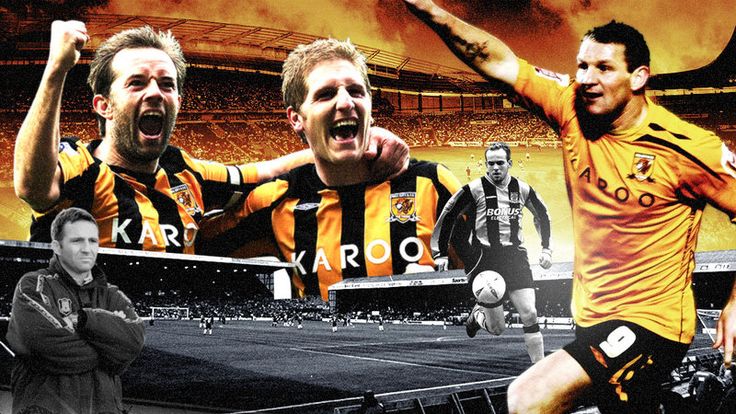
Hull City travelled to Man Utd 10 years after they were bottom of the League. We look at their remarkable rise.
This weekend Hull City travel to Manchester United sitting pretty above the reigning Premier League champions. A decade ago they found themselves rock bottom of the Football League. Skysports.com's Chris Harvey was sports editor of the Hull Daily Mail during those troubled times and looks back at how the club survived those dark days.
I have listened to many interviews given by Hull City manager Phil Brown since the Tigers' surprise promotion to the Premier League.
In each, one word crops up consistently to describe the club's opening to the season - fairytale. And if not fairytale, then it's dream, as in dream start, being in dreamland or simply living the dream.
I have another word to add to that list - miracle.
Now it may not be miraculous that Brown's men have 20 points at this stage of the season, although it comes pretty close. It may not even be a miracle they have won four successive away games ahead of Saturday's daunting trip to Old Trafford.
But turn the clock back ten years and you will understand why miracle is perhaps the most appropriate word Tigers fans should use to describe the last decade.
Ten years ago I was sports editor of Hull's evening newspaper, presiding over the least successful period in the Tigers' history.
The club was bottom of English football's fourth tier and facing the very real threat of relegation from the League.
After years of battling financial hardship, the club had been sold to former tennis player David Lloyd and there was a feeling around the city that the Tigers could be on the up.
That feeling of optimism was short-lived. Lloyd opted to bring in a big name to re-invigorate the club but his choice of former England striker Mark Hateley as boss was flawed - he had no managerial experience and little knowledge of the lower leagues.
Within months, Lloyd was facing fan protests and wanted out. Plans to re-develop the Tigers' Boothferry Park ground and move City to a new "super stadium" with rugby league club Hull FC had stalled and the team were in freefall.
Resurrection
What is more Lloyd had declared open warfare on the club's long-suffering supporters stating: "there is not one single more penny of my money going into the club. I've been their Father Christmas for the last two years. And they want to get rid of Father Christmas."
Lloyd sold the club for a nominal fee to a South Yorkshire business consortium headed by Nick Buchanan but crucially he retained ownership of Boothferry Park.
Hateley followed Lloyd out of the club soon after with the Tigers bottom of the old Third Division and was replaced by veteran midfielder Warren Joyce who managed to steer the club away from the relegation trapdoor.
Most would have thought the only way was up but The Great Escape proved far from the end of the club's problems. Joyce was harshly sacked and former Villa boss Brian Little brought in but there was still time for Lloyd to send in the bailiffs after a dispute over outstanding rent payments, locking the Tigers out of Boothferry Park for a period.
Administration followed in February 2001 before former Leeds United commercial director Adam Pearson stepped in to begin the club's resurrection.
The situation was not a great deal better when I arrived in the city during the summer of 1993.
The club was in the league's third tier and struggling on and off the field.
Terry Dolan was boss and was forced to put together a team on a shoestring. It was a side few were prepared to watch.
Crowds had slumped to around the 5,000 mark and people around the city had little enthusiasm for their club. Ask any youngster who they supported and very few would nail their colours to the Tigers' mast. There were few replica kits in evidence either - but that was hardly surprising as the club shirts at that time were among the worst in history; their animal skin patterns from the early 90s regularly make it into top ten worst kits ever.
Even older football-lovers, when asked who they supported, would rarely admit to being a fan; many would just shrug and say "well I look out for City's results, but they're rubbish aren't they".
The fare on offer was largely uninspiring with Dolan using his in-depth knowledge of lower and non-league football to bring in players.
One such find was Dean Windass - released by the Tigers as a trainee but recruited again from local side North Ferriby United.
Deano became something of a talisman during those dark times and his character brought much-needed colour to some pretty grey Saturday afternoons.
But with little income coming in, City had to sell to survive and in December 1995 he went to Aberdeen for £700,000.
Dolan uncovered one or two other nuggets who he was able to sell on to raise funds - goalkeepers Alan Fettis and Roy Carroll brought cash into the coffers - but the policy was unpopular with supporters.
Unpopular it may have been but Dolan's ability to find players he could develop and sell on was vital to the club's survival.
Unpopular
For several years, then chairman Martin Fish was up and down to the High Court in London pleading for time to keep the club alive as creditors demanded payment of outstanding debts.
During his tenure, Fish was forced to keep the club afloat by selling the club's better players each time a big bill dropped through the Boothferry Park letterbox. He also stuck by Dolan throughout his chairmanship, much to the disgust of many Tigers fans.
The pair may have been unpopular with supporters but their canny business sense kept Hull City alive.
Throughout this troubled period there was talk of big money backers bailing the club out but they failed to back interest with cash. The Tigers remained under the ownership of the Hull-based Needler family who, after bankrolling the club for many years, decided they were no longer prepared to dip into their pockets.
Fans had little sympathy with the problems faced by Fish and Dolan but it's fair to say their canny wheeling and dealing sowed the seeds for the success the club is enjoying today. Without them the club could have gone to the wall making Hull the largest city in Europe without a professional football team.
Though the Great Escape and the infamous Boothferry Park lockout followed Fish's tenure, plans were already being put forward for a super stadium.
Fish had often looked to redevelop City's traditional home but once Hull City Council sold part of its holding in local telecoms firm Kingston Communications, cash was freed up to build a stadium to house the Tigers and Hull FC.
The completion of the KC Stadium in 2002 allowed the Tigers to draw a line under their troubled past.
Now heroes from a bygone era such as Ken Wagstaff, Raich Carter and Chris Chilton sit alongside current stars Windass, Geovanni and Michael Turner as names that will go down in folklore.
The stadium is a sell-out every week and the misapprehension Hull is a rugby league city is a thing of the past. Where once kids wore Manchester United, Liverpool and Leeds kits in the local parks, now you are greeted with youngsters sporting black and amber wanting to be Daniel Cousin and Boaz Myhill.
I know I was among the many pundits who tipped the Tigers for a swift return to the Championship but I for one will be drinking a toast to Fish, Dolan and, of course, Phil Brown should the current side pull off their modern miracle and retain their Premier League status.