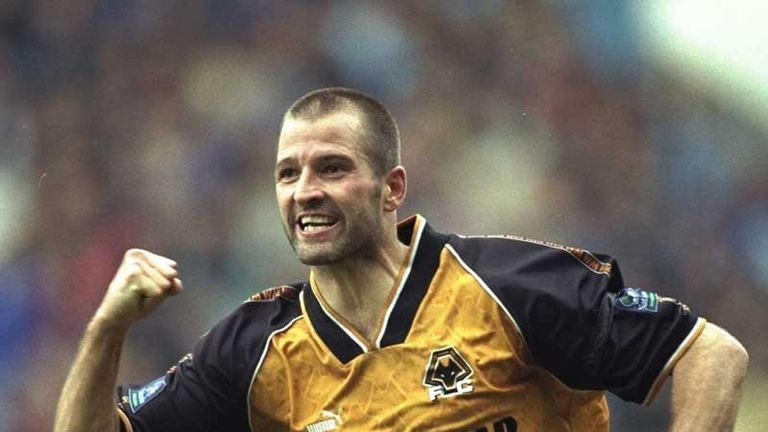
You have voted for the best player to wear a Wolverhampton Wanderers shirt and the winner is.... Steve Bull.
You have voted for the best player to wear a Wolverhampton Wanderers shirt and the winner is.... Steve Bull.
We asked fans of each of the 92 English League teams and Scottish Premier League sides to nominate their all-time favourite footballers and Bull topped the poll.
Former England skipper Billy Wright came in second while prolific frontman Andy Gray was third in the voting.
Steve Bull
Steve Bull was one of those rare breeds who displayed undying loyalty to his employers throughout a memorable career.
The legendary striker could have opted to leave Wolves for a club higher up the League ladder on numerous occasions, but instead chose to remain committed to the men from the Midlands.
He moved to Molineux in 1986 having failed to make an impact at Wolves' Black Country rivals West Brom.
Bull would spend the next 13 years in the famous gold shirt, breaking countless records along the way.
His 250 goals in League football ensures he continues to top the club's all-time leading scorer charts, while the 52 he managed in the 1987/88 season remains a benchmark to others.
Despite plying his trade outside of the English top-flight, the shaven-headed striker won 13 England caps and was included in Bobby Robson's squad for the 1990 World Cup.
Billy Wright
A true gentleman of the game and a one-club man of notable repute, Billy Wright is synonymous with all things Wolves.
The commanding centre-half spent 20 years with the club between 1939 and 1959, making over 500 appearances.
He was the first player in world football to earn over 100 caps for their country and skippered both Wolves and England on countless occasions.
Andy Gray
Andy Gray had already established a reputation as a prolific frontman during spells at Dundee United and Aston Villa prior to his arrival at Wolves in 1979.
His fine form in front of goal continued at Molineux, helping to repay the British record £1.5million fee shelled out for his services.
He scored the winning goal in the 1980 League Cup final against Nottingham Forest and opted to stay with the club after they dropped out of the top flight in 1982 - helping them to promotion at the first attempt.