Patient patience
One of football's blind spots is the ignorance of psychological damage caused by injuries. Daniel Storey thinks the time has come to have empathy and understanding with players coming back from the brink...
Wednesday 23 October 2013 16:47, UK
Daniel Storey investigates one of football's blindspots and calls for empathy over player injuries.
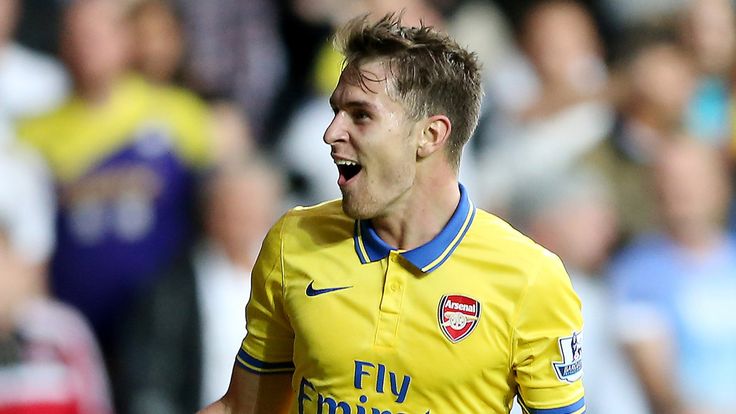
On a weekend in which Aaron Ramsey danced through Norwich's defence to continue a frankly outrageous run of form, and Giuseppe Rossi's hat-trick against Juventus completed a remarkable Fiorentina comeback, there were reasons for supporters far beyond the Emirates Stadium and the Stadio Artemio Franchi to raise a smile. These are two players performing at their peak following substantial setbacks - now transformed into the Premier League's current best player and Serie A's top scorer. Both are mightily impressive comebacks. In February 2010 Ramsey suffered a double leg break (both tibia and fibula) during a match against Stoke City, ruling him out for an initial seven months. Rossi's nemesis was the anterior cruciate ligament, causing a six-month layoff in October 2011. Just days after returning to training, exactly the same injury occurred, and Rossi was forced to endure another ten months of measured rehabilitation. Such serious injuries are the blind spot of the football supporter. The initial news and distressing diagnosis allows us to sympathise with the individual concerned, but because we follow the fortunes of the team as opposed to individual players, our focus is soon drawn back to the bread and butter of the Saturday 3pm. We receive clichéd progress updates ('stepped up rehabilitation', 'back to light training', 'raring to go') but these only flicker our interest through the positive effect a return could have on our club. Our apprehensions are wrapped up with the health or wellbeing of the squad as a unit, not the people contained within. The result is predictable - out of sight, out of mind. Perhaps it is for this reason that when a player is said to have returned to 'full fitness' after an extended lay-off, we fail to afford a great deal of patience upon their return, because the team performing to its maximum is only possible through its players doing the same. I've been were guilty of criticising Ramsey at times both early last season and during the previous campaign, but am by no means alone, and would consider myself content to eat humble pie, such is the midfielder's resurgence. This was a player that seemingly lacked the ability to warrant a place within Arsenal's first-team squad, with fans deeming the five-year contract offered to the Welshman as evidence of the club's paucity of ambition. That many are currently being proved so spectacularly wrong in the case of Ramsey (and many also considered Rossi's career at the highest level in doubt) demonstrates the lack of understanding of the real issue with serious lay-off in sport: the psychological harm caused. Just imagine for a moment that you were stopped from doing the job you loved through no fault of your own. Imagine you had no warning, no notice period and (at least initially) no sense of when, or even if, you might be able to resume your work. Without being unnecessarily melodramatic, in your 20s your life as you pictured it may have come to a premature end, your raison d'être removed. Significant injury causes an identity confusion in sufferers. Football simply becomes an extension of the personality of the individual. A footballer will not see himself simply as Aaron Ramsey but Aaron Ramsey, Arsenal footballer. He considers himself a vital and valuable part of the club's fortunes, and therefore become disillusioned when, actually, everything just continues in your absence. Such issues unavoidably effect a loss of self-esteem. Football is such an all-encompassing force on its players that their confidence is entwined with the fortunes of their club. Players will gain significant assurance from scoring a goal or being part of a winning side with teammates they also consider as genuine friends, but there is little to be taken from watching from the stands as others achieve. With their source of confidence withdrawn, such players have no choice but to watch and wait, a feeling of isolation increasing as their sense of worth diminishes. An offset of post-traumatic stress, the destruction of self-esteem remains a serious, if often unreported, aspect of the game. As the Secret Footballer rather poignantly described in 2011, 'One minute everything is going well and seconds later things have never looked so bleak; sometimes the pressure is simply too much.' Kenny McKinley, a wide receiver for the Denver Broncos, was killed by a self-inflicted gunshot wound in September 2010. McKinley had previously confessed to feeling lost and worthless after suffering a knee injury six months earlier. If such weaknesses were not enough, the mental fragility following recuperation must also be considered. If you had suffered a serious leg break, how long before you had the confidence to once again commit to a 50-50 challenge (particularly if being inexplicably and disgustingly booed when facing the same opponents)? If you have snapped a cruciate ligament, how long until you dared sprint or stretch for a ball? At the highest level of the game, even the slightest delay or uncertainty becomes almost immediately evident, and the Premier League (or Serie A) is no place for half-measures, but there is no magic formula, no quick fix for a psyche damaged by past events. Instead, players must aim to take small steps on a stage that demands large strides. In the case of Ramsey, this seems the most likely cause for a stalling two years, a suspicion rather confirmed by teammate Jack Wilshere. "His [Ramsey's] injury was tougher to get over mentally, because he can remember the tackle. For the first couple of months, or even a year, if you're going into a 50-50 tackle, it's in the back of your mind." Such a lack of certainty surely only serves to erode at confidence already fragmented by the demands of physical rehabilitation. Ramsey's individual recovery is perhaps best epitomised not by his goals or assists, but by the fact that the Welshman has made more tackles than any other PL player this season. Psychological certainty has been restored. Given their profile and wealth, patience is a virtue rarely afforded to our footballers, whether injured or otherwise, and the kneejerk view of 'paid thousands for sitting on your arse' is probably more prevalent than we would like to admit. Perhaps the rejuvenation in players such as Ramsey and Rossi so long after career-threatening lay-offs should force us to question the accepted cliché - healthy body does not always equal healthy mind, and both demand our greater understanding and empathy. A version of this first appeared on Football365