
Meet Maradona's son - the coach on a journey
Diego Maradona Jr speaks exclusively to Sky Sports about the lessons from his father - as his own coaching journey in Spain takes flight...

Everyone knows the name Diego Maradona in the football world.
Many thought, when the Argentine legend passed away in 2021, the flame and the name of a living legend had disappeared.
It hasn’t just yet.
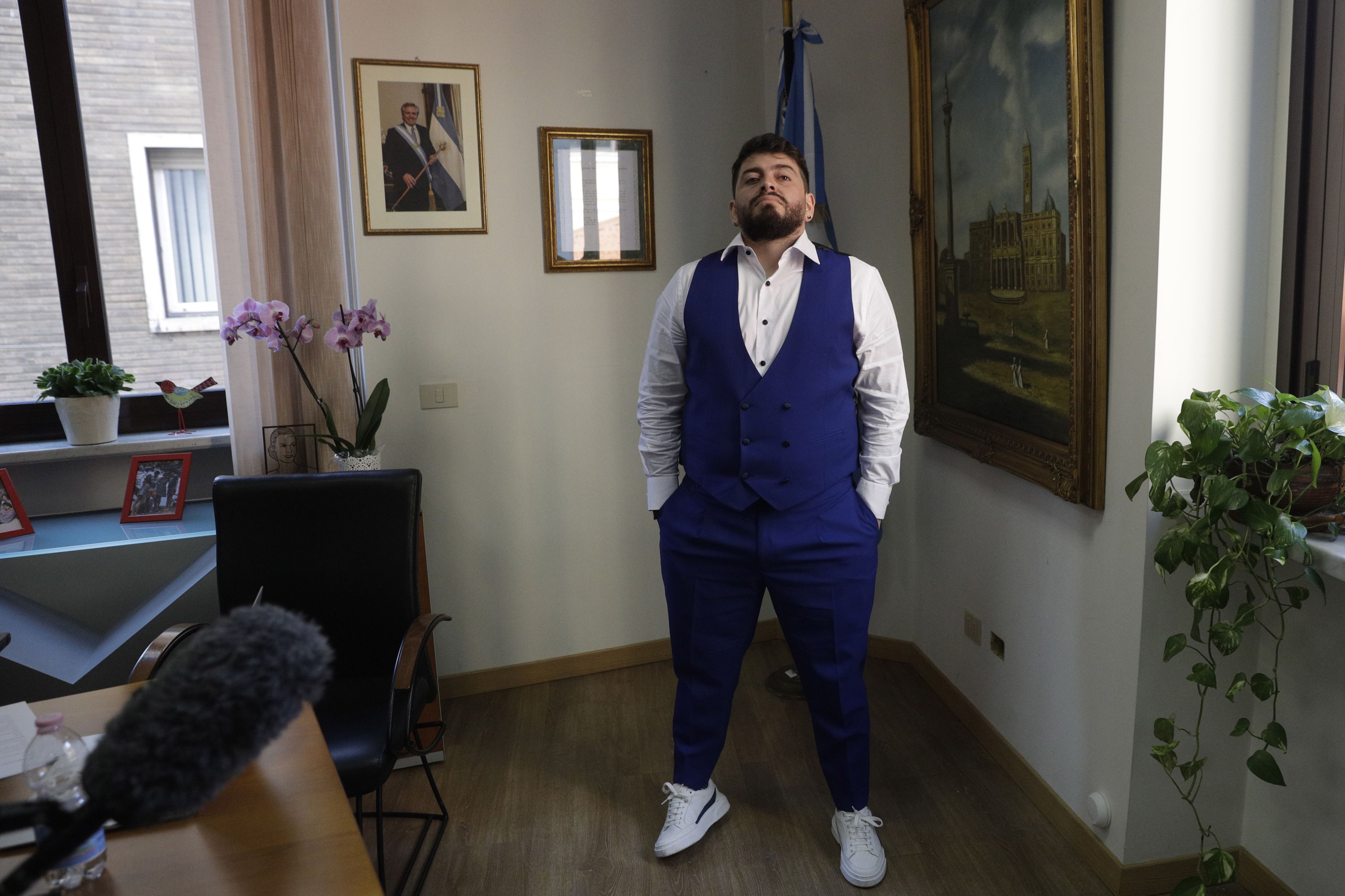
On the island of Tenerife, the story of football’s greatest phenomenon lives through his son – Diego Armando Maradona Jr.
Last October, the 38-year-old took on a role at Spanish fifth-tier side UD Ibarra. After five years managing similar-level clubs in Italy, the move to take charge of the full-time, professional Spanish club was his biggest jump in the game yet.
It has proved to be a masterstroke. Maradona Jr arrived with the club having won just seven points from their opening seven games. They were staring down the barrel of relegation.
Now they stand on the brink of the play-offs following a six-game unbeaten run.
For a while, the son of the all-time great was not called Diego Maradona Jr. He was Diego Sinagra.
Born in 1986 and the outcome of an affair between Argentina’s football star and Naples citizen Cristiana Sinagra, it was only in 2007 that Diego Sr publicly recognised him as his son, the pair having only met each other for the first time four years earlier.
“If we talk about Maradona, he was a man who, when you met him, you realised you were facing the best player of all time,” Diego Jr tells Sky Sports from his new Canary Islands club.
“He gave you the feeling of being in front of a special person.
“But if I have to talk about Diego the father, for many years we didn't have a good relationship.
“But when we sat down to talk and we cleared up what we had to clear up, I had a wonderful father. A careful father, a loving father – with me, with my children, with my family.
“It’s normal, like all people in the world, he had strengths and weaknesses, but I loved him for what he was, as a person and as a father.
“I had a father with whom I had fun, I had many beautiful moments that I carry in my heart. So I can only speak well of him.”
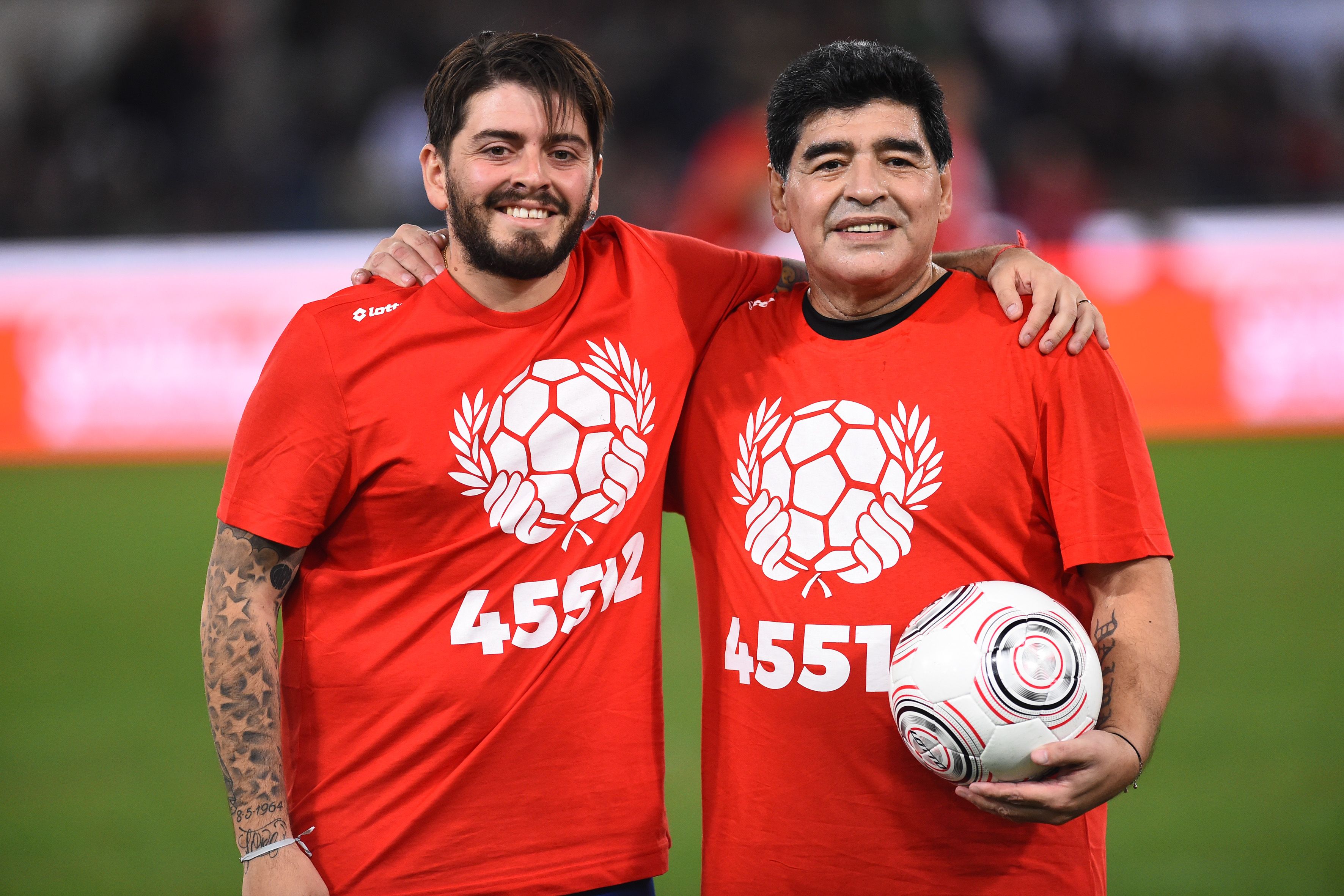
There is absolutely no doubt this man is related to Maradona, even though he was raised by his mother’s side of the family: there is a clear physical resemblance.
And a look at his CV reveals echoes of his father’s eventful career.
Maradona Jr left his first job at Italian minnows Napoli United as a form of protest over the club not paying its players.
He was then sacked just months into his next job at FC Pompei in November 2023 despite being sat second in the Italian fifth-tier table.
Even at new club Ibarra, he does not know how long that will last – his contract is up at the end of the season.
“We’ll see how it ends up this year,” he says. “Then we’ll sit down at the table to figure out if it’s time to continue or leave. But the desire is to continue this project and to stay here for many years.”

There is also a similar football education between father and son – they were raised by the streets.
Maradona the phenomenon was raised in the shantytown of Villa Fiorito on the outskirts of Buenos Airies.
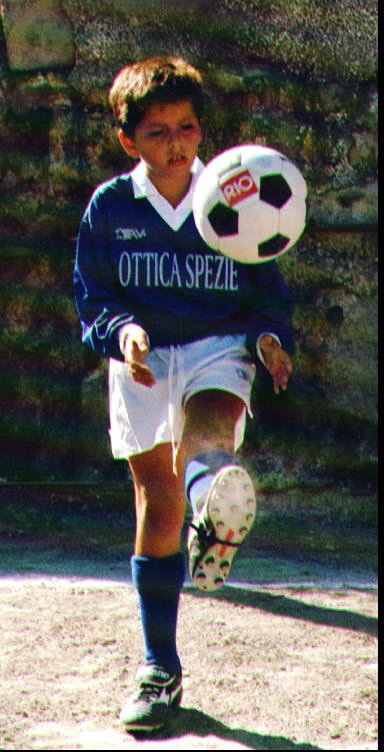
His son’s dream, meanwhile, began in the cages of Naples’ street football circuit, after being born two years into Maradona’s time as a player at Napoli.
“I think this is the most beautiful part of football,” says Maradona Jr about learning on the streets. “This has been lost over the years, with these damn video games, with all these distractions that lock children in their homes.
“I was born in a city where street football is a religion – you need players like that.”
It all sounds very Maradona. All of this begs the questions as to whether Diego Jr is a mini-me of the all-time great.
“Look, I think my father was unique. That uniqueness belongs to few people in the world,” he claims.
“I think I took many sides of his personality, both positive and negative, just like I took the same from my mother.
“But I think I have a different idea. It is normal that my father influenced me, because when I talked about football with him, I listened a lot and I learned a lot from him.”
And those lessons? “To be honest with people, not to be afraid to tell the truth, to have a very confidential relationship with the players.
“And above all, not to give in to difficulties, because this is a sport where one Sunday you are a genius and the next Sunday you are not good at anything.
“So certainly 'not to give up' was one of the most important lessons I received from him and obviously from my mother, because I grew up and was educated by my mother and my mother's family.
“But I like to think that I have my own idea and I go forward with my idea and with the concepts that I have as a football coach.”


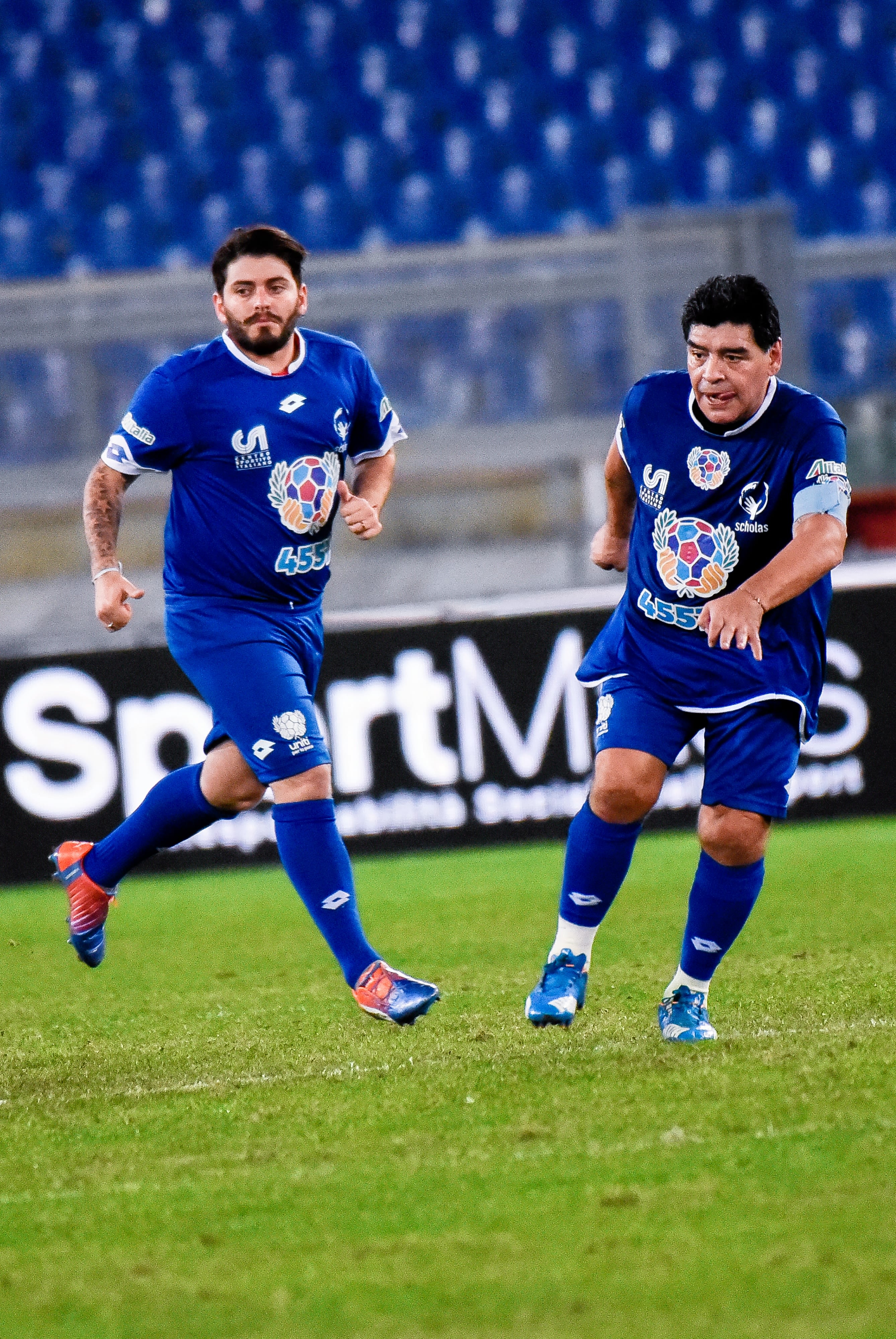
Going out on your own with a famous father is not straightforward, though. After years being distant, Diego Jr finally got the Maradona surname from his father in the early 2000s – but he soon realised it causes problems.
The shadow of his father still looms, even years after his passing.
“Having this surname has many advantages but many more disadvantages, because people expect to see my father and I am not,” he says.
“Because my father - I repeat - was unique and was an important personality in football, the best.
“But sometimes I try to focus on the work I do, on everyday life, because I will get where my work will take me and not where my surname will take me.”
It is the reason why he chose Ibarra in the Spanish fifth tier. His surname is synonymous with the Naples region he managed in before, less so in Tenerife.

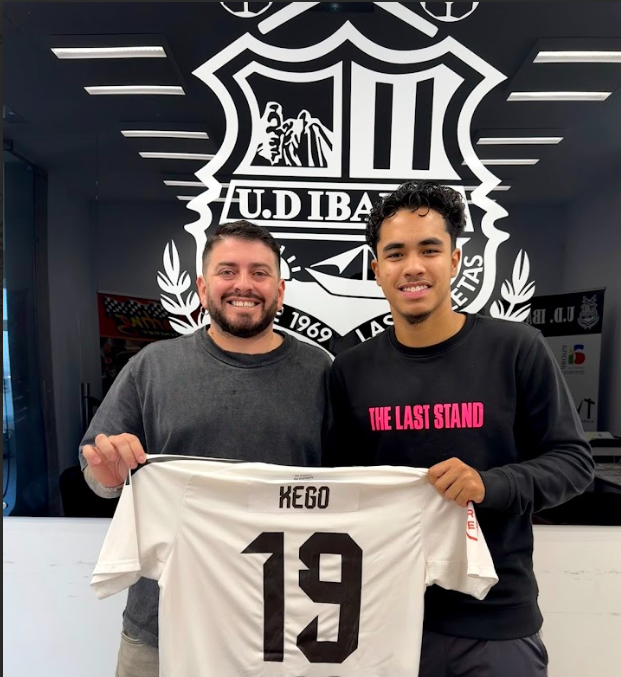
He answered the call from Ibarra’s Italian sporting director Mirko Capezzoli last autumn as he knew the Spanish club’s chief had watched his team and knew his style of play.
“This is very important for me, because apart from the fact that my surname is the most important in world football, I was interested in coaching a team where they really loved me,” Maradona Jr says.
“Not only did they love my surname, but they also loved the coaching. So this was important.
“It's definitely the most important project I've committed to. It's definitely the most ambitious and fascinating project.
“Not only because I wanted to have an experience abroad, but also because it allows me to increase my technical and human experience. It's training for what I want to do when I get older.”
So what do the Maradona tactics look like, especially given Ibarra picked him for football reasons, not just the lure of nepotism?
“When coaches talk about philosophy, it's always very difficult to answer,” he says.
“But I'll explain.
“All of us coaches want to have 80% per cent possession of the ball. All of us coaches want to be protagonists. All of us coaches want our teams to always be able to play well.
“But in the five years of experience I've had as a coach, I've realised that unfortunately it's not always possible. Clubs in general always look at the results. They don't care about everything else.
“So in my opinion, the philosophy must be to be able to combine the idea of football that a coach has with the results. And it's not easy.
“We all want to be Pep Guardiola, we all want to be Mikel Arteta, we all want to be Enzo Maresca. But it's not easy because not everyone has the City, the Chelsea, the Arsenal players.
“So we have to do what is necessary and adapt our idea to what we have available.”
So if tactics are fluid, and his father’s influence remains there, what does the son of Maradona want from his players?
“I start with a fundamental principle, which is to give priority to players who know how to play football,” he adds. “And more so, those who to try to be a protagonist.
“For example, my tactical principle is the third man running, pass and move, being direct when possible. Otherwise it’s about keeping possession as much as possible.
“But then, I repeat, every game and every situation leads you to have different principles or maybe different from what you have.
“For example, if there is a game where you have to be more direct and play more up to the attackers, I believe that a coach, even if he has the philosophy of possession, should do that.
“For example, we talk a lot about Guardiola, about possession, about keeping possession. But the Guardiola teams, when they have to be direct, they are direct.
“At City there are a lot of plays that go direct to Erling Haaland. And maybe the idea of playing for Guardiola is not reflected much there, but it works.
“I always hope that my teams can read the games and the situations.”
His father was known as El Pibe de Oro – the Golden Boy.
His son is still flying that football flag, rising up the ranks in the coaching game – and given his success at Ibarra, he seems to have that golden touch.
 Built with Shorthand