
Forty ex-footballers set to take legal action over dementia links in 2021
Rylands Law is in touch with the families of 40 ex-players; law firm is also representing rugby players in planned action against sport's governing bodies; 2019 FIELD study found footballers at increased risk of dying from neurodegenerative disease
Friday 11 December 2020 12:49, UK
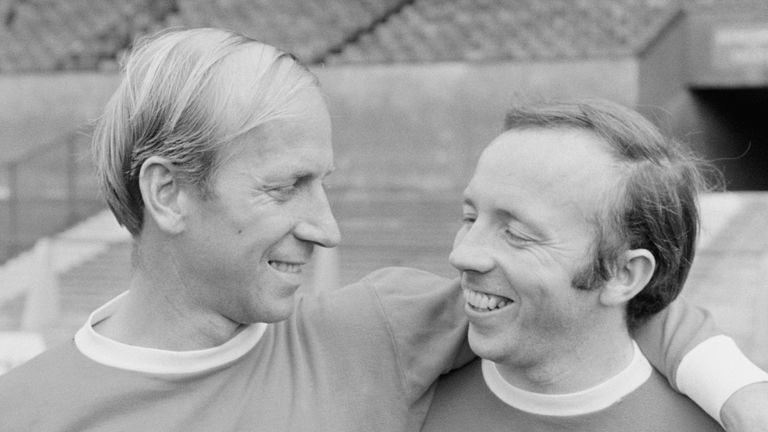
A law firm is planning to go ahead with an action on behalf of former footballers suffering with dementia in the new year.
Rylands Law, which is also representing an initial group of 10 former rugby union players suffering with early onset dementia, is understood to be in touch with 40 ex-players' families.
At this stage, it is too early to say who the football action would be against. In the rugby case, the planned action would be against World Rugby, the Rugby Football Union and the Welsh Rugby Union.
The football group are understood to be older than in rugby, ranging in age from their 50s to their 70s. As with the rugby group, initially around 10 individuals' claims would be put forward first, followed by a larger group litigation order.
- Alix Popham: My world was turned upside down
- 'Rugby union facing brain disease epidemic'
- Steve Thompson: I can't remember World Cup final
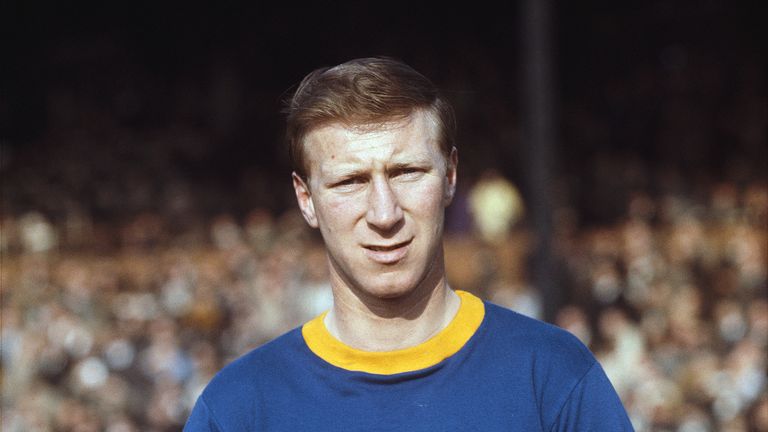
Dementia in football is back in the spotlight after Nobby Stiles and Jack Charlton both died with the disease earlier this year, with Sir Bobby Charlton's dementia diagnosis also being confirmed soon afterwards.
The news regarding Sir Bobby Charlton meant five members of England's 1966 World Cup-winning team had been diagnosed - the Charlton brothers and Stiles, plus Ray Wilson and Martin Peters, who died in 2018 and 2019 respectively.
The FIELD study published last year found footballers were three-and-a-half times more likely to die of neurodegenerative disease than age-matched members of the general population.
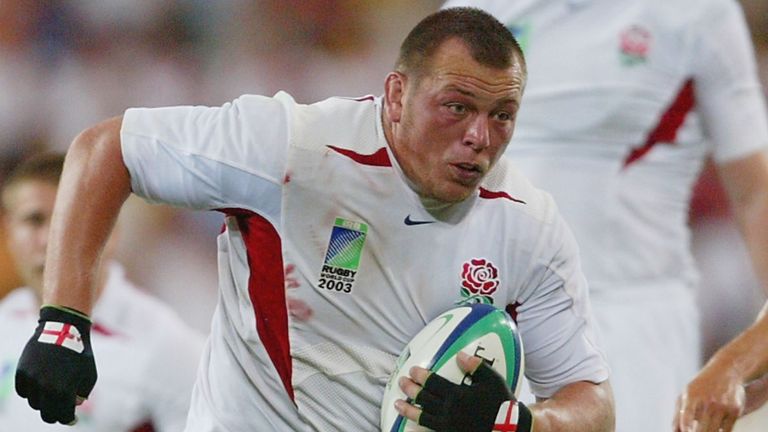
Further studies are ongoing in the sport to try to establish a link between concussion and sub-concussive impacts from heading footballs and dementia.
A number of high-profile individuals, including former England striker Gary Lineker, have called for a complete ban on heading in training sessions at all levels of the game.
In 2002, an inquest recorded a verdict of death by industrial disease in the case of former England striker Jeff Astle caused by repeated heading of the ball.
Dr Willie Stewart, who led the FIELD study, carried out a new examination on Astle's brain in 2014 which concluded that the 59-year-old had died from chronic traumatic encephalopathy (CTE), a condition normally linked to boxers.