Exclusive
Growing up with Brian Clough: Craig Bromfield shares his amazing story
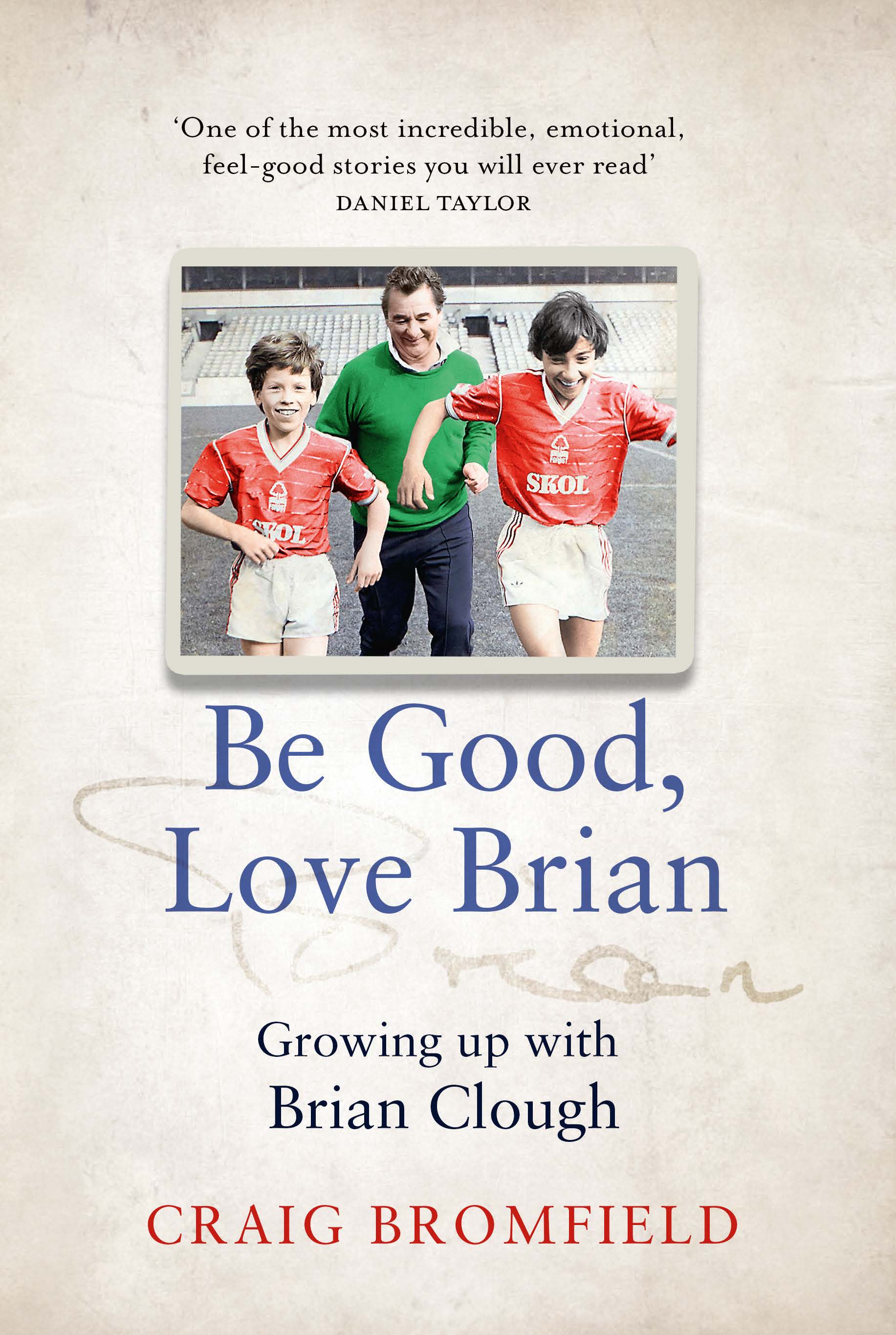
In an exclusive interview with Sky Sports, Craig Bromfield opens up about his extraordinary story of meeting Brian Clough and being taken in by the manager's family. It is detailed in full in his new book Be Good, Love Brian: Growing Up with Brian Clough

Wednesday 10 November 2021 17:06, UK
![Craig Bromfield (left) and brother Aaron on the pitch with Brian Clough at Nottingham Forest's City Ground the first morning of their first holiday in Nottingham [Credit: SWNS]](https://e0.365dm.com/21/11/768x432/skysports-craig-bromfield-brian-clough_5577473.jpg?20211109132036)
"If I had not met Brian Clough, my life would have been over before it had even begun," Craig Bromfield tells Sky Sports.
Craig is back in Seaburn on an unseasonably pleasant afternoon not far from where he met the man who would change his life.
Clough, then among the most famous figures in English football, took him into his home and treated him like a son.
Seventeen years on from Clough's death, their first meeting in Seaburn back in October 1984 looms large in Craig's life. He has written a book about the experience, something that has led to a lot of looking back this past few years. Not all of it has been easy.
"Too much reflection," he says. "There are conflicting emotions. I have moved back up to Sunderland to live which is probably a mistake. It takes me back to some places that I do not want to think about but I have had to. It is a confusing experience."
His is a story of poverty and of vivid tales of racism in the 1980s - his elder brother Aaron was mixed race. Amid that, there is the extraordinary humour and kindness of Clough, the man who shared his home with him, showing him adventures, holidays and cup finals.
It is also a story of regret and of the betrayal that Craig is still coming to terms with. "I let them down," he says of the Clough family. Life since has felt like an attempt to atone. Though he cannot repair relationships, as the book's title suggests, he wants to be good.
He is doing so by using the proceeds to raise money for boys like he was. He has already given much of the book advance to charities supporting the teenage homeless and victims of domestic abuse. "Some good is going to come out of it which is very nice," he says.
"Even now, I struggle with what happened. There are days when it hits me more. Days when I just sit there and wonder who I am. Am I the person I have grown into, who I think is predominantly good, or is that a mask? Underneath it all, am I still that scruffy little kid?"
But before all that this is a story of hope where there had seemed to be none. A tale of two urchins, Craig only 11, asking for a penny for the Guy as Bonfire Night approached, only to stumble upon the Nottingham Forest team at their hotel preparing to face Newcastle.
Kenny Swain, the European Cup winning full-back, gave them a fiver and told the two brothers to return in the morning for autographs. When they did so, they happened upon Clough fresh from his morning walk, who gave them breakfast and tickets to the game.
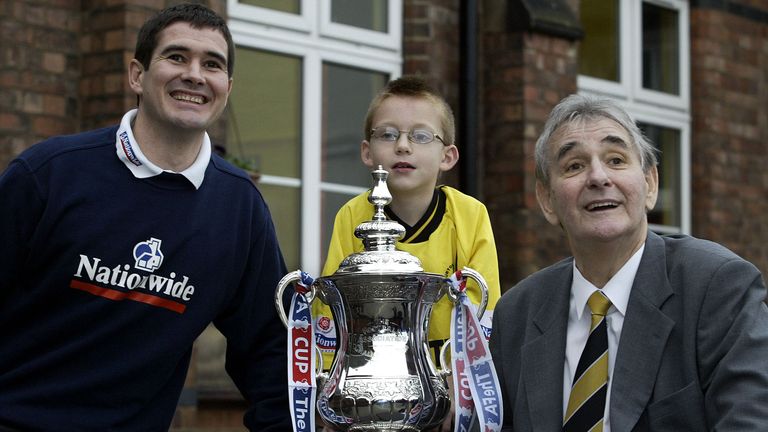
It was the start of the relationship. The book tells stories of Clough saving Craig and Aaron from bullies and even allowing him to sit on the Forest bench. Perhaps intuitively aware of their difficult homelife, the boys were invited to come down and stay with Clough.
"The reaction from my family was not fantastic," recalls Craig.
"They said he had just done it for publicity and it would not be happening again." But they were wrong.
It was a tough upbringing. "I never felt safe in my own home." His father, technically his stepfather, would beat his mother and had been a somewhat notorious figure. "He did not exactly make it easy on himself or us by becoming a drug dealer," says Craig.
It is easy to see why Clough would feel empathy with the waifs who turned up that day in Seaburn but it does not explain everything that followed. Why did he do it? In simple terms, it seems that Clough, a North East native, just enjoyed their company.
"Aaron was different to me. Sometimes he would make a joke without people realising he had made a joke. The whole room would just crease. I was like his little sidekick. Anything he missed, I would add. Brian said we used to make him laugh his socks off."
But clearly there was a bit more to it than that.
"There was also the socialist side of him. Although he did not know how bad our lives were, he could see that they were not fantastic and he wanted to give us different experiences. We suddenly had bicycles and sports gear, experiencing things others weren't.
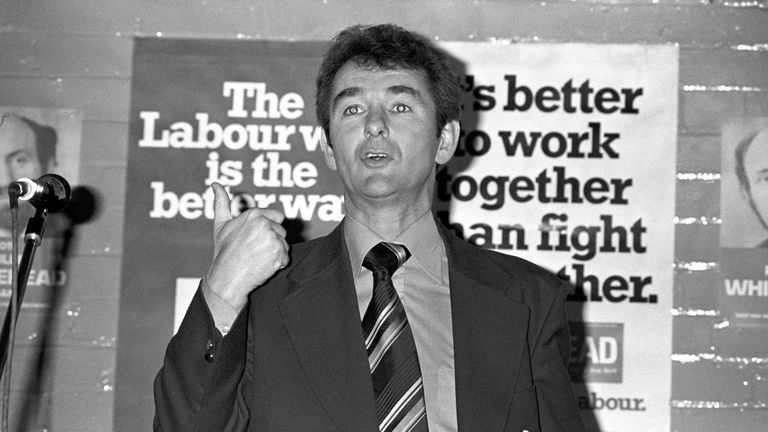
"I think he wanted to show us that life had more potential than where we were and just give us a nicer life. I don't think he planned for it to last as long as it did. Maybe it was the fact that we got on so well with the family that it turned into a regular occurrence."
While Aaron joined the army at 16, Craig moved in on a more permanent basis. He was close to Nigel and would go on to work for the eldest brother Simon. He speaks fondly of Clough's wife Barbara - always Mrs Clough to Craig even now.
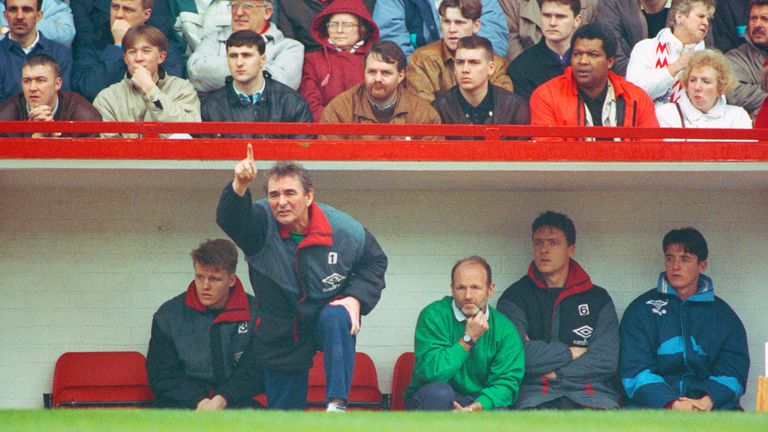
It was a life transformed. Time spent on the team bus with England internationals Stuart Pearce and Des Walker, taking part in training sessions, witnessing Wembley cup final wins. Memories to cherish. "Growing up around heroes and having amazing experiences."
And then there was Clough himself.
"Pretty much for three years I was in his car driving to work with him and seeing him in his office, in his study, walking around the cricket ground with him. To see that side of it and still see the loveliness shine through was immense."
![Craig Bromfield in 1989 - aged 16 with the Littlewoods Cup in the dressing room at Wembley. He lived with Nottingham Forest manager Brian Clough [Credit: SWNS]](https://e0.365dm.com/21/11/768x432/skysports-craig-bromfield-nottingham-forest_5577474.jpg?20211109132219)
An incident back home not long after that first meeting, highlights the absurdity of Clough's eccentric generosity and how he made it seem so natural. Swain returned to the North East as a player with Alan Ball's Portsmouth and so Craig duly went to see him.
"Me and Aaron came down to the hotel honestly expecting Alan Ball to take us down to his house on holiday." Did he? "He did not even give us tickets! We just thought it was normal. That was when you realised the extraordinary side of what he had done."
Life with the Cloughs in the Derbyshire village of Quarndon was idyllic with occasional reminders of the fame that once saw Clough called out by Muhammad Ali. "Underneath it all he was normal. He travelled normally, he cooked for us. He treated us like sons."
It is why what happened next is still so difficult for Craig to accept. Almost three decades on, it is he, more than anyone else, who has been affected by the experience. "When you think about it," he begins, "the underlying message of the book is that I stole."
Working for Simon in his shop, Craig found out that money was being taken by his colleague and friend. Instead of reporting it to Simon, he was persuaded not only to remain silent but take a cut, trying to justify it to himself on the basis that they were being underpaid.
When discovered by the Clough family, it was handled delicately. The authorities were not involved, there was even severance pay.
But he was also cut out of their lives.
"I would have gone to prison because the amount was substantial. My life at that point would have been ruined by a criminal record, a reputation. I had no education. I would have had no chance if they had done what they could have done.
"They did not want to ruin my life. Brian did say that he had brought me down to give me a better life and if he had called the police my life would have been over. It is something I struggle with, letting them down as I did when they had shown me such love.
"What happened at that point is that I flipped. I realised the gift that he had given me. I changed as a person. I went from this scruffy little kid who was bullied by everybody to a managing director of three companies over in Warsaw earning six-figure salaries."
He would send newspaper cuttings of his success in Poland to the Clough family, perhaps in the hope that they would feel some pride and vindication in their decision. He was not so much proving them wrong but proving them right for giving him that chance.
"The sick side of it, and I really don't know if I should focus on this, is that I never felt as though I deserved the success that I had. Never. I would sit and question myself because of how I had behaved. It had a psychologically profound effect on me."
Even now, he follows Nigel's teams with a passion, having switched his support from Burton Albion to Mansfield when he moved clubs. He goes to games home and away. "It is my weak way of showing I am loyal when I was not loyal as a kid," he explains.
"It is a bizarre thing. I question myself. Am I doing it for the right reasons or am I doing it to make myself feel better? I cannot expect to be friends with him again. Nigel probably does not give a rat's arse that I follow them around the country but for me it is important."
While he talks to Nigel now, there was no reunion with his father. He came close once. At Burton Albion during Nigel's first spell there, but stopped himself. "It was totally my fault. I just bottled it at the last minute because I did not know what to say."
There would not be another opportunity. Clough died in 2004.
"I broke down in the office and could not stop crying for 10 to 15 minutes. I was angry with myself for not fixing it. It left me with such a hole. I have had a fantastic life since meeting Brian but nothing can follow that. It is heart-breaking that he has gone. I was crushed."
It was the catalyst for this book. "I started writing it as a thank-you letter to Mrs Clough and it just transformed." He asked permission to write it, but knows they are a private family. "A lot of people have said things that did not need to be said. I hope that I haven't.
"I do hope the humour of the book comes across as well. It is dark but it is funny. I don't want the negative side to be the overriding side. I want it to be the beautiful act that they did. Just because I am negative about it, does not mean that the story is."
It still feels like a cry for forgiveness and some people have reached out as a result of the recent media attention, reminding him of the positive impact that he had on their lives and urging him not to worry any more. "That has given me a massive lift," he says.
But it is clear that forgiveness must come from himself not the Clough family or anyone else. "They have told me on numerous occasions whenever I have met them that I need to forgive myself, let it go and move on. It is not them stopping me moving on, it is me.
"There were various stages through the book, because of it being cathartic, where I was expecting to get more of a happy feeling but I still have not had it. I thought once I had the physical book in my hand I would get it. Maybe it will come on publication day."
Or maybe it will come when he can see how the money raised from this book is helping others. Children just like him whose lives were transformed with an act of kindness.
"My hope is that the proceeds enable me to do some good for somebody else," he adds.
"I don't know if it selfish but that might help me if I am able to contribute to one or two kids having a better life.
"I might finally forgive myself then."
'Be Good, Love Brian: Growing up with Brian Clough' by Craig Bromfield can be purchased online through Amazon Prime and in all good book stores from November 11