
Analysis
Future of Football: Attendances on the rise... but how big could stadiums actually get?

Monday 31 July 2023 07:44, UK
What does the future hold for stadiums and fans in the stands? Have attendances topped out? Do fans help deliver success on the pitch?
As part of the Future of Football series, Sky Sports investigates the past and present, before making predictions for the future, based on data and projections from leading experts...
Top-flight attendances at all-time highs
The average attendance for a top-flight football match in England smashed the 40,000 threshold for the first time ever last season.
It hasn't been an incremental rise over the years, though. The record of 38,793 set in 1948/49 before all-seater stadiums had stood for 71 years until 2019/20 - having halved to around 20,000 during the 1980s.
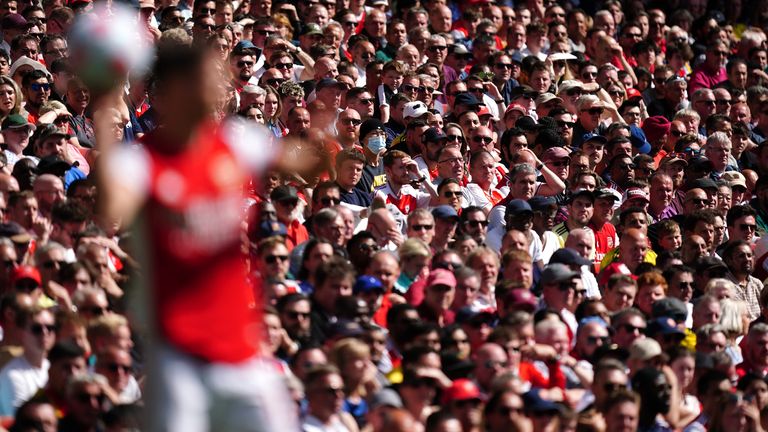
The landmark comes with a caveat, in that clubs now count all season ticket holders in their attendance figures, regardless of whether they turn up to the match - but the general upward trajectory for capacity crowds remains clear.
- What is the future of football stadiums...and will you need VR goggles?
- Download the Sky Sports app | Get Sky Sports
The graphic below shows how attendances have expanded and contracted over the past 135 years, and also highlights how attendances have typically spiked after periods of national and global crises - notably both World Wars.
The latest spike in attendances follows that trend - merely two seasons after the 2020/21 season was largely played behind closed doors during the Covid-19 pandemic.
The biggest growth occurred in the women's game, where top-flight attendances soared 170 per cent from 1,931 in 2021/22 to 5,222 last season - having flatlined around the 1,000 mark for five years until 2019/20.

The spike coincides with wider coverage of the league, while the profile of women's football elevated considerably last year after England won the Euro 2022 tournament on home soil.
Meanwhile, the Women's World Cup is on track to become the most attended standalone women's sporting event in history, with over one million tickets sold for this summer's tournament.
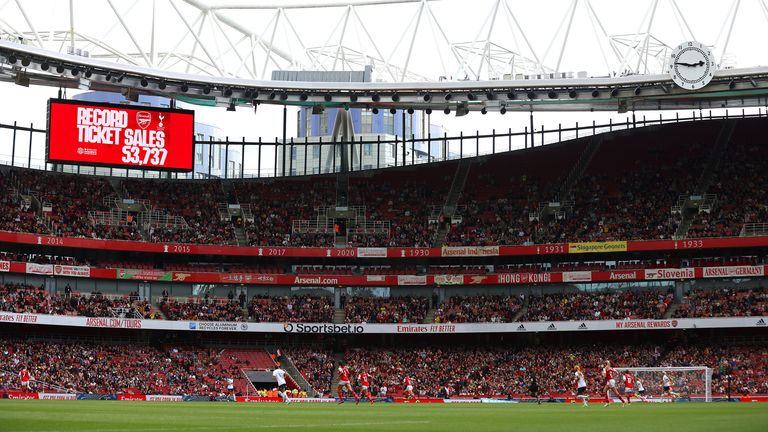
Packed to the rafters
In the men's game, the table below reveals how Manchester United have dominated the domestic all-time records - clocking the top attendance in 56 of the 124 seasons, followed by Everton (14), Arsenal (12), Chelsea and Newcastle (both 10).
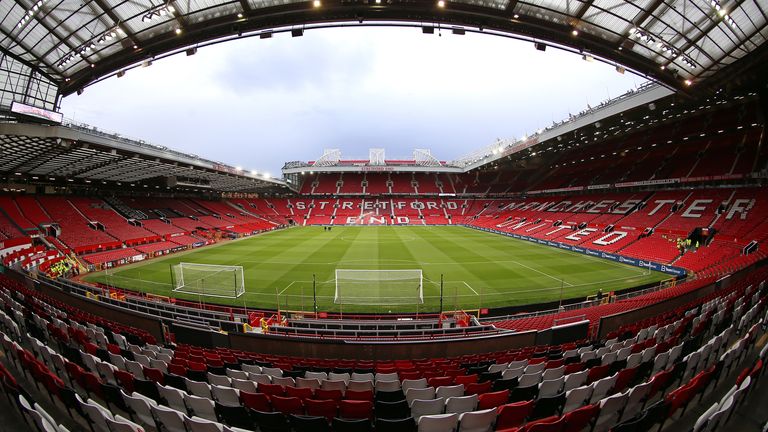
Old Trafford averaged at 73,671 last term, having sustained similar levels for 16 years since the most recent expansion added 8,000 seats in 2006.
However, German Bundesliga club Borussia Dortmund attracted the biggest capacity crowds in Europe last season with an average attendance of 81,228 - having leapfrogged Barcelona's Nou Camp in 2011/12 and staying on top since.
Will home advantage matter in the future?
Clubs clearly have financial interests in gate receipts, while fans increasingly want to get their hands on tickets - but does strong home support correlate with success on the pitch?
While not linked directly to the sheer number of fans, the so-called '12th man' in the men's game has long been associated with driving sides over the line and data suggests it helps - but the impact has been on the wane.

Back in 1894/95, teams playing on home soil enjoyed a win ratio of 65 per cent, but that figure has been on a steady decline over the past 128 years - hitting merely 41 per cent in 2015/16.
Home advantage - with fans in the stands - still exists. The 2020/21 campaign underlined that fact when home teams in empty stadiums recorded the lowest win rate in the history of the game at just 38 per cent. Teams on the road won more games then their hosts for the first time ever.
The overall declining trend suggests home advantage may not continue in the future.
What does the future look like - can stadiums meet demand?
So, we know attendances are rising, but at what point will they top out?
As it stands, the Narendra Modi Stadium in India is the largest stadium in the world and holds up to 132,000 cricket fans. The Rungrado 1st of May Stadium in North Korea was originally built to hold 150,000 before alterations reduced capacity to around 114,000.
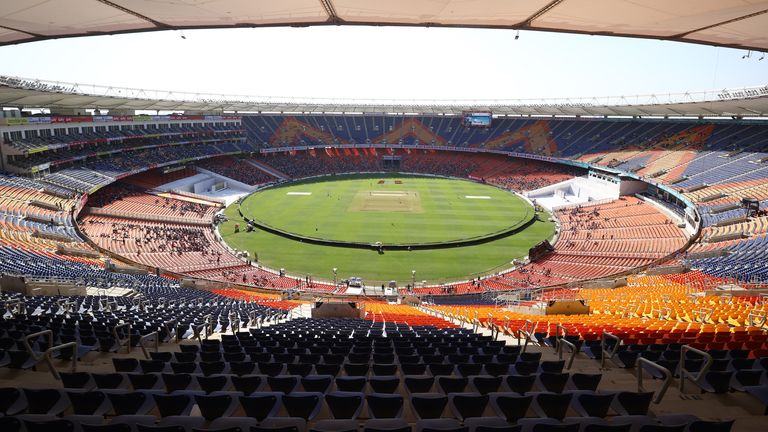
Barcelona's Nou Camp is the largest football stadium in Europe with a capacity of 99,354, while Wembley - the home of football in England - ranks among the top 20 worldwide at 90,000.
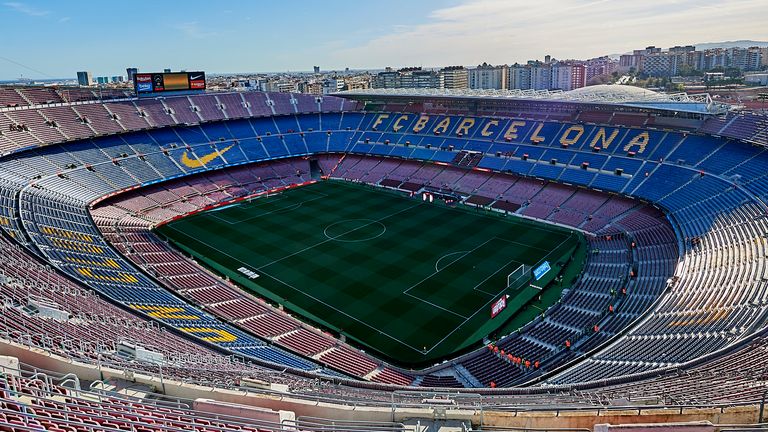
But, in the future, does capacity have a ceiling? For all the advances in technology and engineering, a stadium, in its traditional form, appears to have a limit - beyond which the experience would either become impractical logistically or the experience would be diluted too far from the action.
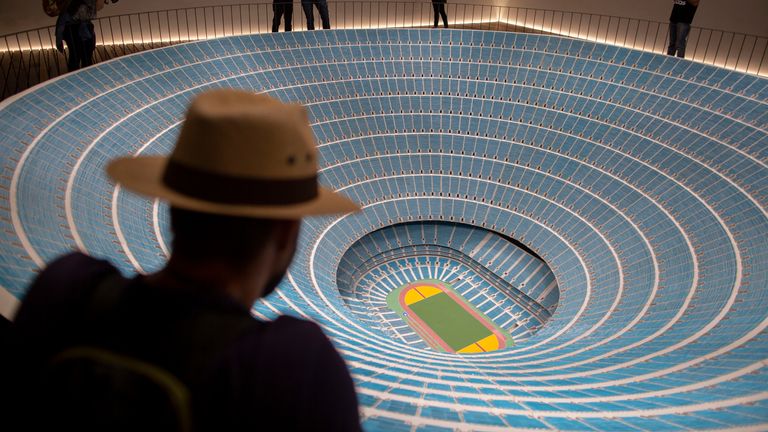
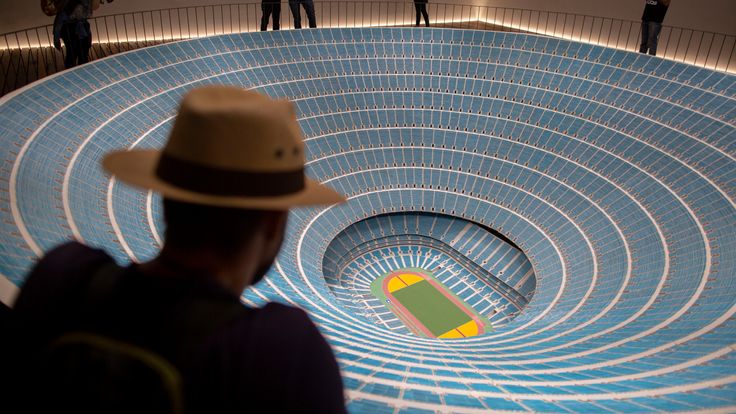
American artist Paul Pfeiffer constructed a concept of the world's first one-million stadium - taking inspiration from Sydney's 110,000-capacity Olympic Stadium, which hosted the opening of the 2000 Olympics.
Such a stadium would be a monumental feat in engineering and create an unrivalled atmosphere, but the concept also poses logistical issues: how could so many people safely enter and exit the arena - in addition to providing services, transport links and parking.
"Capacity is really governed by the viewing distance of fans to the action on the pitch," according to Dale Jennins, Senior Principal at Populous - the architects and lead designers of the Tottenham Hotspur Stadium.
"International best practice for the maximum viewing distance is that no seat should fall outside of an arc of 190m from one corner of the pitch to the farthest seat in the opposite corner.
"The calculation is based on the size of a football and the speed at which the game is played, so it differs from sport to sport. For example, tennis would have a shorter recommended viewing distance because the ball is smaller and moves faster.
"Taking this standard for football, it is possible to design a stadium with a capacity of up to around 90,000, where every seat falls within the 190m arc.
"It can be pushed further, but it would result in an extremely unorthodox-shaped bowl and building form."
Theoretically, it is also possible to increase capacity within the 190m arc by increasing the steepness of the tiers, but there are safety regulations guarding against this that can also differ per country. The maximum rake of a stand in the UK is 35 degrees, but it is steeper in Italy, for instance.
"There are also other factors to consider, such as comfort," says Jennins. "Historically, the tread depth of the terracing in UK stadiums was set at around the 660mm mark, but over time, this has been expanded to give people more room. If you expand the tread depth, you increase the distance between the rows of seats and push them further from the pitch. This, in turn, reduces the number of seats that fall within the 190m arc."
Virtual reality to take a front-row seat?
While such projects could well be achieved in the future, it looks likely that virtual reality will take a front-row seat in the immediate years ahead, with current technology offering to deliver unlimited crowds and combine atmosphere.
The Premier League has certainly grown its global reach over the years, with worldwide searches soaring from just under 18m in January, 2004 to a record-breaking 587m in July 2023 - with regular dips during non-season periods.
Of course, internet usage has increased significantly over that timespan and that should be considered when evaluating those results, while some divisions overseas also incorporate 'Premier League' - but, regardless of the cause, English Premier League clubs have a growing level of engagement and exposure around the globe.
Speaking to Sky Sports, finance expert Kieran Maguire said: "Looking forwards, there is talk about the rise of the metaverse - the ability to use augmented and virtual reality to bring a matchday experience to people's own homes.
"Manchester United claim to have 1.1bn followers around the world. So, instead of Manchester United being limited to 75,000 people being able to attend Old Trafford, why can't we have some form of match taking place at Old Trafford physically and then have it also simultaneously being broadcast in some 3D format to New York, Lagos, Melbourne and Beijing, and you've got 40 or 50,000 fans attending there.
"All of a sudden, those people are willing to pay the equivalent of 30 or 40 bucks to be in a stadium or 10 bucks to to have that matchday experience at home."
So, could we be heading to virtual stadiums with family, friends and strangers for matchday experiences in the coming years? Virtual and augmented reality is a topic we cover extensively in the next instalment of this series.