Analysis
England vs DR Congo: Thomas Tuchel battling selection dilemmas, fitness issues and low blocks ahead of last-32 clash
Sky Sports' team of writers analyse the key talking points as England approach Thomas Tuchel's first knockout game as Three Lions boss; England face DR Congo in the last 32 in Atlanta; the right-back dilemma, fitness issues and who starts out wide are all discussed...
Wednesday 1 July 2026 15:50, UK
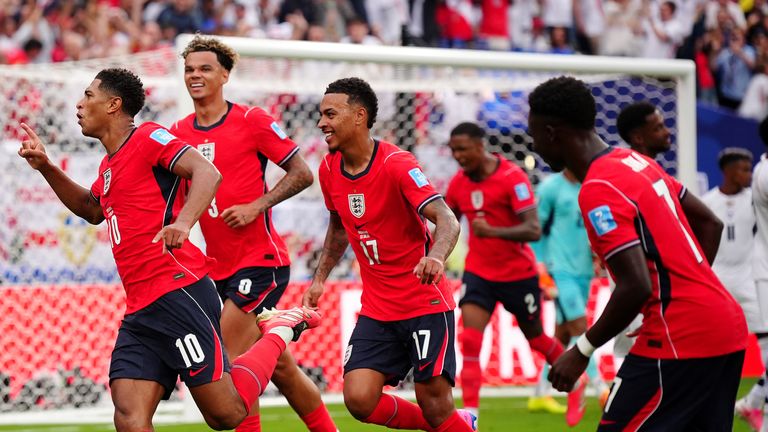
England face DR Congo in the last 32 of the World Cup with several key issues for Thomas Tuchel ahead of his first knockout game as boss.
Reece James' injury presents a selection dilemma at right-back, while England's lack of end product against low blocks will also be at the forefront of Tuchel's thinking. Are doubts also creeping in regarding Jordan Pickford's form in goal?
Here, Sky Sports analyses the key talking points ahead of the meeting in Atlanta...
Who should play right-back?
Right-back has suddenly become a problem position for Tuchel after he lost first James with a hamstring injury following the draw with Ghana and then Jarell Quansah - who came in for the Chelsea man against Panama - with a badly-twisted ankle in that final group game. Both will miss the DR Congo game.
So the England boss is now down to just Djed Spence, possibly Trevoh Chalobah - called up after the injury curse first struck to rule out Tino Livramento with a calf issue during the build-up to the tournament - and in a real emergency, versatile centre-back Ezri Konsa.
Spence played the last 10 minutes of the opening win against Croatia, but as a left-back - where he was mainly used at Tottenham last season - then 66 minutes of the goalless draw with Ghana, again on the left-hand side of the defence, before starting on the bench and then replacing the injured Quansah for the final 27 minutes of the Panama game.
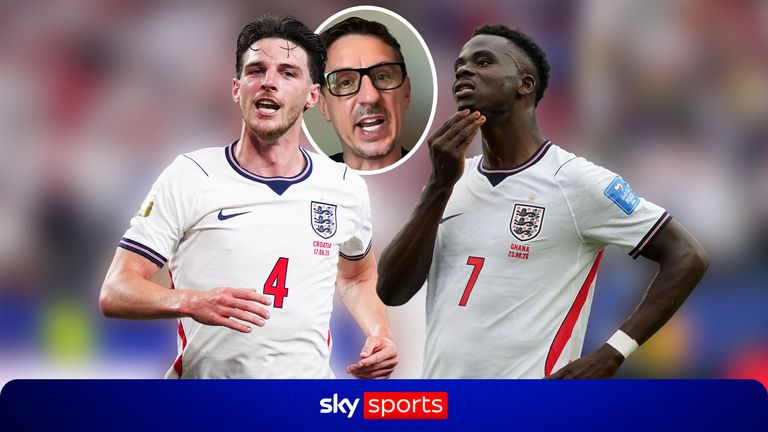
Gary Neville believes Tuchel was protecting the player, with so few other options for the role.
"Tuchel has got Spence, who he rested the other day," the former England right-back told Sky Sports. "I hope that's because he needs to play the rest of the games. But we are very thin on the ground."
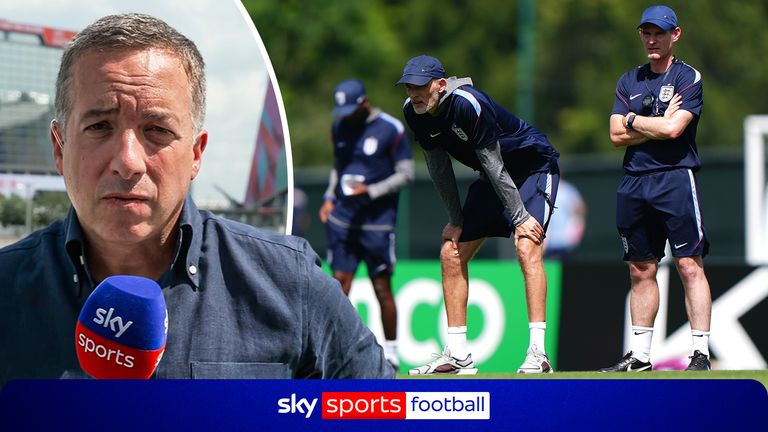
And with Konsa likely to start in the centre of defence and Chalobah yet to have any game time at the tournament, Spence - who has impressed when he has been called upon in the warm-ups and group contests - should be the man entrusted with the role on Wednesday.
Rich Morgan
Not the game for Kane to drop deep?
A key element of England's plan to get the best from Harry Kane was allowing him to play to his strengths - and they include dropping deep with runners beyond. It has shaped Tuchel's thinking in prioritising pure pace over trickery on the wings.
But against Panama, who offered so little space in behind their defence, Kane's impact came in a more conventional manner - nodding in a cross from close range. It highlighted that he can be that box presence and that is what might be required again.
DR Congo have had some of the lowest possession numbers at this World Cup so do not expect the wingers to be racing into vacant space behind the full-backs too often. Kane's passing range, such a great weapon, may have to wait. England need his finishing.
Adam Bate
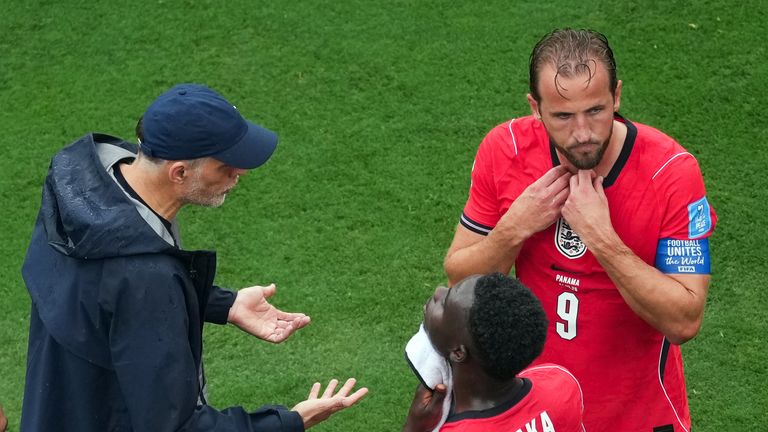
Bellingham role upon Rice return?
Jude Bellingham was the player of the match in England's win over Panama but is likely to see his role switched for this game due to the return of Declan Rice in midfield. The task is to continue getting the best from him in whatever position he is assigned.
On the face of it, Rice's absence required Bellingham to play deeper - but the formation has always been a bit more nuanced than that. While Rice is often described as playing alongside Elliot Anderson, he has in reality often been deployed in advance of him in the left channel.
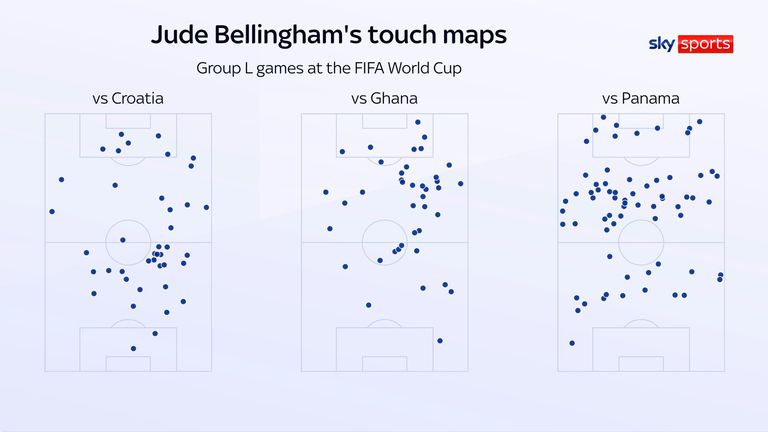
Those are the positions that Bellingham frequently took up in the 2-0 win against Panama - scoring one and setting up the other - having previously played from the right. His touch maps show that he was able to get on the ball much more last time out.
He actually had more touches in the opposition box in this game as well as showcasing his tackling abilities once again. Bellingham is at his best when he is able to go where the action is and influence things. It will be interesting how it plays out with Rice back.
Adam Bate
Who starts on the wings?
Tuchel changed both wingers for the final group game against Panama as Bukayo Saka and Marcus Rashford replaced Noni Madueke and Anthony Gordon. The pair will be confident of keeping their places in the starting line-up against DR Congo.
Rashford was erratic against Panama, only hitting the target with one of his five shots and not completing any of his six crosses. But he offered considerably more attacking threat than Gordon, while Saka appears to have overcome his fitness issues.
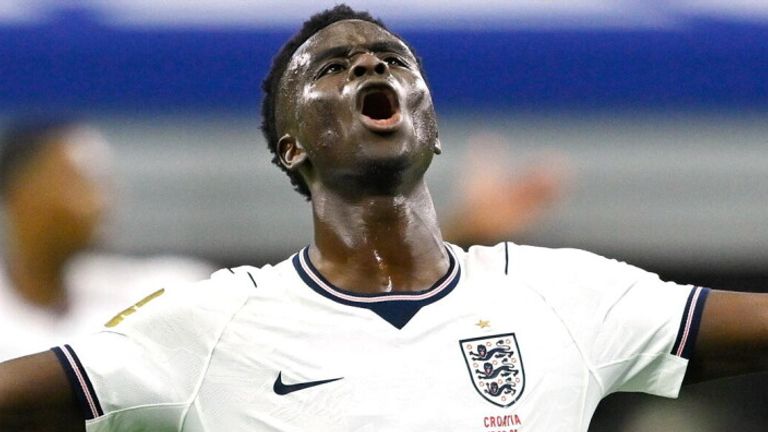
Rashford and Saka have averaged more than twice as many shots per 90 minutes as Madueke and Gordon at the tournament so far. They have also averaged considerably more touches and passes, reflecting their greater involvement generally.
Saka has been carefully managed by Tuchel, appearing as a substitute against Croatia and Ghana before coming off in the 62nd minute against Panama. Now that the knockouts have arrived, though, he should be in a better condition to deliver his best. His set-piece delivery is another invaluable asset.
Nick Wright
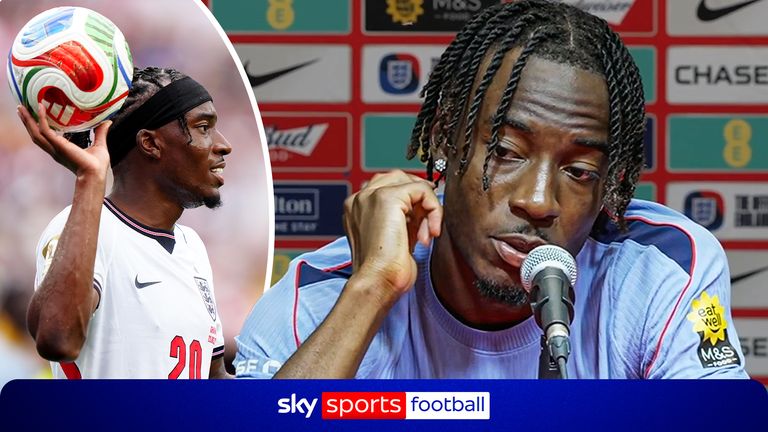
Are doubts creeping in about Pickford?
Jordan Pickford remains England's first-choice goalkeeper, as he should with credit in the bank after three major tournaments, but doubts are beginning to creep in.
It was a shaky performance against Croatia, kicking off the tournament with two goals conceded.
His showing against Ghana then compounded those fears. He was a bystander for much of it without a save to make. But his challenge on Prince Adu outside the area was rash and could have very easily cost England the game.
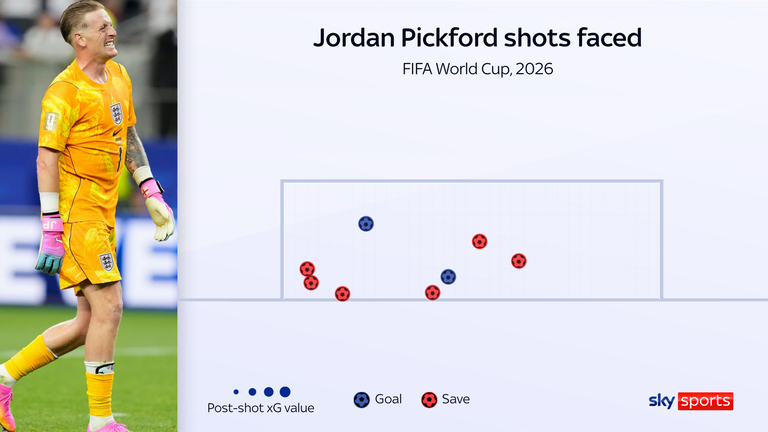
Racing out from his area, missing the ball and taking the player along with him: goalkeepers are often measured on the brief moments throughout a fixture when they are called upon. Pickford failed that test.
He also currently sits 39th in goals prevented for goalkeepers across the tournament (-1.39), a metric that measures performance based on the quality of shots they have faced compared to the goals conceded.
If England are to stand a chance as the tournament progresses, they need Pickford to return to the reliable presence between the sticks that he has been for almost a decade now.
Patrick Rowe
How much of a concern is fitness?
England's most prevalent injury worries have come at right-back, which has been discussed in detail above. Tuchel will not have foreseen this, but is now dealing with the consequences.
Meanwhile, after an Achilles issue, Saka was eased in through the group stages, but though Tuchel says he is "not a problem", Sky Sports' Neville has weighed in, saying Saka "doesn't look right at all".
Speaking on Stick to Football, he said: "He's usually the boy that's bubbling and smiling, he's got that competitive edge to him, but he's not right and that's a concern to us."
Then there's Anderson, who retained his spot in the starting XI against Panama, and played 84 minutes, despite reported muscle tightness.
But Rice will not have played for eight days by the time of the DR Congo encounter, having sat out England's final group game after a calf complaint, and to have him back in midfield will provide a huge boost.
The majority of the concerns appear manageable, and that's how England need them to stay if they are to go deep.
Dan Long
How England can break DR Congo's low block
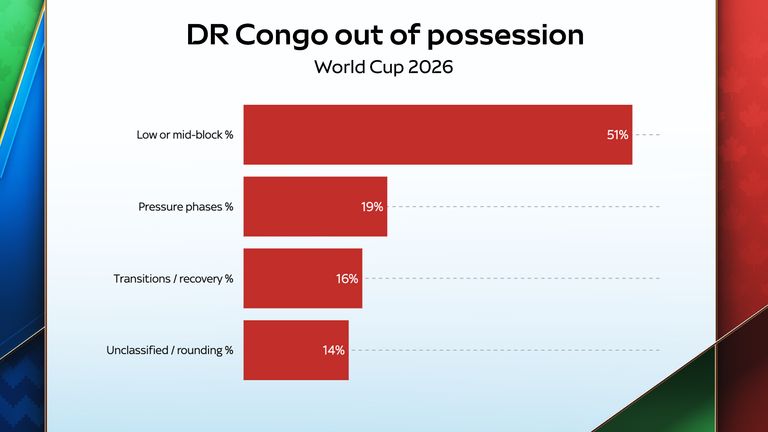
DR Congo frequently sit in a low-to-mid block out of possession but England's issue at this World Cup has not been creating shots against deep defences - it has been turning that pressure into clear chances and goals.
According to FIFA data, DR Congo have spent more than half of their out-of-possession time in a low-to-mid block. The pattern is clear: they are happy to retreat into shape, protect central areas and invite opponents to find a way through.
Senegal, France, Germany and Canada have each scored twice during phases when opponents were sitting deep. France and Senegal have combined that finishing touch with shot volume, producing between seven and eight shots per 10 minutes in that game state.
England have yet to score against a low block at this World Cup, but their shot rate is similar to France and Senegal. That suggests the problem is not simply getting efforts away.
It is more likely about chance quality, shot location and the speed of England's attacking play once they reach the final third.
At the other end of the scale, Uruguay, Turkey and Belgium have produced plenty of shots against deep defences but failed to convert them, either through poor finishing or lower-quality attempts.
Spain, meanwhile, have struggled to find the same level of attacking volume, failing to score against deep opposition and managing only around four shots per 10 low-block minutes.
The data points towards the profile of teams who have caused low blocks the most problems. France and Senegal have not just circulated possession in front of defenders; they have threatened with pace, direct running and individual quality in one-vs-one situations.
England are creating shots but the next step is creating better ones.
Adam Smith