Analysis
Explained: Why two Republic of Ireland vs Israel matches have become so controversial
Thursday 24 September 2026 12:54, UK
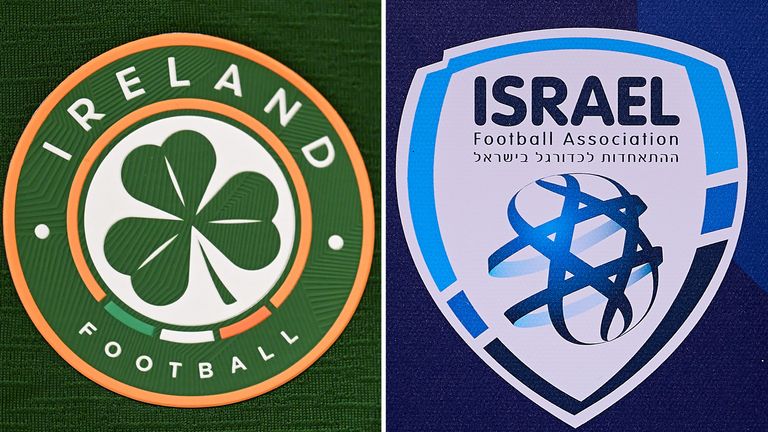
The Republic of Ireland will face Israel in a men’s football fixture for the first time since 2005 in this international break, but there have been calls for the two UEFA Nations League games not to be played at all.
Both meetings - the first played in Debrecen, Hungary on Sunday and the second scheduled for the Serbian town of Backa Topola on October 4 - have been overshadowed by politics, with the Football Association of Ireland (FAI) urged to boycott the internationals amid ongoing conflict in the Israel-Gaza War.
Uncertainty over the games going ahead might have subsided, but the tensions between the two nations have not.
Heimir Hallgrimsson, the Republic of Ireland head coach, has been accused of "stupidity and hypocrisy" by the Israel Football Association after last week suggesting his team would be "playing against genocide" when facing Israel, while his players are not ruling out their own protests ahead of the games.
- Republic of Ireland's World Cup dreams ended by penalty heartbreak
- Republic can take 'growth' from 'heart wrenching' defeat
- Republic of Ireland scores and fixtures

The Athletic examines the key issues ahead of the first meeting this weekend.
Why have these games caused controversy?
This has been a contentious issue rolling down the tracks ever since the 2026-27 Nations League draw was made in February. Group B3 saw the Republic of Ireland pitted against Kosovo, their opening opponents this evening, and Austria, but it was the prospect of facing Israel which created immediate unease.
The Football Association of Ireland (FAI) had overwhelmingly approved a motion that called on UEFA to ban Israel from its competitions just four months earlier due to violations of the governing body's statutes, including "the organisation of clubs in illegal settlements in the occupied West Bank without the consent of the Palestinian Football Association".
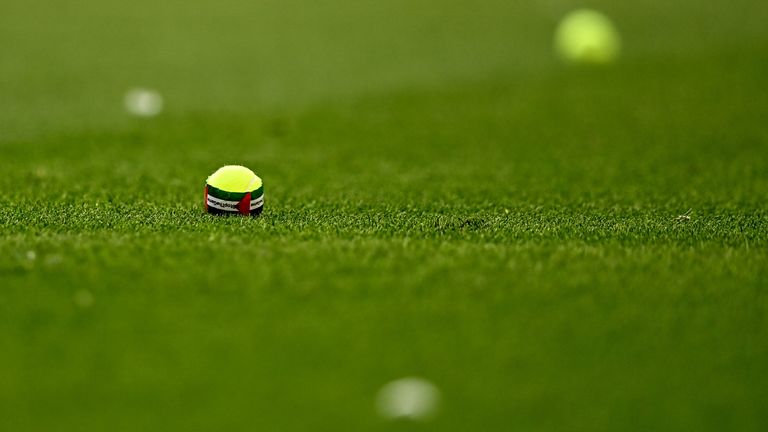
The Nations League draw duly reignited the row. Irish politicians, including the FAI member Joanna Byrne, were quick to call for a boycott of the Israel games in the following days and protests ensued when Qatar visited Dublin's Aviva Stadium for a friendly in May. Tennis balls featuring the Palestine flag were thrown on the pitch by supporters, twice causing brief interruptions.
The FAI had already confirmed its plans to go ahead with the Israel games by then, and that decision was formally approved at an EGM in July.
That saw only 32 votes in favour of a boycott, with 75 members voting for the games to be played. The FAI had argued that boycotting games would cause "significant and lasting harm to Irish football" due to the likely disciplinary sanctions from UEFA.
A measure of the opposition to the Republic of Ireland facing Israel also came with the acceptance that the "home" fixture would not be played in Dublin. The FAI cited "operational challenges (that) could impact the delivery of the game on home soil" and the decision was eventually made in late June, with the support of UEFA, to move the game to Backa Topola, a small town in northern Serbia, on Sunday week.
No tickets for the game will be made available to Ireland fans.
"The answer I got was very clear," FAI chief executive David Courell told reporters on September 18. "That would not be possible because Ireland and Israel have never been in direct conflict."
What is the political backdrop?
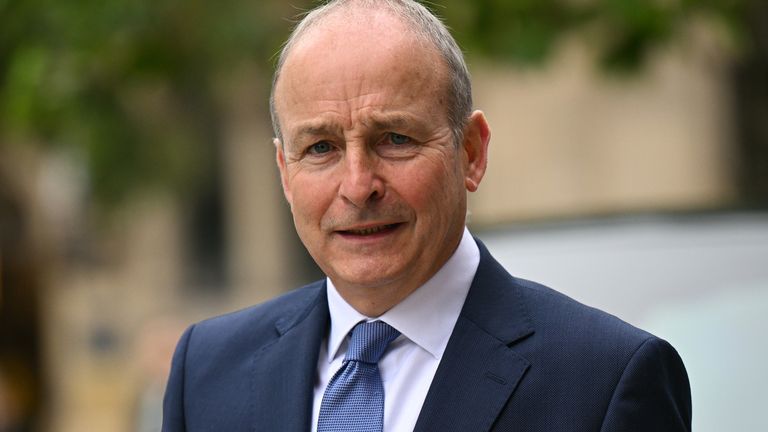
The Republic of Ireland has consistently outlined its backing for the Palestinian people since the conflict with Israel began almost three years ago, joining Norway and Spain when officially recognising a Palestinian state in 2024. Taoiseach Micheal Martin has also made his stance clear, accusing Israel of committing "genocide" last year in comments reported by the Irish Mirror.
The conflict in Gaza began after Israel responded to attacks by Hamas militants on October 7, 2023, which saw around 1,200 people, mostly civilians, killed in Israel and 250 taken hostage. The war has subsequently seen 73,000 people killed, according to figures from the Gaza Health Ministry and used by the UN.
Strained relations between the Republic of Ireland and Israel have continued this year. Two Israeli government ministers were the subject of travel bans in June, while foreign minister Helen McEntee also confirmed Ireland's intent to limit goods trading with settlements in the Israeli-occupied West Bank this summer.
A meeting between the Republic of Ireland and Israel on a football field this weekend has subsequently taken on enormous significance against such a backdrop.
There are similarities in Ireland's political stance with those of Norway, who faced similar calls for a boycott when Israel travelled to Oslo last October. The Norwegian Football Federation (NFF) had aligned itself with its government and said in a statement leading up to Israel's visit that the "tragic humanitarian suffering in Gaza" had made the fixture challenging.
That World Cup qualifier, won 5-0 by Norway, saw thousands take part in a protest march to the stadium.
Who has opposed the games taking place?
Moving a home game 1,500 miles away has not stopped the objections building ahead of the two teams meeting on Sunday. More than 160 Irish sportspeople signed an open letter asking their national team to boycott the Israel games under the banner of the Irish Sport for Palestine Group, who have also run the "Stop the Game" campaign that protested outside of the Irish team hotel in Dublin on Monday.
"This is a significant moment and with this moment you have an opportunity to do the right thing," the letter said.
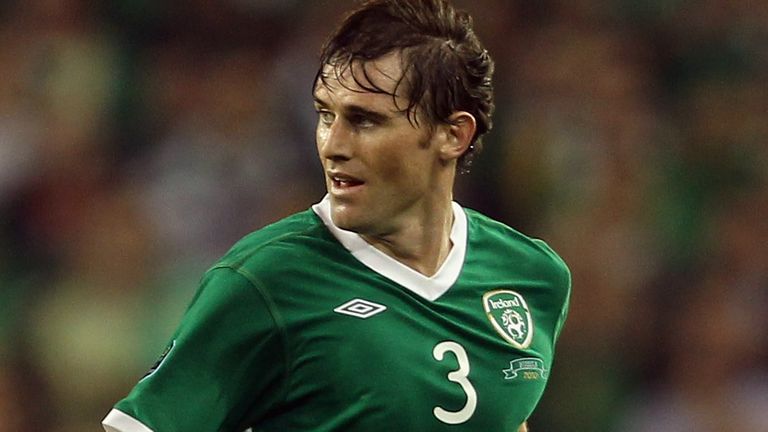
Kevin Kilbane, the former Republic of Ireland international who holds 110 caps, has also been unequivocal in his views. "The Republic of Ireland should not be playing Israel… not while Israeli forces are committing genocide," he wrote in a column for the Irish Times.">he wrote in a column for the Irish Times.
Amnesty International also issued a fresh statement on Tuesday that said UEFA risked letting football "rubber-stamp apartheid" by allowing Israel's continued participation in its club and international competitions. A spokesperson for the Israeli FA responded to that by saying: "Their obsession with the idea of Israel as a state is incurable, as is their need of attention."
The Irish media, meanwhile, has faced its own dilemmas in the coverage of the Israel games. RTE, the public broadcaster behind Ireland's boycott of the Eurovision Song Contest in the last two years due to Israel's continued involvement, has stripped back its coverage. Contractual obligations will be met, RTE confirmed in a statement, but there would be no studio coverage or commentators sent to either fixture.
What have the key stakeholders said ahead of this weekend?
Relations between the two nations have grown increasingly hostile in the last week. Hallgrimsson appeared in front of the media to announce his squad for the upcoming friendlies and made pointed remarks when asked how his players would focus on football.
"We're not playing with genocide, we're playing against genocide," the former Iceland head coach told reporters. "We're playing against Israel, we're not playing with Israel."
The reaction to those words, in a social media post from the Israel FA account, raised temperatures further still. "We have contributed to the world and humanity in countless fields, earning an impressive number of Nobel Prizes along the way," it read. "Unfortunately, we have not yet found a cure for stupidity, ignorance and hypocrisy displayed by @IrelandFootball team coach. We're not playing with ignorance, hypocrisy and stupidity, we're playing against the coach who embodies them."
Martin, who was among the world leaders attending the UN General Assembly in New York, was then drawn back into debate on Tuesday. "I think those are unacceptable remarks. They should be withdrawn. Israel can't keep denying what the world knows and what the world understands."
The FAI has not addressed Hallgrimsson's comments publicly, but the Republic of Ireland's head coach said on Wednesday that he had been "grateful for the support" he had received.
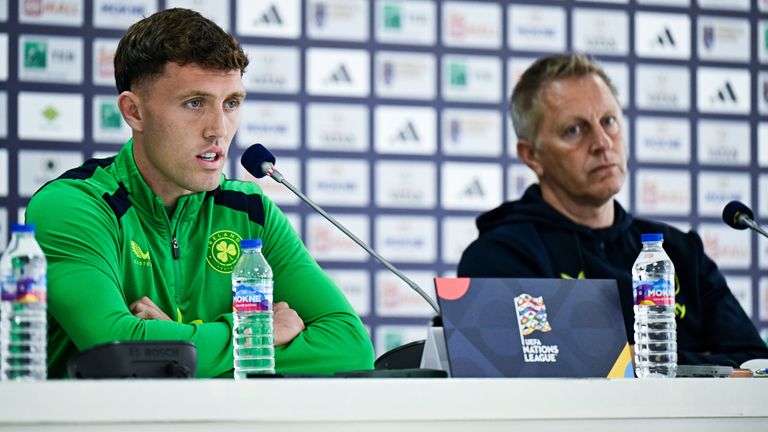
"Maybe from a leadership point of view, it was not clever from me to take the attention (away) like this. It's a tricky time for us," Hallgrimsson said in his pre-match press conference ahead of facing Kosovo.
The same extends to his players, too. Dara O'Shea, the Ipswich Town defender, said, according to the BBC, that he and the rest of the players would come together on Friday to "openly discuss" the prospect of a protest ahead of the first Israel game in Debrecen on Sunday.
Why are the games being played in Hungary and Serbia?
Hungary has acted as an adopted home for Israel since the start of the conflict. They first played there in November 2023, when resuming their attempts to qualify for Euro 2024 when hosting Switzerland at the Pancho Arena in Felcsut, a small village 26 miles west of Budapest.
Victor Orban, who lost his position as Hungary's prime minister this year, had been a long-standing ally of Israeli prime minister Benjamin Netanyahu and claimed Hungary to be the "safest country in Europe" for Jews.
The World Cup 2026 qualifiers against Estonia, Norway and Italy were all held in Debrecen, which has also previously hosted European games for Israeli sides Maccabi Haifa and Maccabi Tel Aviv.
The Republic of Ireland's choice of Backa Topola, Serbia, is less clear. Dublin ceased to become an option, even behind closed doors, as the opposition to Israel visiting became clear, which left limited options for relocation.
It needed to be a nation sympathetic to Israel to avoid further protests and Serbia, neighbouring Hungary to the south, has forged strong diplomatic relations. According to the Associated Press, Serbia's president Aleksandar Vucic inaugurated an assembly factory for Israel-made drones last week, with plans for three more production sites.
A switch to Serbia was reliant on UEFA approval and it will be Backa Topola's home of the TSC Arena where this story ends on October 4.
This article originally appeared in The Athletic.
© 2026 The Athletic Media Company