Decision-making is at the heart of sport. It can turn a game on its head and be the difference between glory and failure.
More from Football
-
Europa League and Conference League LIVE! Crystal Palace, Brighton, Bournemouth, Celtic, Sunderland score updates
-
Premier League predictions & Jones Knows' best bets: Nottingham Forest vs Man City, Man Utd vs Aston Villa and more!
-
Crystal Palace transfers, latest news, rumours and gossip: Live updates, goals and highlights
-
Tottenham transfer news, rumours and gossip: Live updates and latest on deals, signings, loans and contracts
-
All 18 of Scott Twine's free-kick goals!
-
England squad: Cole Palmer to return? Kobbie Mainoo recall? Thomas Tuchel's big selection dilemmas analysed
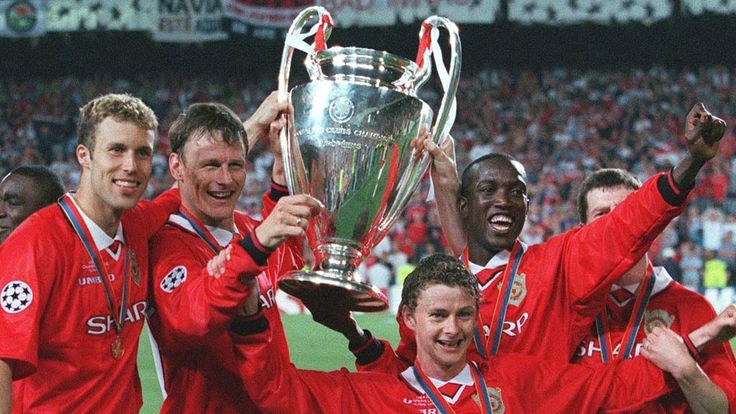
VOTE NOWFergie's supersubs win the European Cup
In 1999, Manchester United stood on the brink of history as they faced Bayern Munich in the European Cup Final. Having already won the Premier League and FA Cup, the club was just 90 minutes away from
an unprecedented treble. But the German giants took a one goal lead and they clung on as the clock ticked down. That was when Alex Ferguson decided to send on substitutes Teddy Sheringham and Ole Gunnar Solskjaer in a last-ditch bid to get back into the game. Two historic goals later, scored in the 91st
and 93rd minute, and the European Cup was returning to Old Trafford.
Benitez rings the changes in Champions League final
The 2005 Champions League final pitted a workmanlike Liverpool team against a classy AC Milan. And the Italians' ability shone through in the first 45 minutes, as they eased into a 3-0 lead. That was when Liverpool manager Rafa Benitez made the decision to bring on German midfielder Didi Hamann for
defender Steve Finnan. The German gave Liverpool an extra man in the middle, helping them fight their way back to a remarkable 3-3 at full time. Then, after extra-time, the English team triumphed on penalties - with Hamann converting - crowning an unforgettable night in Istanbul.
Jack Charlton appointed Ireland manager
A few Irish eyebrows were raised at the decision to appoint Jack Charlton, a World Cup winner with England, as Republic of Ireland manager in 1988. His combative playing style and equally robust management style would ruffle a few feathers, but brought unprecedented success to the Republic. Taking them to European Championships and World Cups for the first time, Charlton became the darling of Irish supporters.
Liverpool decide Dalglish is the man to replace Keegan
When Liverpool legend Kevin Keegan left the club to join Hamburg in 1977, Liverpool's supporters were furious. But their anger was short-lived, as manager Bob Paisley splashed out a then British transfer record of £440,000 to buy Kenny Dalglish from Glasgow Celtic. Dalglish wasted no time winning fans' hearts by scoring 31 goals in a brilliant debut season. He went on to become a club legend and managed the team twice, securing several trophies and a permanent place in Anfield folklore.
3 points for a win
Until the early 1980s, most football leagues in the world awarded 2 points for a win and 1 point for a draw. In 1981 the decision by the Football League to take on board an idea from football personality and TV presenter, Jimmy Hill would usher in a new era for the game. By awarding 3 points for a win, Hill believed it would promote a more attacking style of football. And so it proved. Gradually the world followed, with FIFA formally adopting the system in 1995. Few could argue against it being a crucial decision and a huge step forward for the 'beautiful game'.