
Thomas Tuchel could become third successive German coach to win Champions League - so what is their appeal?
Sky Sports talks to technical director David Webb about the appeal of German coaches and why they are becoming increasingly successful as Thomas Tuchel tries to become the third successive German Champions League winner
Saturday 29 May 2021 21:06, UK
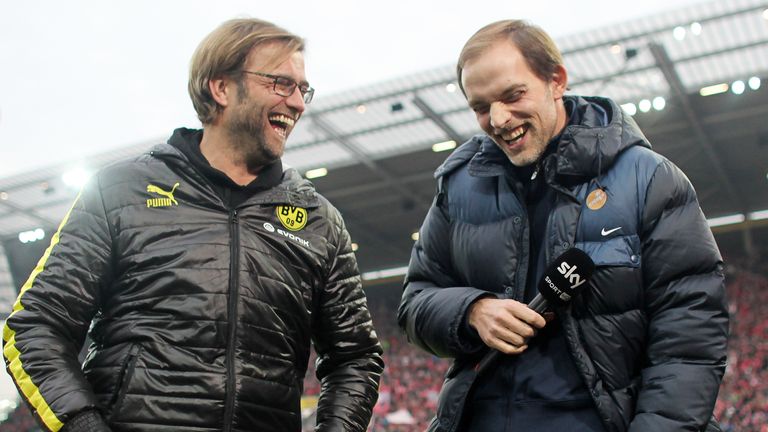
Chelsea boss Thomas Tuchel could become the third successive German coach to win the Champions League this weekend, after Liverpool's Jurgen Klopp and Bayern Munich's Hansi Flick.
Tuchel has made an immediate impact in the Premier League since taking over the club earlier this season, putting them into the top-four and finishing FA Cup runners-up, setting a path to restoring Chelsea to credible Premier League title contenders in the coming seasons.
He is one of a number of German coaches impressing across Europe, with Julian Nagelsmann the outstanding choice for Bayern following Flick's departure, Klopp bringing all the big prizes to Anfield, and Daniel Farke back in the Premier League with Norwich.
- Merson says: Chelsea must be clinical to beat Man City
- Why it could be Foden's final
- Parallel lives: The rise of Mahrez and Kante
So could a golden age for German coaches be upon us? What is it about German coaches and their philosophy to the game that is increasingly attractive and successful?
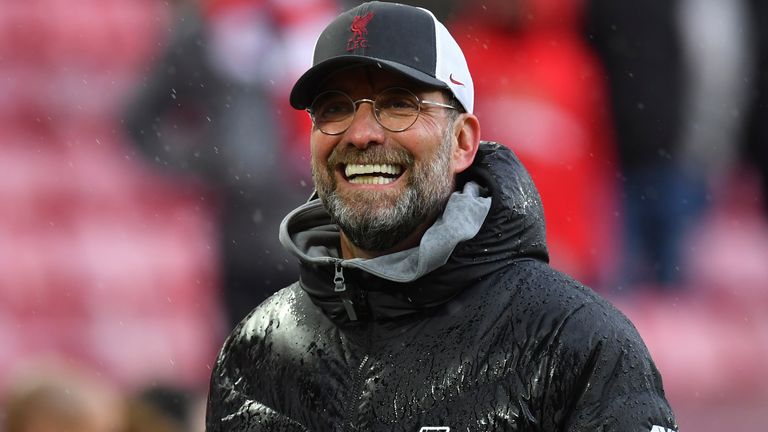
Sky Sports News spoke to David Webb - former head of elite potential ID at Spurs, head of recruitment at Bournemouth, and technical director at both Huddersfield and Ostersunds - to gauge the trend and weigh up the benefits of 'going German'.
Developing coaches and succession planning
Webb's first experience of the German coaching philosophy was when he went to Bayer Leverkusen during the 2008/09 season to complete his academy management license, looking in depth at the technical structures in the country as part of the course.
He discovered a culture of considering youth coaches as important as first-team coaches, especially at U19 level, and a keenness to develop them as future bosses of the seniors.
"What they like to do is, as well as develop players, develop staff from within," Webb says. "So an academy coach at a German club is just as important as a first-team coach.
"The education they go through, the process - they earn their stripes. A German coach at U19 level is called an 'elite' coach for a reason; because they take that level really seriously.
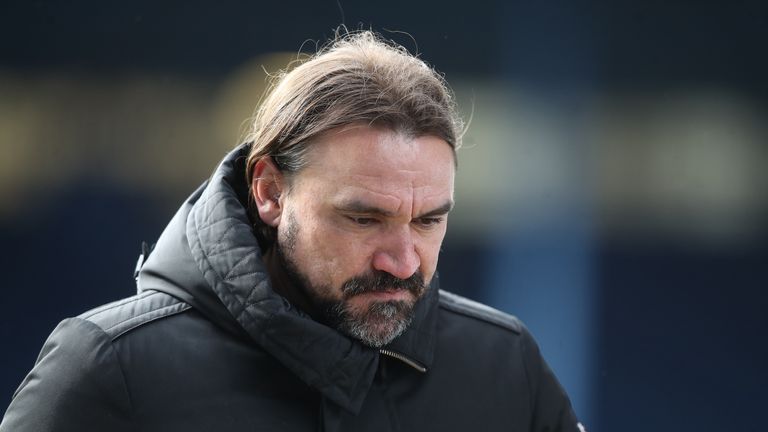
"Many successful German coaches have come through that route. Nagelsmann began in 1860 Munich's youth setup before a successful spell at Hoffenheim's academy earned him the head coach role there.
"Daniel Farke was a sporting director at a third-tier club then went to Dortmund to be an academy coach. Then he worked his way up to the second-team coach, and then came straight into Norwich.
"The idea is that they can transmit what they have learned, within the club's identity and structure, into the head coach role. They still have to develop first-team players, but can work on the premise that they have proven themselves at that particular club already.
"It's good succession planning. They have a structure and identity in which the first thought if a coach moves on is 'can we promote from within? If not, can we look to others in Germany or Austria?'
"Whoever they bring in almost certainly have academy and youth experience, they will understand the values of the club, the environment, and then they are there just to coach.
"That's also why you will see, rightly or wrongly, clubs announce their successors before the end of the season and before the incumbent has moved on. It gives time for the other coach to integrate into the next role more steadily - and for me, it just shows really good planning."
Ralf Rangnick, Red Bull and the Gegenpress
Renowned German coach Ralf Rangnick - overseer of the Red Bull group of clubs in Europe as their head of sport and development, and a Bundesliga runner-up as manager of Schalke and RB Leipzig - is credited with having influenced Klopp, Tuchel, Nagelsmann and most of the currently successful coaches in the Bundesliga.
He invented the 'Gegenpress', which translates as 'counter-press'; the high-pressing, all-out running style adopted to great fame by the current Liverpool boss. Klopp calls it 'heavy metal football' and if that is the case, Rangnick can be considered its Black Sabbath.
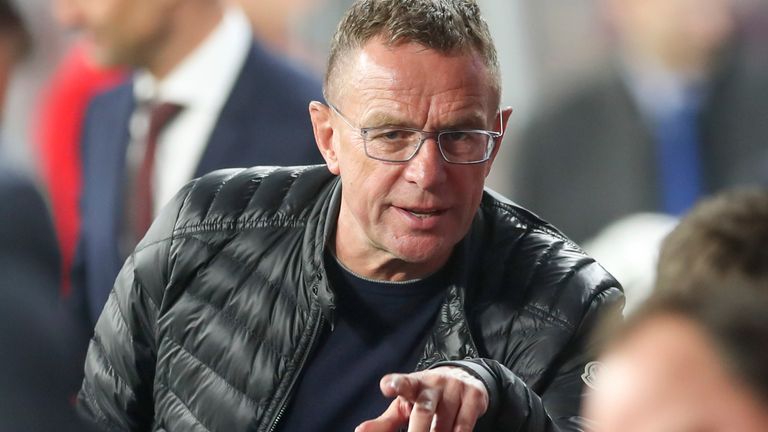
But Rangnick has also personally taken many young coaches under his wing, including Tuchel at Stuttgart, Nagelsmann at Leipzig, his successor Jesse Marsch who will join from Salzburg in the summer, incoming Borussia Dortmund boss Marco Rose, and his successor into Borussia Monchengladbach Adi Hutter, from Eintracht Frankfurt.
Webb believes his influence has been key to the increasing success of German coaches in the modern game.
He said: "A lot of German coaches have taken on Rangnick's Gegenpress and adapted it; the high-offensive pressing, outrunning, outworking teams, always looking to attack. Those are the key principles in the German game now, and from that these coaches are adapting it tactically, setting it up in different formations to win games.
"If you look at Tuchel, he uses a little bit of that but is also very creative with his tactical flexibility and training methods. He thinks outside the box. He's even creative in the way he likes to do his training drills. They're not the normal bog-standard drills. He challenges players to think during sessions and allows the sessions to dictate the players.
"The belief is they are allowing players responsibility in training so they can take more responsibility on the pitch, because he can't be there to guide them on the pitch.
"If you watched Chelsea against Manchester City in the recent Premier League game, where it looked like they were playing five at the back, they were actually playing four with Antonio Rudiger stepping out to press and deny spaces. That shows a real in-depth study of the opposition but starting with one framework and having that flexibility. It was very impressive."
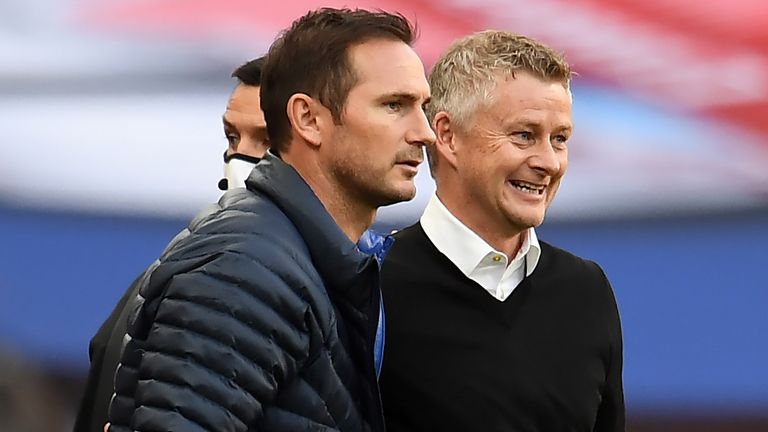
Tuchel vs Lampard
Frank Lampard was credited with doing an excellent job as Chelsea boss when he took over in 2019, leading the club to a top-four finish under a transfer embargo by finally integrating some of their best academy players into the first team.
But he was not able to continue that success after substantial investment in the summer, including two top Germans in Kai Havertz and Timo Werner, and he was replaced by Tuchel in January with the club ninth in the Premier League and 11 points outside the top four.
Tuchel has since taken Chelsea on a run of 10 wins from 17 games, with only two defeats, to put them back in the top four, as well as reaching the Champions League final and finishing FA Cup runners-up.
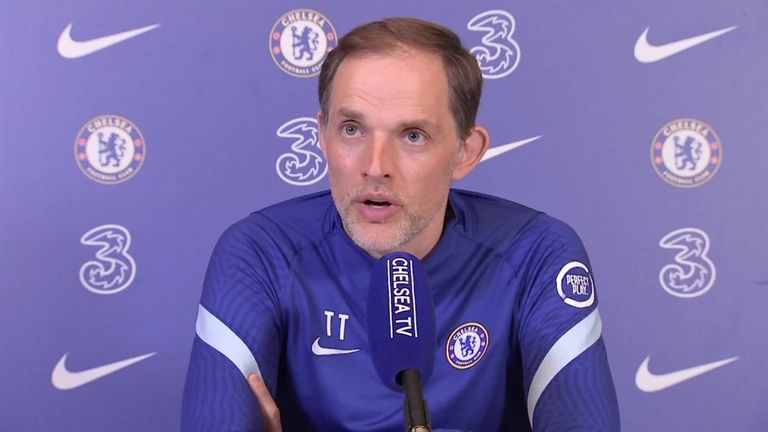
Webb - who was a youth coach at Crystal Palace when he discovered Wilfried Zaha and brought him to the club - believes this is a sign of Tuchel's considerable coaching experience through the age groups, over Lampard's relatively short managerial career so far.
"Rightly or wrongly, Frank took the Chelsea job obviously feeling he could do well and in the first season he did amazing with no budget and blooding youngsters such as Mason Mount, Reece James and Billy Gilmore," Webb said.
"But it's about learning your craft as a coach, and expectations in the second season at Chelsea were very high, Frank is still developing and will eventually go on to be a top manager.
"It's about having that grounding and experience to be well equipped. When you go into a job like Chelsea, you're automatically in the firing line.
"When you're facing multiple competitions and pressure to succeed straight away, then the balance of knowing how to manage a football squad, getting the best out of players in different scenarios, when you've had more education in those areas, it can definitely help.
"Steven Gerrard is another at Rangers, and has surrounded himself with good coaches to learn from, which is one reason they have been so successful this season. Both are at the top of a list of a lot of really good young English coaches coming through - but they have to learn their craft and gain experience, even through coaching youth teams."
So, should Tottenham 'go German'?
Webb, who has an MSc in Sports Psychology, was part of Mauricio Pochettino's scouting department under their former head of recruitment Paul Mitchell. He believes their most successful period in recent history was with the Argentinian as head coach, developing players.

Pochettino's successor Jose Mourinho was an abrupt change in management style from Pochettino, now in charge at Paris Saint-Germain, and it did not work out, leaving Spurs needing a full appraisal of their situation and future plans, while struggling to make the top four and the inexperienced ex-midfielder Ryan Mason in temporary charge.
Webb believes that, within Tottenham's structure, there is scope to bring in an upcoming German head coach to develop players and take the team forward in a similar vein to how Pochettino did when he joined from Southampton in 2014.
"If I was advising Tottenham, I would go down more of an up-and-coming German coach route; someone who has had good success at a club but maybe not as far as some names mentioned in the media.
"If I was going to go for, say a Ralf Rangnick, I'd have Ryan Mason there to learn with him. Ralf has a real proven background of developing staff as well as players.
"I think Spurs were most successful under Pochettino, bringing top young players through and developing them. I can see the success [like that again] evolving first hand. Tottenham are never going to be the main spenders in the transfer market, so you have to be realistic with what you're trying to compete with.
"If you go for a manager whose expectations are from a winning history, they are ultimately going to want the best players to compete. Tottenham's transfer strategy isn't that, so you want to go for someone like Mauricio was when he came from Southampton.
"Depending which club I was at, you'd definitely give a German coach some serious consideration. Based on the team, the club values, and what the owners dictate it would be silly not to, considering the education, background and coaching processes they've got."