Analysis
Pep Guardiola leaves Manchester City: Inside the final day of his remarkable 10 years in the Premier League
Sky Sports' Laura Hunter was at Pep Guardiola's 593rd and final game as Man City boss; the Spaniard leaves having won over half of the club's trophies and titles - overseeing more games than any other manager in club history - but it's not the honours that kept him there, it's connection
Monday 25 May 2026 16:24, UK
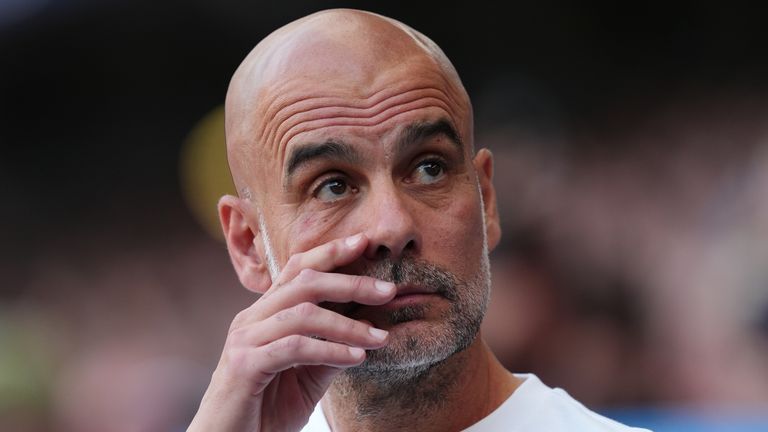
A few things struck me about Pep Guardiola's final two press conferences, none more so than his reluctance to make it about himself.
On Friday, journalists had turned up in their droves to pitch a question to him about his departure: Why now? When was the decision made? What will you do next? His opening gambit: "Aston Villa, guys, allez," which drew a laugh.
Guardiola chose to speak very little about the whys, whens and whats, preferring to highlight "how happy and fortunate he was" to manage Manchester City for a decade. It was not the titles and records he stayed for - though they helped - it was the connection to a city he fell in love with "from day one".
- How Man City have guarded against post-Pep decline
- Transfer Centre LIVE! | Man City news & transfers🔵
- Man City fixtures & scores | FREE Man City PL highlights▶️
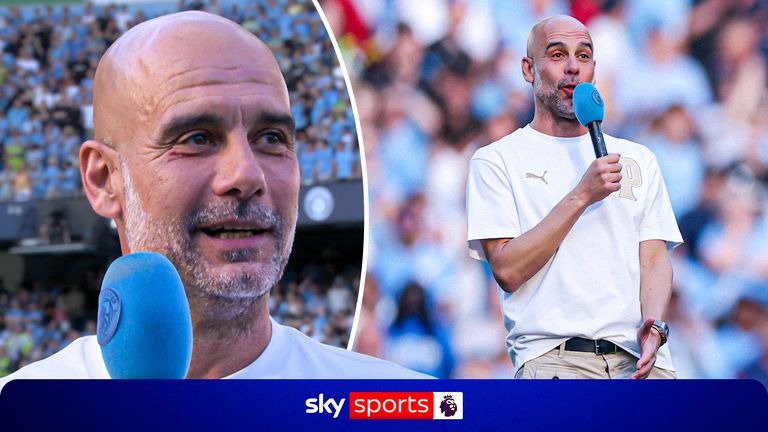
The debate over him being the Premier League's best ever was, to him, "not important", despite dominating the online chatter for weeks before - and no doubt months after.
Nor, really, was talk of all the very many trophies - 20 in total - that have adorned his Man City career. When asked directly about his proudest moment he replied: "It's a question for the people; hopefully they enjoy watching us play."
The joy of watching Manchester City play under Pep was not necessarily encapsulated in a final performance under him. The fact that Antoine Semenyo scored from a set-play in a drab defeat was perfectly ironic. Almost the antithesis of Pep-ball.
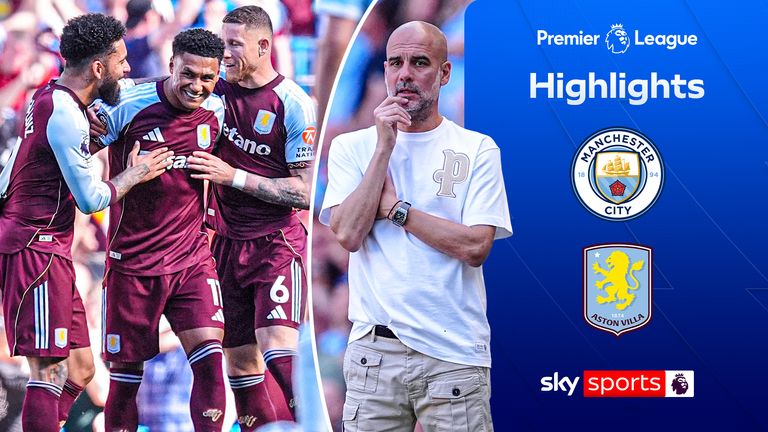
Guardiola stayed rooted to his seat when the opener went in, presumably unenthused by its scrappy creation. Pep teams never have been built on set-piece prowess and they were not about to start now. "A good game for Aston Villa to get all the alcohol out of the bodies after the Europa League," he joked afterwards.
It was clear from his experimental selection - nine changes from the draw at Bournemouth - that he was not chasing a 270th Premier League victory. Erling Haaland, Marc Guehi, Gianluigi Donnarumma and Nico O'Reilly were missing entirely, none of them injured.
What he wanted most was to share the experience with those who have made his time extra special. With his longest-serving aides and those who best represented the club's extraordinary evolution under him.
With club captain Bernardo Silva. With Johnny, Jonny Stones. With academy royalty Phil Foden.
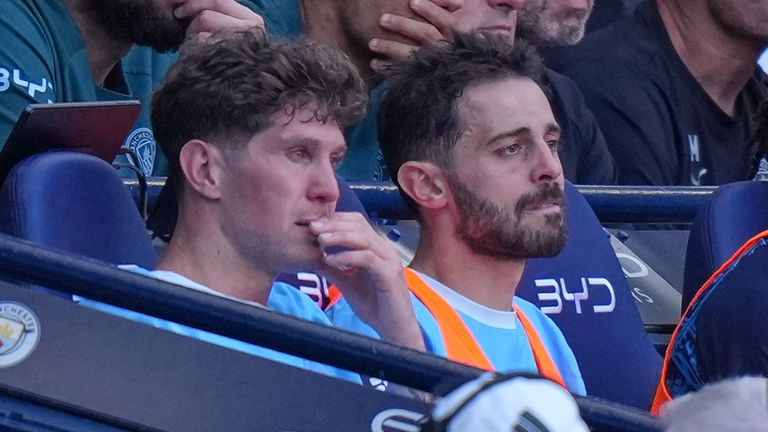
The football was as immaterial as it could have been between two of the league's most tactically astute, technically obsessed coaches. The end result was of relatively little consequence, albeit you wouldn't know it from the way Guardiola berated both Silva and Foden during a drinks break in the first half.
Former players Ilkay Gundogan, Ederson and Fernandinho were Pep's esteemed guests. In attendance as much to honour him as be honoured themselves.
And tears flowed from start to finish. Silva was emotional from the moment he led the team out of the tunnel for the final time, peaking when both sets of players offered him a guard of honour to leave the pitch.
His reaction drew the same response from Guardiola, who used his casual white T-shirt to wipe away the tears as he embraced the player who has comfortably made the most appearances under him (460).
"I don't cry," said Guardiola afterwards, "but when I see Bernardo cry, I cry." Plenty in the stands welled up.
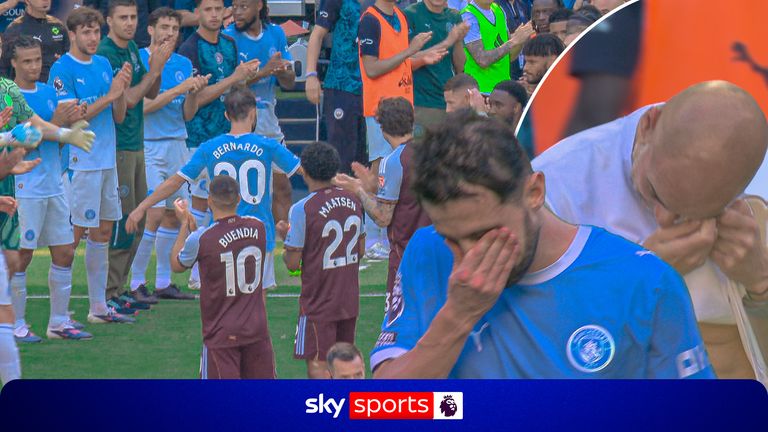
Stones was overcome, too, the adoration from a record-breaking crowd louder than it's ever been. For one time only, Guardiola was happy to embrace fanfare over football. For only the second time all season, his team were beaten at home, the same number of defeats as champions Arsenal.
And so, to his last ever press conference, longer and more expressive than his penultimate. Perhaps that is simply a byproduct of a matchday, a rawer environment where feelings are less containable. More likely, though, it was the culmination of something much greater.
Pep did not make an effort to guard his emotions as he did on Friday. He spoke candidly about being ready to leave, the furniture from his house in Manchester long gone, and how his sentimental side had taken over many parts of the day with his 95-year-old father in the crowd.
"The luggage of memories," as he put it, packed away to pour over at another time. Sat on a beach, perhaps, with rest and recuperation now top of his agenda for just the second time in nearly 20 years of relentless management.
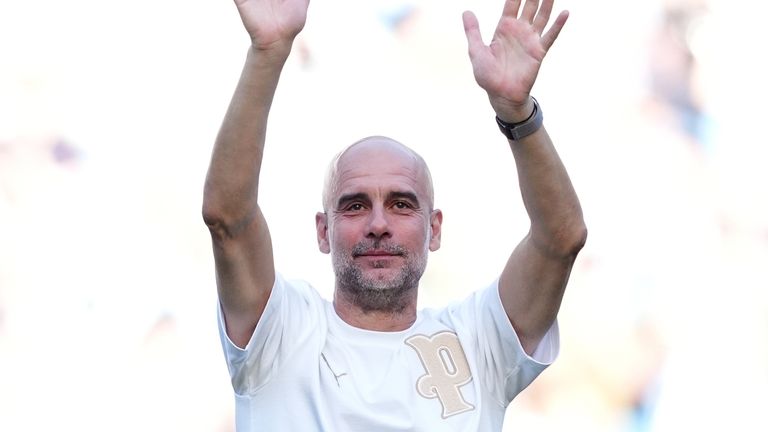
What will endure, of course, is the legacy of a coach that has delivered over half of the major trophies won by City, with a win rate (70.8 per cent) unlikely to ever be seen again. And a points-per-game ratio that dwarfs even the great Sir Alex Ferguson.
Even with far fewer games than some of his contemporaries, Guardiola sits fourth on the list of managers with the most victories in Premier League history (269).
The naming of the Etihad's expanded North Stand in his honour will act as a constant reminder of his profound impact and achievements. "The players don't know it, but I will be there controlling them," he joked. No doubt the psychology of that stand will forever carry meaning for those who played under him.
Fans won't forget easily, either. Pep paraphernalia was everywhere on Sunday and summed up the sentiment perfectly: 'Ten glorious years. Twenty trophies. Thank you Pep.'