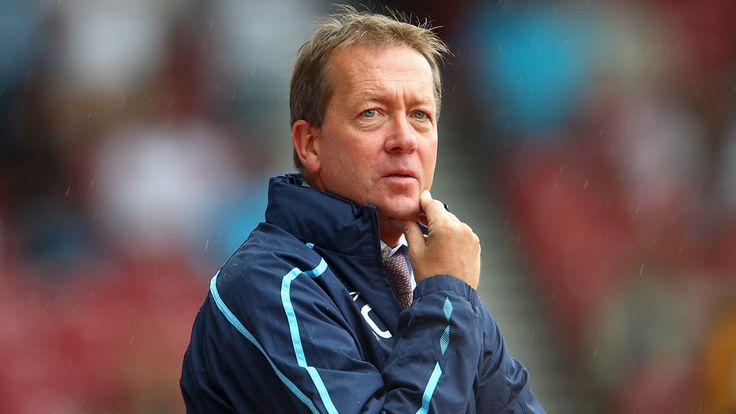
What are the secrets to football management? Alan Curbishley is next in our 'The Gaffer' series.
After a playing career which included time with Birmingham City and Aston Villa, Alan Curbishley has built a fine reputation as a football manager with another two of his former clubs, Charlton Athletic and West Ham United.
His managerial achievements over more than 15 years to date saw him linked with the England job in the past and his other highlights have so far included keeping Charlton in the Premier League, having twice been promoted - once via an incredible penalty shootout play-off win over Sunderland at Wembley and once as champions.
Curbishley has been out of football management since leaving West Ham in 2008 after a fallout with the club over transfer policy, having also succeeded in a Carlos Tevez-inspired battle against relegation with the Hammers in 2006/07. But, here, he gives Sky Sports an insight into being a boss.
Have you always wanted to be a manager?
Yes. I had various managers and coaches in my playing career and I have learned a bit and disregarded a bit. I always thought, if I was lucky enough, I would give it a go. Management was exactly how I expected it would be when I started - 24 hours-a-day work, full on and mad.
Who were your managerial role models?
I had Ron Greenwood and John Lyall when I was a player at West Ham. I learned the art of coaching from them. They were always trying to make everybody better. Whenever I came into contact with them, the decisions they took were to improve my game. I also had Ron Saunders at Birmingham. He came just after he had won the league at Aston Villa. We were only there together a couple of weeks but I realised why Villa were such a good side. I understood what he was trying to do and how he approached it. I took a lot from that.
What so far has been your best day in management?
I think it has to be getting my first job. You have to get in. I got in at Charlton and obviously we won promotion and stayed in the Premier League. But, actually, getting my first job was better, because it is so difficult, especially at Championship and Premier League level.
What so far has been your toughest day in management?
Leaving West Ham. It should never have happened. I have still got the best win percentage of any West Ham manager in the Premier League. I left the club when they were fifth from top. Who knows what could have happened if I had not left. But, unfortunately, it is history now.
What are the keys to man-management? How do you decide if a player needs an arm around the shoulder or the infamous hairdryer treatment?
That comes with experience. But the game has changed so dramatically. What a lot of managers could do 10 years ago, you cannot do that now. It is a totally different situation. Experience is a massive thing. It helps you steer clear of problems and, obviously, solve problems. But the art of man-management is now even more important, because of the way the game has changed.
How important is a strong relationship between a club's manager and owner/chairman/director of football?
I think it is the main relationship. I think it is more important than the relationship between the manager and the players in some respects. I think the relationship between the manager and the owner or chairman is paramount to being successful.
Is there a difference between