Exclusive
Aaron Connolly: Leyton Orient forward reflects on eventful career path from Premier League full debut goals for Brighton to set backs and comebacks
Aaron Connolly speaks to Sky Sports about his breakthrough at Brighton and the pitfalls and setbacks that followed on his journey in the game. He is now rebuilding in League One at Leyton Orient and determined to forge a career he can be proud of.

Tuesday 17 November 2026 11:52, UK
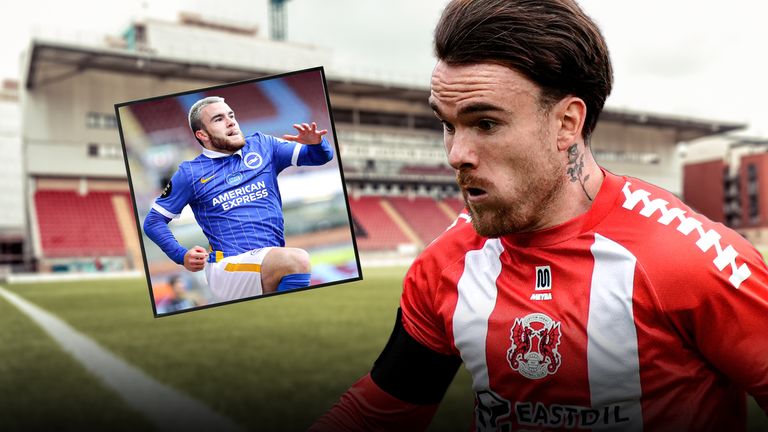
It is easy to forget that Aaron Connolly is still only 26, considering everything he has already experienced.
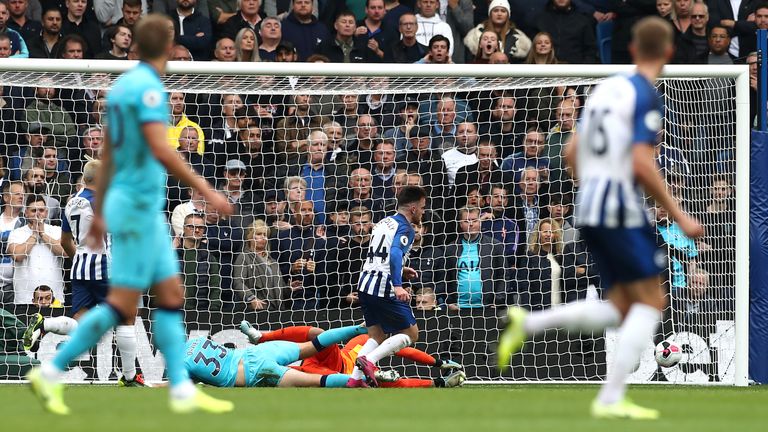
Just over seven years have passed since that magical full Premier League debut, scoring twice for Brighton against Spurs at the age of 19 in 2019.
In the time since, there have been injuries that have damaged his progress in football and obstacles in his life beyond the pitch.
"It's been tough," Connolly - now at Leyton Orient - tells Sky Sports. "It's probably been well documented that I haven't dealt with setbacks very well before.
"I love playing football. It's what I've done my whole life. So when I can't, it's obviously difficult.
"I've had a spell of injuries and interruptions. It seems to have been the way for the last three or four years of my career.
"At Hull, I was doing well, scoring goals, then got an injury and didn't really get back in.
"Then I left Hull, went to Sunderland, started one of my first games against Millwall, scored and then picked up a little injury and missed the next game. It's just that momentum I never seemed to get.
"Then obviously last year [at Orient] I had that momentum for about 15 to 20 games. I started scoring and assisting, and then tore my quad. I was in a bit of a rush to come back and then obviously did my shoulder and needed surgery again.
"Hopefully, I'm doing everything I can to stay injury-free right now, but with football you never know. There could just be that one late tackle or slip or something. Hopefully, fingers crossed, I'm past that stage now."
- Transfer Centre LIVE! | Latest League One news and rumours
- FREE League One highlights | League One fixtures & scores
- Got Sky? Watch EFL games LIVE on your phone📱
- Not got Sky? Latest Sky Sports deals or stream EFL games with no contract📺
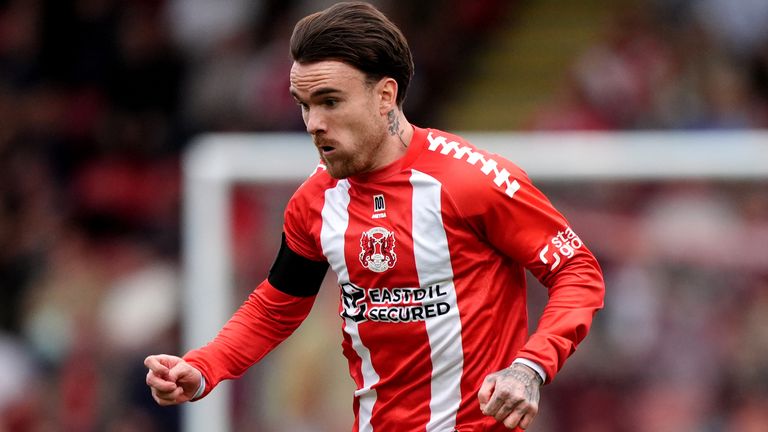
Connolly knows, injuries aside, he hasn't always helped himself. Temptations and distractions away from the pitch halted the progress in his late teens and early 20s.
A reputation was built that he is now working hard to shake off.
"There's always going to be football fans who have a certain opinion of you without knowing you," he admits. "I burst onto the scene a few years ago, and it feels like a long time ago now.
"There are people at the highest level because they live and breathe football and do everything properly. I didn't do that.
"I probably worked as hard as I could to get to that position to score those goals against Tottenham. After that, I kind of came away from everything I'd done to get myself in that position.
"Now, obviously, I've realised, and I'm hoping it's not too late to have realised, that kind of lifestyle and that attitude towards the game isn't going to get me very far.
"I probably believed the hype straight away and thought I'd scored two on my full debut, so I'm going to score 30 in the Premier League without dedicating myself to it, being in the gym, being first in and last to leave.
"I let myself down a lot, and that's probably why I ended up getting injured.
"I'd be late into training, be the first one to leave, never really stay and work on my craft or anything. I kind of thought I'd signed a long-term deal here now, so I've got five years to play with. That five years just went, and every footballer will tell you it goes quickly. It does.
"I've realised now that I need to dedicate myself to football. Sometimes when I'm at the training ground now, I come in first and leave last, and I'm sitting there thinking, 'why has it only clicked for me now that that's what you need to do in football?'
"Probably from 23 to 25 years old, I was just looking back on when I was 19, thinking, 'what did I do? Why did I do it for so long?'
"Even when I was injured, I still wanted to do the same thing because when I was at Brighton, if I got a little injury, that injury would take six weeks when it should have been two because of the way I was doing things. I wasn't doing everything properly.
"But listen, that's just the journey. If every player had the same journey, it would be a boring sport.
"I can never look back and say I wish I hadn't scored those two goals straight away, because I might not have ended up at Sunderland, for example, without that kind of CV behind me because of the impact I had early on at Brighton.
"It is difficult to think that I wish it hadn't happened. I do agree it probably was the worst thing that could have happened, looking back now, but at the time it felt like the best thing ever. And some of the issues probably would have come about eventually anyway."
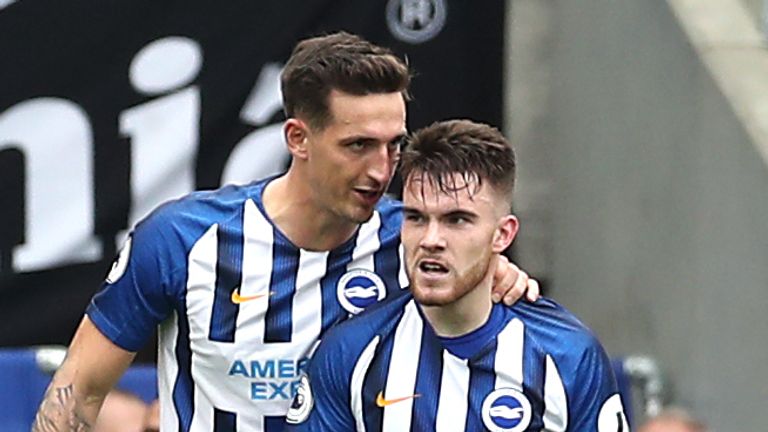
Part of Connolly's journey has been overcoming an alcohol addiction, something he opened up about a couple of years ago on World Mental Health Day, while he was with Sunderland.
"I don't want to be that kind of player that's known for these types of issues, but also the reason I need to remember why I did the interview a few years ago was just to help as many people as possible," he says. "I know in my family my mum's dad struggled a lot with it, so I'd always happily speak about it.
"I'm in a good place with all of it. Obviously, it is a difficult thing to wake up and realise I can't do what a lot of my team-mates can do, which is go out on a Saturday, have maybe a couple of sociable drinks and go home. I know that's not me.
"Trying to find different things at the weekend to entertain myself when all I knew before was Saturday game, Saturday out, Sunday out. That was kind of what I'd do.
"I don't miss it, that's for sure. I have a better life and better relationships with people now without it.
"And my football, if I was drinking and going out, I wouldn't be able to do any of it, at any level.
"I wouldn't have the relationships I have with people. I always have time for everybody now, whereas before I was quite selfish and didn't have time for many people.
"I was probably miserable a lot in different clubs and different scenarios. It would be the only thing on my mind.
"I can't think about whether people like me or like what I've done or opened up about that situation. But for me, it helped, and all the messages and responses I received helped a lot of other people as well. That's what I've done it for."
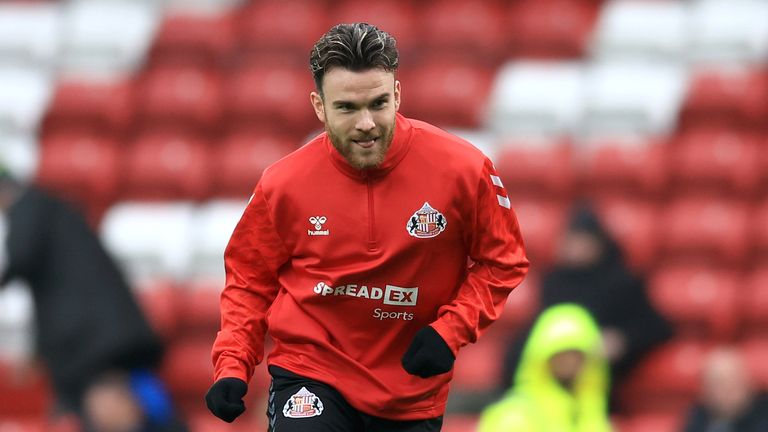
Connolly is keen to now try and help younger players learn from his own pathway, even if those at Orient aren't quite exposed to what he was in the Premier League.
"Everyone needs to make mistakes," he says. "I'm not going to know all the answers straight away when I was 19 and getting paid all this money and playing in front of 50,000 every week.
"People are texting you saying, 'I can sort you this, I can do this for you', the minute you start playing in the Premier League.
"It took a lot of adjusting and getting used to that. I'm probably still not used to that kind of stuff because when you're growing up in Ireland, you don't get that kind of special treatment with things like that.
"But I always sit with the academy players in the physio room, and if they ever want to come and ask me something, they know they can. I'd like to think I'd give them as much advice as I can.
"They all want to play in the first team, but they're currently on loan in the Isthmian Premier, and they're thinking it's the end of the world. Why am I here at 18 or 19?
"I'll remind them that some journeys are completely different. I was in the Premier League at 19 and now I'm in League One. You might be in the Isthmian at 19 and could be in the Premier League by 26. There are different journeys.
"I always used to have a little bit of back and forth with Adam Webster at Brighton when I'd say, 'where were you at 19?' He was playing for Portsmouth in League One and Two. He'd say, 'well, I'm here at 26. Let's see where you are at 26'.
"He was right. They probably saw it coming before I did.
"I always try to give them that kind of advice. I know they do come in and sit with me and ask me questions, so I just want to be that kind of open space for them as well."
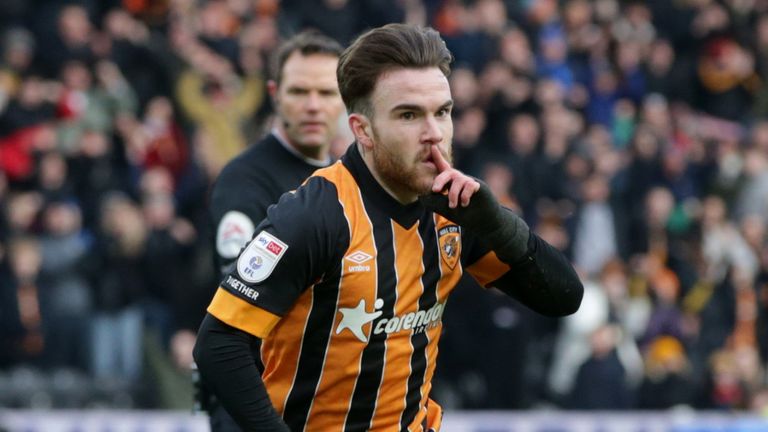
For Connolly, there is a lot of time to get back to where he believes he can be. Right now, he just wants to get a run of fitness and form with Leyton Orient.
Most importantly, he is determined to forge a career with no more regrets.
"A lot of people when I was 19 probably wouldn't have thought I'd be in League One, but that was probably one of the reasons why I'd end up dropping down the leagues to where I am now." he says.
"Like I said before, if this is going to be my level and this is where I end up at 35 or 36, then that's fine. At least I know I've given it everything, and then it's down to whether there are better players than me and better players in my position going ahead of me. I can accept that.
"But if I'd kept living the way I was and not appreciating the game, I'd probably look back when I'm 34 or 35 thinking, I wish I'd realised this 10 years earlier.
"I don't want to look back on my career with regret. You always hear that when I was 18, there used to be people coming into the training ground for educational talks and saying that.
"I'm just looking forward to seeing what I can do at 100 per cent fitness."