
World Cup 2018 suggests power of possession is on the wane
Tuesday 3 July 2018 09:07, UK
When Spain passed their way to World Cup glory in South Africa in 2010, possession was king.
Vicente del Bosque's side had won the European Championship two years earlier using the same tiki-taka template, while Pep Guardiola's Barcelona were enjoying similar dominance at club level.
Possession was celebrated as the key to success, but eight years on, it seems the footballing landscape has changed. Has the 2018 World Cup marked the end of an era?
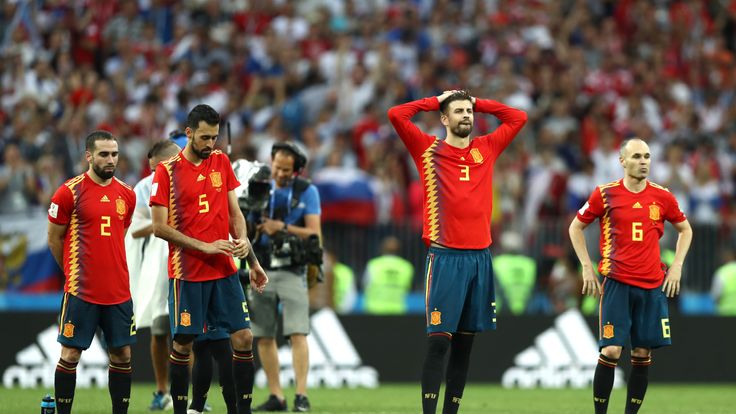
In Sunday's last-16 tie with Russia, Spain recorded a remarkable 79 per cent share of the possession, becoming the first side in World Cup history to attempt more than 1,000 passes in a single game, only to crash out on penalties having failed to break the hosts down from open play.
It came after an unconvincing group campaign in which they laboured to a 1-0 win over Iran and were held to a 2-2 draw by Morocco, and they are not the only possession-based team to have struggled in Russia.
Germany, second in the possession rankings in Russia with an average of 65 per cent, did not even make it beyond the group stage, while Argentina, who averaged 61 per cent possession, only scraped through their group before falling to France despite dominating the ball.
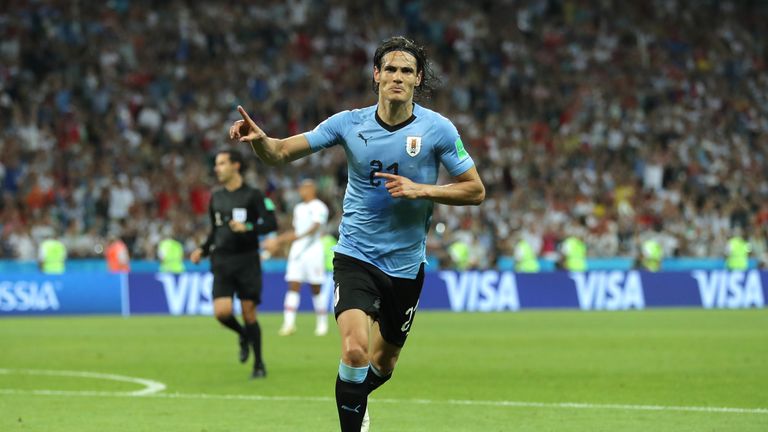
Spain, Germany and Argentina all struggled to find the penetration to complement their possession, with teams such as Uruguay, who had just 33 per cent of the possession in Saturday's 2-1 win over Portugal, succeeding through defensive discipline and effective counter-attacking instead.
"There is very often this mistaken assumption that ball possession leads to scoring opportunities," said Uruguay manager Oscar Tabarez after their win over Portugal. "But even if you don't have much ball possession you can still inflict yourself on opponents in different ways."
Tabarez's comments are backed up by the statistics. So far in Russia, there have been 16 instances of teams recording more than 65 per cent possession, but only five of them have ended in victories.
That number might be even lower if not for late goals.
Germany, for example, required a last-gasp Toni Kroos free-kick to beat Sweden in Group F, while both of Brazil's goals in their Group E win over Costa Rica came in injury-time.
It was a similar story for England against Tunisia, when Harry Kane scored the winner at the death, and it underlines just how difficult possession-based teams have found it to break their opponents down in Russia.
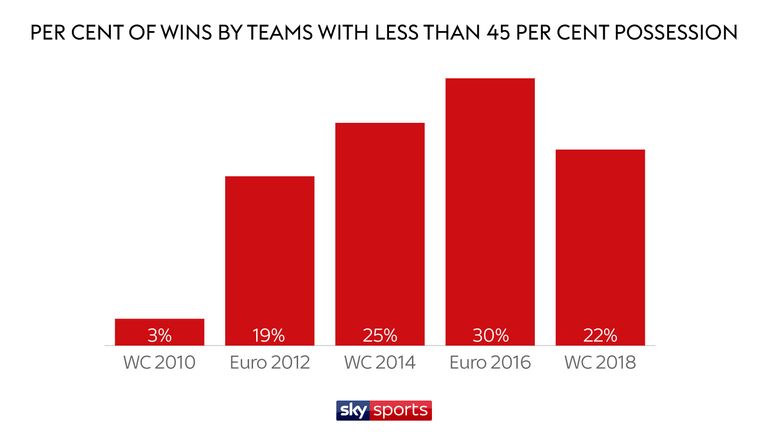
Interestingly, the statistics suggest it is part of a wider trend. At the 2010 World Cup, when Spain's passing game reigned supreme, only three per cent of games in the tournament were won by teams with less than 45 per cent possession. That number rocketed to 25 per cent at the 2014 World Cup, and this year it stands at 23 per cent.
The trend is apparent at club level, too. Leicester ripped up the rule book with their 2016 title triumph, but they are not the only Premier League team to have enjoyed success with a modest share of possession over the last decade.
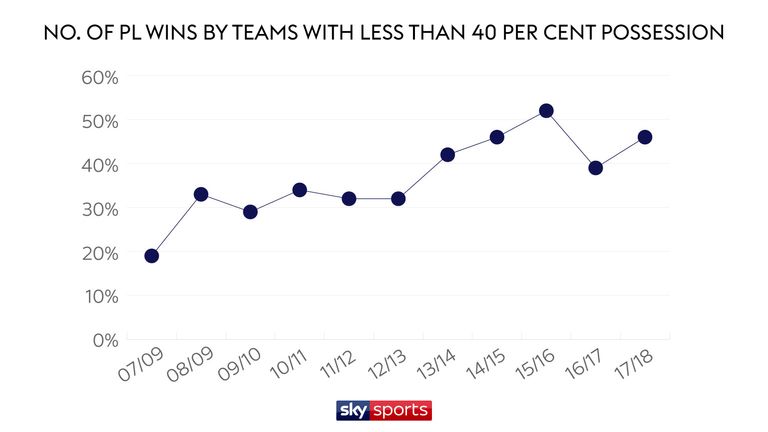
In fact, the number of teams winning games with less than 40 per cent possession has increased steadily in the Premier League. In the 2007/08 season, there were only 19 such instances. Last season, there were 46.
With more and more teams, both at club level and internationally, geared towards sitting deep, keeping their discipline and making the most of counter-attacking opportunities and set-pieces, could it be time for possession-based teams such as Spain and Germany to vary their approach?
Comment below to get involved in the debate, but please adhere to our House Rules. If you wish to report any comment, simply click on the down arrow next to the offending comment and click 'Report'.