Celtic and Rangers fail to overturn ban on supporters at next home Scottish Cup games after fan trouble at Ibrox
The Old Firm clubs will play their next Scottish Cup home ties behind closed doors following crowd trouble at their quarter-final fixture in March; Celtic and Rangers fans clashed on the pitch at Ibrox, and over 40 people were arrested
Thursday 29 October 2026 16:53, UK
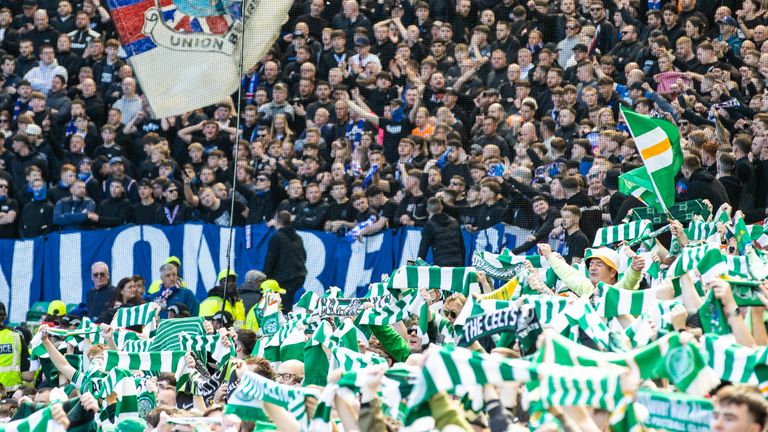
Celtic and Rangers have lost their appeals against a Scottish FA sanction ordering the two clubs to play their next home Scottish Cup fixtures behind closed doors.
The Old Firm sides have also failed to successfully challenge the £100,000 fine they were ordered to pay their opponents for those games.
But the threat of a second match being played behind closed doors, which would have kicked in if there is any trouble at a Scottish Cup fixture before the end of next season, has been lifted.
- Scottish Premiership fixtures | Table | Live on Sky Sports
- Got Sky? Watch Scottish Premiership games on your phone
- Not got Sky? Stream Scottish Premiership games flexibly on your phone
The original sanction followed their quarter-final meeting last season that ended with fans from both sides clashing on the pitch at Ibrox.
Police Scotland arrested 43 people following the scenes that left officers injured as missiles and pyros were launched.
What happened at Ibrox?

This was the first Old Firm game at Ibrox since 2018 where Celtic were given the full Broomloan Stand, meaning there were around 7,500 away fans at the game, while some broke into the away end before kick-off, too. The figure was in place to comply with Scottish Cup rules on ticket allocations.
The league match between Rangers and Celtic the previous weekend had around 2,500 away fans after an agreement between clubs to give around five per cent of stadium capacity to away teams for this fixture.
That followed seasons of reduced allocations or, at times, no away fans at all at games.

Celtic progressed to the semi-finals with a 4-2 shoot-out victory over Rangers after the goalless draw at Ibrox, which sparked a pitch invasion from both sets of supporters.
Some visiting fans spilled onto the playing surface to celebrate after the winning spot-kick and supporters from the Rangers end charged towards them, with fireworks thrown back and forth.
What happened since?
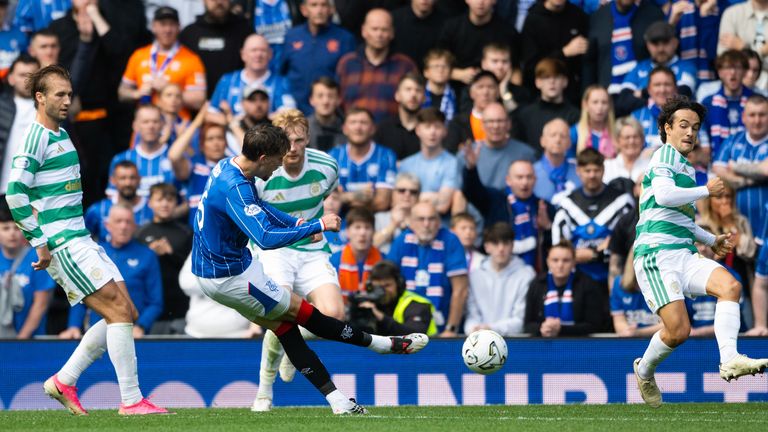
Following the sanction, Celtic said they were "shocked" by the "disproportionate punishment".
Rangers then allocated just 300 tickets to Celtic for their League Cup match at Ibrox this month.
The Ibrox side said that decision had been made based on the independent report that was commissioned following the Scottish Cup quarter-final in March.
They added that since that fixture in March "there have also been further pitch invasions involving Celtic supporters".
Celtic rejected the proposal, and it resulted in the SPFL intervening, with the determination being that no away fans would be permitted at Old Firm matches this season in the Scottish Premiership and League Cup.
What did the report say?
An independent review into the scenes previously concluded that "crushing" and "life-threatening violence" was narrowly avoided.
The report, led by Mark Blackbourne, found: "The Celtic Ultras were the first to enter the pitch in jubilation, with others following their lead.
"In contrast, the Union Bears' movement onto the track and towards the pitch was reactionary, confrontational, and overtly threatening. In both cases, the proximity of these groups to the playing surface materially increased the likelihood of a mass incursion and contributed to the rapid escalation of disorder.
"The post-match pitch invasion by several hundred Celtic supporters was wholly inexcusable. It provoked an immediate hostile response from sections of the home support, who forced past stewards and police to reach the pitch."
Mr Blackbourne also noted it is "deeply disturbing" that a post-match Glasgow City Council Special SAG meeting recorded that time-served Police Scotland officers were described as "petrified" of policing another match at Ibrox Stadium.
He added: "That word must be read in context, not in isolation, but so qualified, it remains deeply disturbing for Scottish football.
"This reference demands the most serious attention from all parties with responsibility for the governance of safety and security at major football fixtures in Scotland."
Interviewees independently described the organisational characteristics of certain ultra groups in terms more commonly associated with organised crime groups in the report.
The report called for incidents linked to ultra groups to come down with heavier sanctions from the clubs.