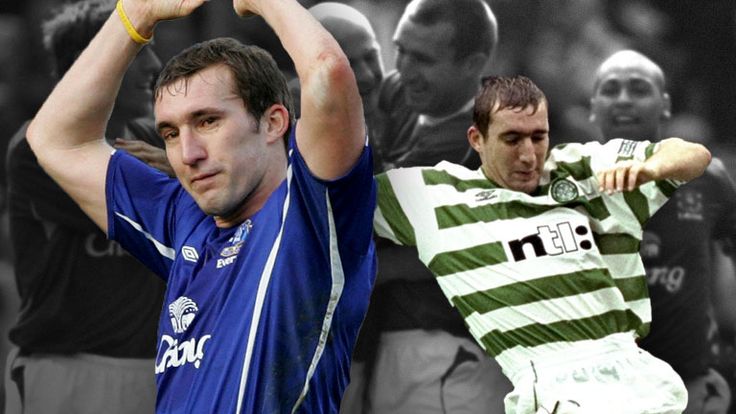
My Career: Alan Stubbs
From his fight against cancer to facing many of the Premier League's greatest goalscorers and even avoiding Paul Gascoigne's practical jokes, former Bolton Wanderers, Everton and Celtic central defender Alan Stubbs looks back to remember the highlights of his dramatic playing days
Monday 9 December 2013 17:14, UK
"Gazza used to pinch our clothes" - ex-Everton man Alan Stubbs looks back on his playing days.
For many, playing days in football against some of the best strikers in history, including Alan Shearer and Thierry Henry, would be dramatic enough. But Alan Stubbs' career involved a far more serious battle. The former Bolton Wanderers, Celtic and Everton centre-back twice overcame testicular cancer before going on to play again at the top level. It is a story of fortune that the disease was spotted as part of a compulsory drugs test. However, it also means he is eternally thankful for the sport which remains his profession. From his fight against cancer, to facing many of the Premier League's greatest goalscorers and even avoiding Paul Gascoigne's practical jokes, now Everton Under 21 manager Stubbs - whose book, How Football Saved My Life, is out now - talks Sky Sports through his unique career.I'm Always Grateful For Football Because...
 "The first time I discovered I had cancer was after a routine drugs test at the end of the Scottish Cup final for Celtic against Rangers in 1999. We had been beaten 1-0 and, as I was walking off the pitch, I got taken aside by the drug testers to provide a urine sample. I was not happy that I was not with my team-mates after a loss but I thought nothing of it after I had provided a sample. Two weeks later, I got a phone call from the Celtic club doctor. He told me the drug test was positive for a hormone which is normally only found in pregnant women or, when it is found in men, it is linked to cancer. I went up to Glasgow with my wife for more checks and it was confirmed I had testicular cancer.
"The doctors told me about my good chances of survival and I was very positive. But then I had a relapse about a year later and I knew it was a lot more serious. I had a major operation and was in theatre for eight hours. They had to move vital organs to get to the tumour, which was on the base of my spine. I had also undergone two courses of chemotherapy before that. It changes your perspective on football. I still love football and coaching but football is not everything anymore. I was lucky. If I had not been a footballer, I would not be here talking now. I had the best care, I had the best doctors and I got diagnosed earlier than others, because, as footballers, we are always getting checked. I was very fortunate."
"The first time I discovered I had cancer was after a routine drugs test at the end of the Scottish Cup final for Celtic against Rangers in 1999. We had been beaten 1-0 and, as I was walking off the pitch, I got taken aside by the drug testers to provide a urine sample. I was not happy that I was not with my team-mates after a loss but I thought nothing of it after I had provided a sample. Two weeks later, I got a phone call from the Celtic club doctor. He told me the drug test was positive for a hormone which is normally only found in pregnant women or, when it is found in men, it is linked to cancer. I went up to Glasgow with my wife for more checks and it was confirmed I had testicular cancer.
"The doctors told me about my good chances of survival and I was very positive. But then I had a relapse about a year later and I knew it was a lot more serious. I had a major operation and was in theatre for eight hours. They had to move vital organs to get to the tumour, which was on the base of my spine. I had also undergone two courses of chemotherapy before that. It changes your perspective on football. I still love football and coaching but football is not everything anymore. I was lucky. If I had not been a footballer, I would not be here talking now. I had the best care, I had the best doctors and I got diagnosed earlier than others, because, as footballers, we are always getting checked. I was very fortunate."