
Exclusive
FutureFit introduced by the FA in England: How 3v3 is at the root of plans to restructure youth football in the country

Tuesday 2 June 2026 08:54, UK
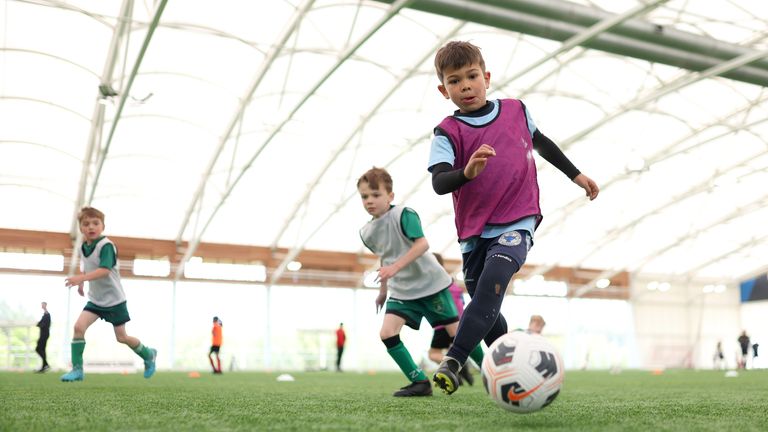
From next season, grassroots football in England will look different. Children under seven will play three-against-three football instead. The Football Association has decided this programme is the best way for these youngsters to experience the game.
The FA's FutureFit programme, implemented from the start of the 2026/27 season, is designed to make football more enjoyable and help players to better fulfil their potential. It comes after studying youth football across over 40 European countries.
"We found we were one of very few countries still playing five versus five at under-7s level," Clare Daniels, a senior national development manager at the FA, tells Sky Sports. "The majority play smaller formats." That includes Germany, Italy and France.
- World Cup 2026 fixture schedule and UK kick-off times
- England's fixtures and routes to 2026 World Cup final
- World Cup kits revealed! | Transfer Centre LIVE!
- World Cup key info - format, venues, prize money
The study was comprehensive. "Two years of research," John Folwell tells Sky Sports. Folwell is the head of grassroots coach development. In conjunction with Liverpool John Moores University, over 400 games from under-6 to under-14 level were analysed.
"It proved that smaller formats mean players are more involved, more engaged, and get significantly more touches on the ball, resulting in technical and physical benefits for young players," says Folwell. So logical that you wonder why it hasn't happened sooner.
But the truth is that youth football has been a long journey in England. Until the introduction of mini soccer - seven versus seven - in 1999, it was considered normal for even the youngest of players to play 11-a-side games on full-size pitches each week.
Daniels labels it "ridiculous" that small children were doing this and most would now agree. Mini soccer evolved to include five versus five and nine versus nine variants, phasing in the progression to full-sided football. This is just considered the next step.

There will be a greater focus on ensuring that it is fun. Rock, paper, scissors will be used to decide who starts the game. No referees, no goalkeepers, no substitutes. The details can come later. At the age of seven, it is designed to be an easy introduction to football.
"We believe that enjoyment levels will be enhanced because players are involved all of the time. They are more engaged with the game," says Daniels. "Players experience significantly more opportunities across all technical actions," adds Folwell.
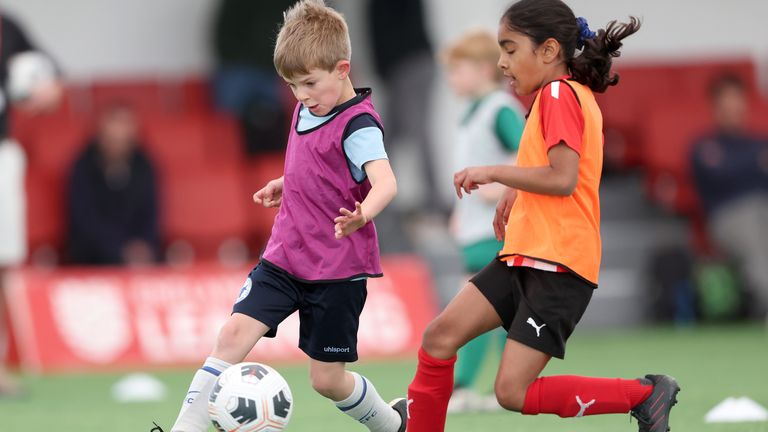
As with any change, there is some resistance. But, tellingly, that has not been coming from the children. "Overall, the sentiment towards these changes has been largely positive - particularly among those who have been directly involved," Folwell reveals.
Football in the youngest age groups should not be about tactics and coaching. It is about maximising enjoyment and involvement, giving players the opportunity to get on the ball. Helping them to fall in love with the game - and improve their skills doing it.
The feedback from children is that there are more chances to score and less time spent standing around watching. That can only be a good thing. Grassroots football is changing. "With the child always at the centre of our thinking and decisions," concludes Daniels.