Mohamed Salah: Why Liverpool legend is making a surprise switch to Trabzonspor
Trabzonspor may not meet people's projected wishes for Mohamed Salah, but the move delivers everything he wants for himself and his family after 22 years of considering the bigger picture, writes Melissa Reddy.
Thursday 6 August 2026 19:28, UK
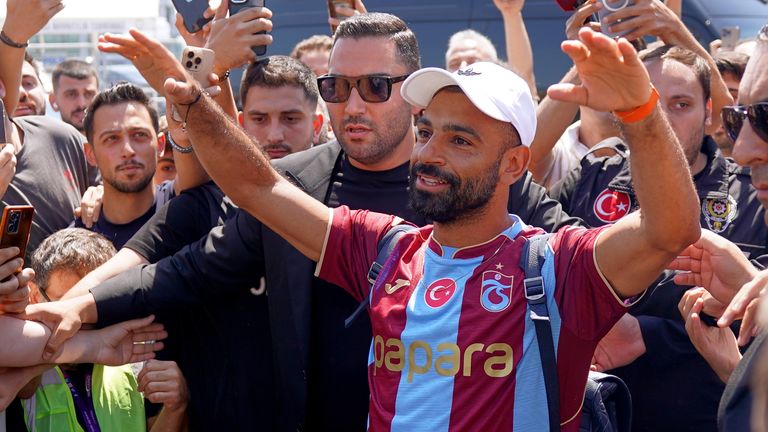
On the eve of Trabzonspor's 59th anniversary celebrations, a truck equipped with three large LED screens reflected what those with allegiances to the club were really desperate to toast to.
One of the monitors displayed a video of an imagined Mohamed Salah unveiling, sandwiched by two others looping a reel of the Egyptian's most iconic goals and moments.
Supporters stopped to pray at the truck for the divine decree of what they'd already convinced themselves of; the record-breaking forward was theirs despite the protestations of club president Ertuğrul Doğan.
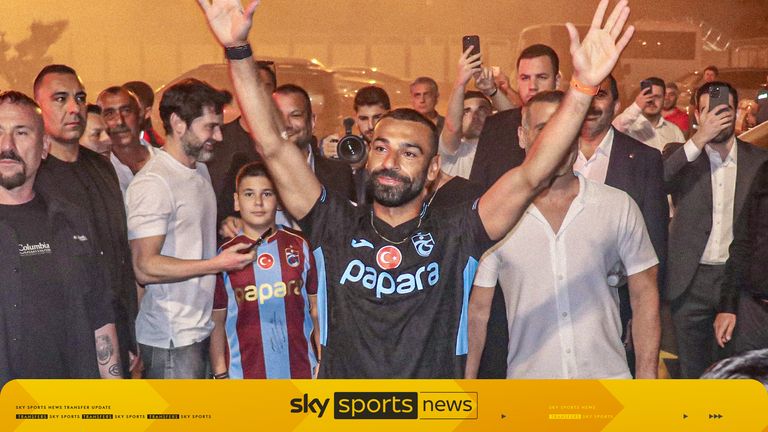
He had used a variation of 'no' or 'nothing' nine times over the weekend to press home the fact Trabzonspor had yet to reach an agreement with Egypt's captain, but the message was not being double ticked.
All around the city, fans were not fazed; they continued to show off their banners adorned with Salah's face. Their reaction, but also the professionalism of Doğan, tells part of the story of how Trabzonspor were able to announce the biggest blockbuster transfer in Turkish football history on Tuesday.
Unlike Besiktas, who were also in negotiations with Salah, they did not play everything out in the press. Trabzonspor worked quietly and respectfully to finalise an agreement, with Doğan even indicating on Saturday there is a manner in which you have to handle such a high-profile situation.
Besiktas, meanwhile, had repeatedly fed information about their interest and talks. It was suspected they used the media to pressurise Salah into accepting their proposal by announcing it was a done deal, despite there being a distance in consensus.
The news had to be countered on X by his business partner, Ramy Abbas. It was game over for Besiktas, but their sporting director Önder Özent, instead deflected to crazy demands.
They were not the first club to want the benefits of Salah - a commercial and cultural behemoth who has also been one of the best players in the world over the past decade - but be unwilling to pay what that package is worth.
It has its PR perks. Besiktas have come across as ambitious enough to explore a deal for a world-class player, and brave enough to stick to their operational boundaries. Sky Sports News has contacted Besiktas for comment.
Trabzonspor, meanwhile, have clinched a game-changing signing that has every intention of helping them win the league and grow into a European force.
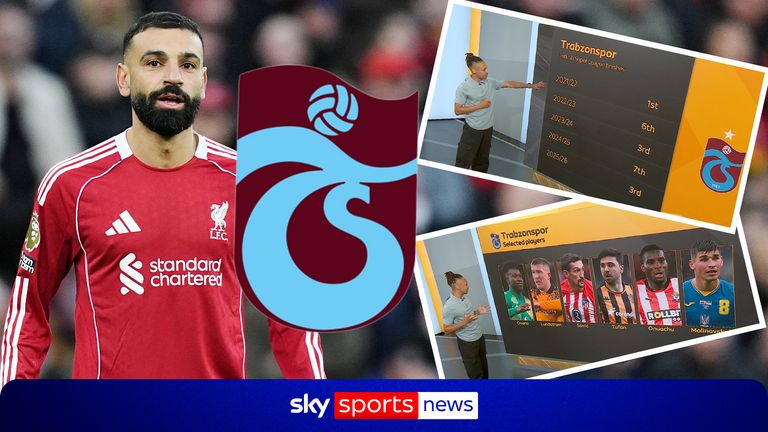
There has been a cocktail of disappointment and surprise at Salah's choice of club, shaken with the belief that it proves he is "washed" and stirred with the sentiment that it is underwhelming.
That conclusion stems from widespread projections of what people willed him do, rather than his own wants at this stage of his career.
Salah had planned on retiring at Liverpool, which his family considered home and their refuge of peace. A heartbreaking exit, prompted by feeling forced out by the club's hierarchy, meant there was a very specific set of parameters for his new destination.
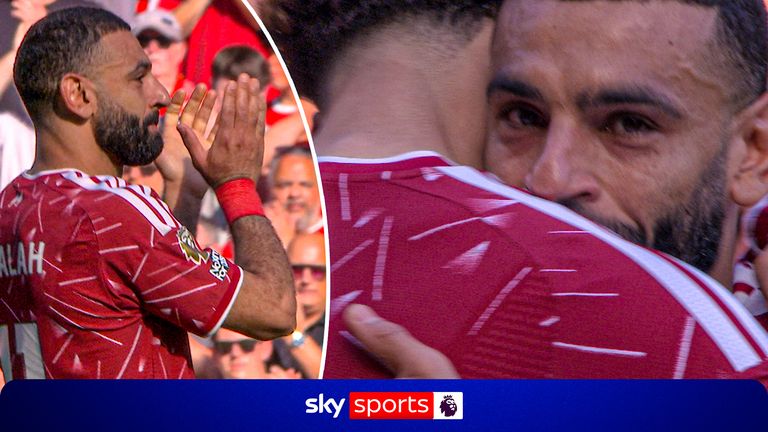
Salah's intention was to remain in Europe, at an ambitious club that genuinely wanted him to play a leading role in helping them win things, with a passionate fanbase that he could feed off, in a city where his family could feel comfortable and not restricted.
Having lived in Switzerland, Italy and England, there was a desire to experience something new. Signing for another Premier League club was out of the question, and after proving himself at both Fiorentina and Roma, Serie A did not appeal to Salah in the way it did to those who romanticised the idea in the media or on socials.
Trabzonspor was not the best financial package put in front of him this summer, neither was it the one that could most supercharge his brand. The Saudi Pro League presented the former, while at least four MLS clubs pitched the latter.
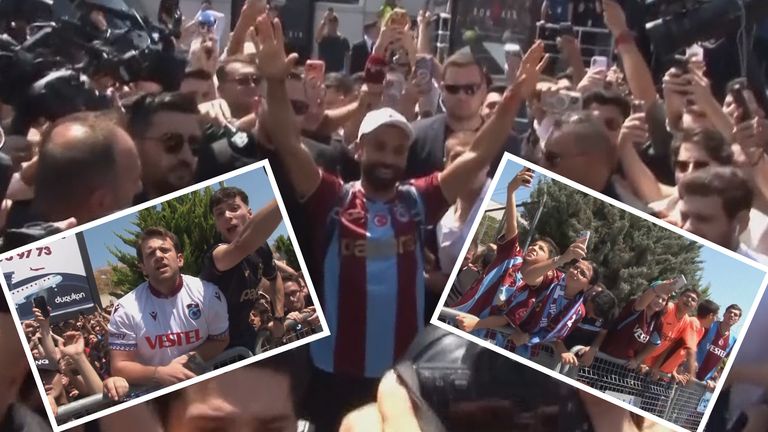
Trabzonspor, however, ticked the boxes that mattered most to him. And how they handled the negotiations gave Salah the feeling that the side based in the Black Sea coast of northeastern Turkey is everything he needs right now.
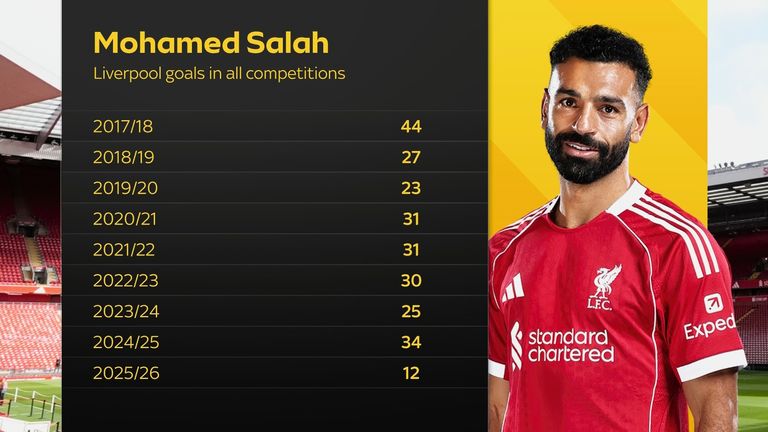
After 22 years of heavy sacrifices, including ceding his adolescence from the age of 12 to build a career in which he considered the bigger picture and what his decisions would mean to the wider world, Salah has earned the right to put himself first.
It is instructive to rewind to how his European journey started after the Port Said Stadium disaster, had cruelly claimed the lives of 74 people, had shuttered football in Egypt.
This is a shortened extract from my new book Only Mo Salah: An Intimate Portrait of the Egyptian King, which is published on August 13.
It is Valentine's Day 2012 and the sporting director of FC Basel's golden era, Georg Heitz, receives an email with a "please look at this player" directive.
A video is attached, simply titled 'Mohamed Salah.'
Heitz opens it to find a 15-minute compilation of a scrawny, supercharged winger, soundtracked by Fort Minor's Remember the Name on loop spliced with another beat.
"You can make players look very good in the videos," Heitz offers, "but Mohamed Salah did not need to be made to look good. He was something else."
Heitz tapped up Basel's chief scout Ruedi Zbinden, who did indeed remember the name because it was flagged on their recruitment system as one to watch.
His colleague, Roberto Crausaz, who was in charge of canvassing South America for talent, had been at the U20 World Cup in Colombia six months prior.
- Liverpool fixtures & scores | FREE Liverpool highlights▶️
- Got Sky? Watch Premier League games LIVE on your phone📱
- Not got Sky? Latest Sky Sports deals or stream PL games with no contract📺
Despite it falling outside of his territory remit, the Argentinian filed a comprehensive report on Salah for Basel.
"There were a few names my network were telling me to pay close attention to, especially from my country Argentina before I arrived at the tournament," Crausaz remembers.
"But when you go to watch games as a scout, I always believe you need to have your mind clear and be open to what you see.
"And when you work for Basel, it's not like you have the budget of Real Madrid so you also have to be creative and pay even more attention."
Lucas Villafanez, an attacking midfielder who scored for Argentina in the group stages, was one of the names Crausaz had been advised to monitor closely.
As the teamsheet circulated just over an hour before kick-off at Medellin's Atanasio Girardot arena, he was listed among the substitutes in the Round of 16.
Crausaz, though, took delight in the opposition's starting line-up, where Egypt had thankfully included an attacker that previously fascinated him: Salah.
"He was very, very, very fast with the ball glued to him," Crausaz recalls.
"He was so unpredictable, it was beautiful because you could see the opponents had no idea what he was going to do.
"Momo wasn't the big name for goals or assists in this World Cup, but every time the ball went to him, he made something happen.
"He wasn't one of those players that are heavily academy trained and all about boring technique, technique, technique. He had big character in his football and took risks.
"How he controlled the ball at speed, his strong dribbling, the fear he put info defences, and how he would go again, again, again - these things you can't teach.
"A player has it or he doesn't. You have to put more value in what a player can do and imagine with work on the weaknesses, what they can become.
"If you focus on the wrong things, you can lose the right player."
Basel did bite, but scepticism was still rife. "So few Egyptian players have been a success in Europe so you wonder if it can really work," Heitz says.
Xherdan Shaqiri, Basel's poster boy and X-factor, had already signed a pre-agreement with Bayern Munich. This was formally announced only six days before Salah was offered to the club via email.
Heitz paints the picture: "How do you follow a boy that came to the club at eight, grows up in front of our eyes to be one of the most exciting players in the world, who drives Basel to trophies, and has a strong bond with the fans?
"All the best clubs in the world wanted him. Bayern worked so hard and fast to get Shaq because he was special and they didn't want to lose out - especially to the Premier League.
"Then you think 'could an unknown Egyptian really follow the 'Swiss Messi?,' which sounds so silly now."
Heitz received the green light from Basel to open negotiations with Al Mokawloon.
Egyptian clubs are notoriously difficult to deal with. Heitz was made aware of this but "we exchanged faxes and they said we have a deal at €1.2m. They told me I can come to Cairo to finalise everything so I travelled.
"I went there and I found myself sitting at the table with the whole legal department of the business and there were two guys representing the club.
"Then they said, 'okay, let's negotiate.' I was so confused, we already had a deal!
"And they said, no - it was only the point to start the negotiations."
Al Mokawloon, according to one of the parties helping with translation, initially had no desire for a fast resolution when they 'accepted' Basel's opening gambit of €1.2m.
The intention was to draw out the process and push the valuation so high that it either put Basel off or made them pay treble what was expected.
"They thought it could be win-win for them," one of the translators during the deal reveals, "but they did not expect what Mohamed did."
While Heitz prepped to travel to Cairo, Salah was on live TV discussing his future and the show's presenter dialled in an Al Mokawloon official to establish the club's stance.
'We have news that Basel wants Salah, is there a formal bid,' he is asked by the Onze Egypt host.
'We haven't received anything official yet,' is the response.
'We want to keep our best players' he adds, before Salah interjects: 'No, there is an official bid. The Basel representative is ready to come to Egypt right now to meet and finish the deal.'
Proof of the proposal is shown on the screen during the conversation and the Al Mokawloon executive backtracks: 'Okay, the issue is the price. They are offering a low amount.
'We expect at least €3m as a starting point. Anything less is too low for a player of your talent compared to European prices.'
Again, Salah counters. 'That is too much. You are asking for too much money and it will ruin the deal…
'The league is suspended. If this deal fails, my dream of playing abroad might be gone forever. I won't be able to do anything if I stay here.'
This was staggering; Egyptian clubs had the esteem, the money and the power. It was transgressive for one of their assets to oppose them, let alone to do it so publicly.
Al Mokawloon caved, agreeing a €1.8m deal with a very tidy 25 per cent sell-on clause.
Salah wearing a basic, round-neck white tee and a brown zipped hoodie, signed a four-year contract with Basel on April 10, 2012.
He was 19 and opted to wear the number 22 shirt in tribute to the iconic Aboutrika, who initially retired after the Port Said Stadium disaster.
The symbolism stretched far beyond the ode to his role model. Salah was accepting the status - but supremely the responsibility - Aboutrika had bestowed on him with the 'future of Egyptian football' title.
"This was such a huge moment for him, but you could tell he was thinking about his country, his people," Heitz says.
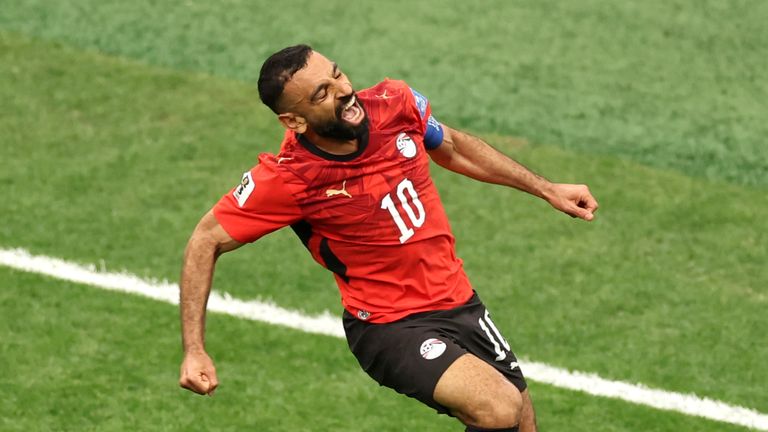
Six years later, as part of a Premier League Origins feature, Salah would unpack why.
"It was difficult for an Egyptian player to get to such a level and continue playing at that level for many years," he said.
"I knew from the first day I went to Basel it will be difficult - but I wanted to change that, I didn't want that narrative of us anymore.
"We are a big country, we have many children in Egypt, and everyone can do something.
"I want everyone to dream, to feel they can do something."
Salah achieved that. Now he can do something for himself.
Only Mo Salah: An Intimate Portrait of the Egyptian King is published on August 13