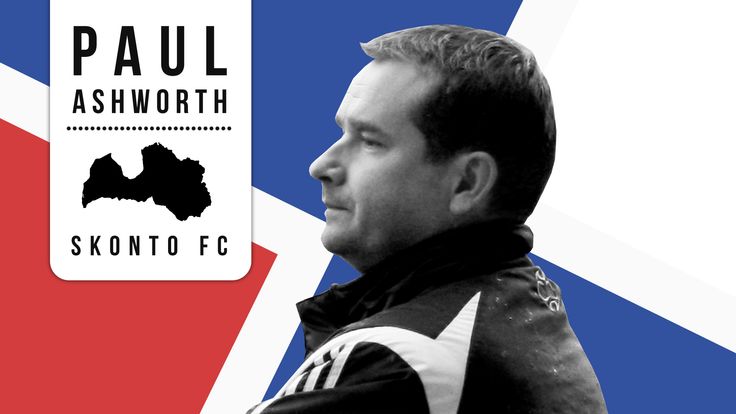
Paul Ashworth discusses life in Latvia and Russia before running a football academy in Nigeria.
Paul Ashworth has managed Ventspils, FK Riga, and Skonto Riga in Latvia. He's also been sporting director at the Russia side, FC Rostov. He has coached at Cambridge United and Peterborough United, and is currently technical director of the Kwarma Football Academy in Nigeria. Born in Norfolk, he is now fluent in Russian. His brother is Dan Ashworth, the FA's director of elite development. Here, Paul talks to Owen Amos about life in Latvia and why he isn't wasting time pining about a return to England...
How did the move to Latvia come about?
I never thought I'd go to Latvia. Gary Johnson, who I knew from Cambridge, was managing the national team, and he called to say there was a team that needed a head coach. I was out of work, so I went over - but it was really just to see Gary. I'd barely heard of Latvia, and I didn't intend to move there. But once I was there, I met the president of Ventspils and he asked me to do a coaching session. I did, and he offered me the job. In the end, it was an easy decision - I was out of work, financially it was good, and I'd be in charge for the first time.
Was it a culture shock?
Ventspils was a shock. At the time, 2001, Latvia was only nine or ten years out of the Soviet Union, and it was like going 30 years back in time. There was only one supermarket. Now, it's totally changed. Nearly everyone speaks English, I speak Russian, there are 15 supermarkets. If I arrived now, it wouldn't be a shock. But it was then.
Luckily, football isn't much different wherever you go. It's like one language. There were some slight differences: the players were more technical, playing shorter passes. Your full backs couldn't hit it into the channel, even if you'd wanted them to. They just couldn't play a 40 or 50 yard ball accurately under pressure. But overall, there were no problems. My assistant spoke English, and I learnt Russian. I was doing what I loved doing. We narrowly missed out on the title twice, and qualified for Europe every season I was there. In 2002 we beat Lugano from Switzerland in the first round of the UEFA Cup, before losing to Stuttgart in the next round.
After leaving Ventspils, you ended up in Russia...
After Ventspils I went to FK Riga, which was difficult. The club wasn't as well run, and it didn't have the financial backing. Before Riga I'd applied for the Rostov job in Russia. I didn't get it, but when the sporting director job came up a year later - essentially director of football - the owner got in touch.
Was the language an issue?
I had learnt Russian, but I don't think the language was a crucial factor. They gave me a full-time translator, as when you're sporting director you're signing lots of legal documents and so on. So speaking Russian was an advantage, but if I didn't speak the language I still think I'd have got the job.
But you returned to Latvia...
My wife is from Latvia, and it was becoming my home, so Skonto Riga - where I went after Rostov - was a great job. They're one of the biggest clubs in Latvia, if not the biggest. I did four and a half years there, and we produced a lot of international players, keeping the club going.
And now you're in Nigeria?
When you're a coach abroad, your life span is very short. You don't get much time. After Skonto, I was looking all over for jobs. I heard of the Nigerian job through the coaches' association, interviewed, and got it